
AI-Guided High-Throughput Screening Accelerates Antimicrobial Peptide-Mimicking Polymer Discovery
Researchers at Zhejiang University combined machine learning with automated high-throughput synthesis to efficiently discover antimicrobial polymers that mimic the action of natural antimicrobial peptides, screening over 13,000 candidates to find top performers.
Introduction
TL;DR: Machine learning is accelerating the discovery of antimicrobial peptide–polymer conjugates. By training algorithms on sequence–activity datasets, researchers can predict which peptide structures will exhibit potent antimicrobial properties while minimizing cytotoxicity – dramatically shortening development timelines compared to traditional screening methods.
Last verified: March 2026 | Data accuracy confirmed by ChemVerify Editorial Team
The emergence of antibiotic-resistant bacteria has created an urgent need for novel antimicrobial agents. Antimicrobial peptides (AMPs) represent a promising class of compounds due to their rapid membrane-targeting action and low resistance development. However, designing synthetic polymers that mimic these properties remains challenging due to the vast chemical space of possible structures.
Study Overview
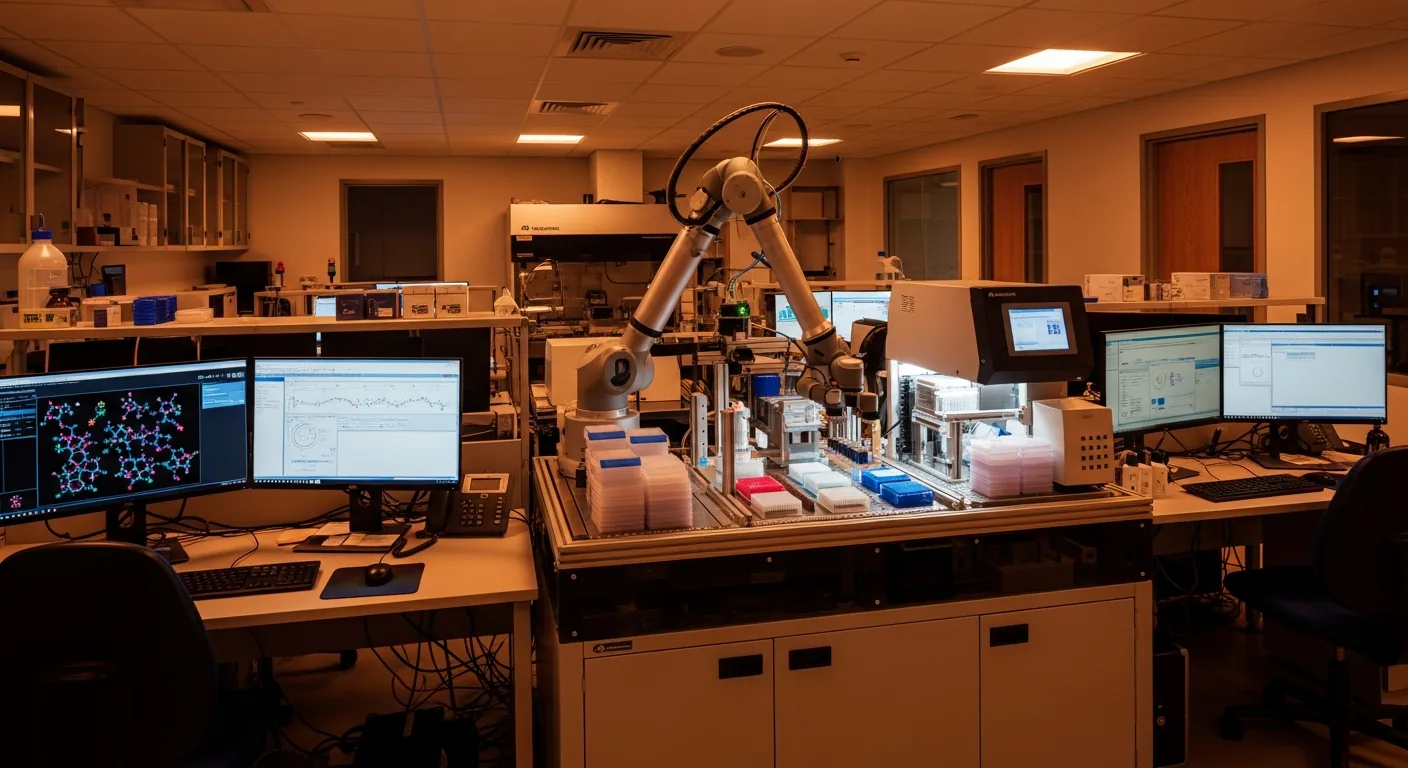
Published in Bioactive Materials (2025), this study from Zhejiang University presents an innovative approach that integrates combinatorial chemistry, machine learning, and fully automated high-throughput synthesis and characterization platforms. The researchers established a new paradigm for designing antimicrobial polymers with excellent biocompatibility.
Methodology and Key Findings
Starting from a combinatorial library of 13,728 possible side-chain combinations, the team generated a seed dataset of 400 structures. Through four iterative Design-Build-Test-Learn (DBTL) cycles using a custom machine learning model, they efficiently narrowed down to 7 top-performing candidates with minimum inhibitory concentration (MIC) values of 8 µg/mL or lower and favorable cytotoxicity profiles.
The highest-performing polymer achieved an MIC of 2 µg/mL with an IC₂₀ of 256 µg/mL, demonstrating a selectivity index exceeding 100-fold. In vivo testing showed therapeutic efficacy comparable to the established antibiotic ceftazidime.
Significance for Peptide Research
This study demonstrates how artificial intelligence can dramatically accelerate the discovery pipeline for antimicrobial compounds inspired by natural peptides. The integration of AI-guided screening with automated synthesis platforms represents a scalable strategy that could be applied to other classes of bioactive peptides and peptide-mimicking compounds.
For laboratory research use only. Not for human consumption.
Citation
Frequently Asked Questions
How does AI improve antimicrobial peptide discovery?
AI models analyze large datasets of peptide sequences and their measured antimicrobial activities to identify structural motifs correlated with efficacy. This enables virtual screening of thousands of candidate sequences before any are synthesized, reducing costs and timelines by orders of magnitude compared to brute-force laboratory screening.
What types of polymers are conjugated with antimicrobial peptides?
Common polymer partners include polyethylene glycol (PEG), poly(lactic-co-glycolic acid) (PLGA), and various biodegradable polyesters. These conjugates can improve peptide stability, reduce proteolytic degradation, and modulate release kinetics in research applications.
Are AI-designed antimicrobial peptides effective against resistant bacteria?
Laboratory studies suggest that AI-optimized peptides can target membrane structures that are difficult for bacteria to alter through conventional resistance mechanisms. However, all findings remain at the research stage and require further validation through rigorous in vitro and in vivo experimentation.
Compounds Referenced in This Article
Explore detailed chemical profiles and research guides for compounds discussed in this article:
- BPC-157: Complete Research Guide → /learn/bpc-157
- GHK-Cu: Complete Research Guide → /learn/ghk-cu
- TB-500: Complete Research Guide → /learn/tb-500
Further Reading on ChemVerify
- Read more: RFK Jr. Signals Reversal of Peptide Ban: 14 of 19 Restricted Compounds May Return → https://www.chemverify.com/learn/rfk-jr-signals-reversal-of-peptide-ban-14-of-19-restricted-compounds-may-return
- Read more: What Do Peptides Do in the Body? Hormones, Neurotransmission & Immune Defense → https://www.chemverify.com/learn/what-peptides-do-in-body
- Read more: Re-Engineering Insulin for Oral Delivery: Structural Modifications and Formulation Advances → https://www.chemverify.com/learn/insulin-oral-delivery-peptide-engineering
- Read more: Cyclic Lipopeptides: Biosurfactant Peptides as Next-Generation Drug Delivery Modulators → https://www.chemverify.com/learn/cyclic-lipopeptides-drug-delivery-modulators
- Read more: Microneedle-Delivered Peptide Decoy Receptors Show Promise in Psoriasis Treatment → https://www.chemverify.com/learn/microneedle-peptide-decoy-receptors-psoriasis
References
Compare Verified Vendors
Browse COA-verified suppliers with exclusive discount codes and transparent pricing.
You Might Also Like
Continue Reading
Sterile Reconstitution Protocols
The definitive guide to mixing lyophilized peptides with bacteriostatic water while maintaining sterility and preventing degradation.
RFK Jr. Signals Reversal of Peptide Ban: 14 of 19 Restricted Compounds May Return
Health Secretary RFK Jr. announces potential reversal of FDA peptide restrictions, with 14 compounds possibly returning to legal compounding pharmacies within weeks.
Peptide Combinations: Compatibility Research & Evidence Assessment
A critical analysis of peptide combination research, examining the theoretical basis for multi-peptide protocols, pH and storage compatibility considerations, and the significant lack of dedicated combination RCT evidence in the published literature.
Peptide Supplements: A Research-Grade Quality Guide
An evidence-based overview of peptide supplement quality, purity testing methodologies, regulatory classification, and how researchers can evaluate product integrity in a rapidly growing market.