
Are Research Peptides Safe? Risks, Contamination, and What Science Says
Examine research peptide safety profiles, contamination risks, immunogenicity concerns, quality control methods, and what peer-reviewed studies reveal about peptide safety.
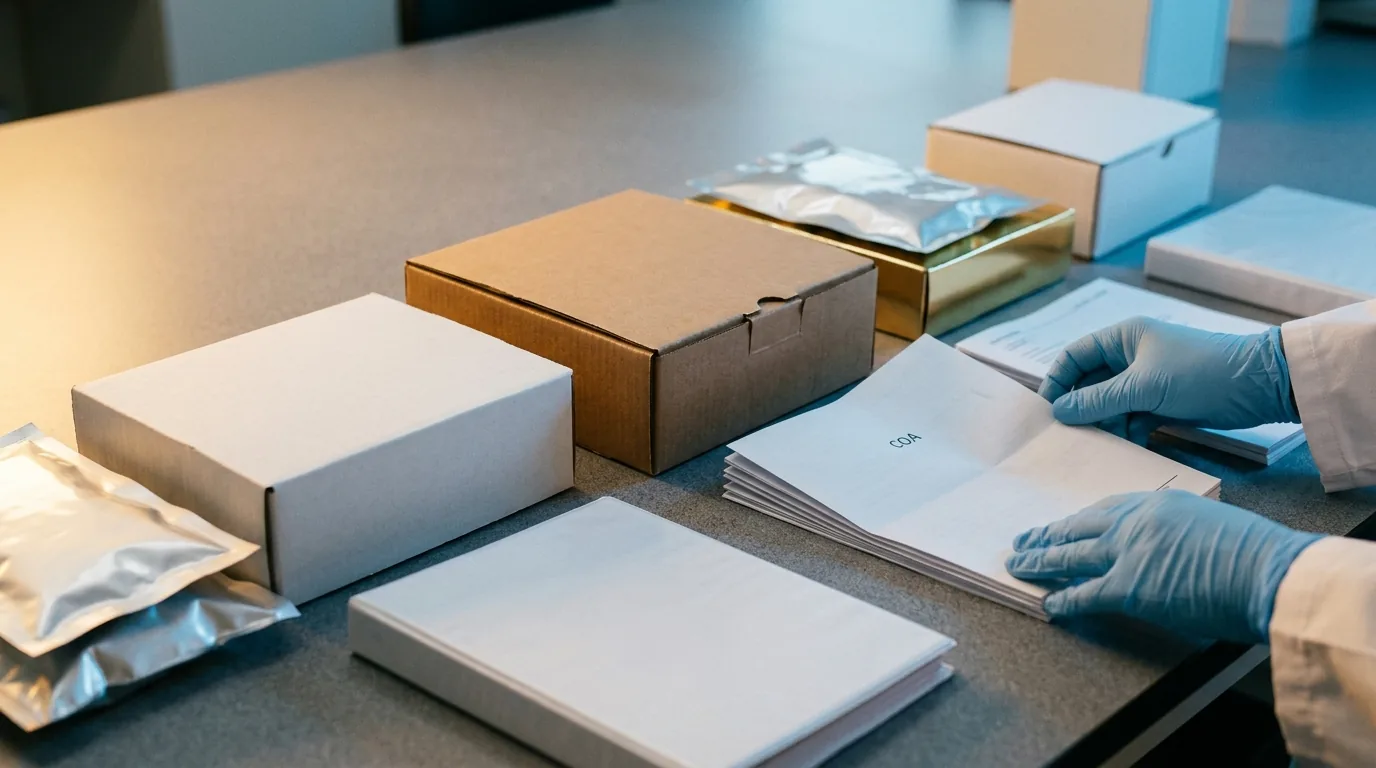
For laboratory research use only. Not for human consumption.
TL;DR: Research peptides produced under strict quality control conditions and verified by third-party analysis exhibit generally favorable safety profiles in published preclinical studies. The primary safety risks stem from manufacturing contamination (bacterial endotoxins, heavy metals, residual solvents), degradation from improper storage, and lack of standardized quality oversight in the unregulated research chemical market.
Last verified: April 2026 | Data accuracy confirmed by ChemVerify Editorial Team
General Safety Profile of Research Peptides
Research peptides are short amino acid chains that interact with biological systems through specific receptor-mediated pathways, and their general safety profile in published preclinical literature is characterized by high target selectivity, relatively short biological half-lives, and predictable metabolic degradation into naturally occurring amino acids. Unlike small-molecule pharmaceuticals that may produce toxic metabolites, peptides are typically degraded by endogenous peptidases into amino acid fragments that enter normal metabolic pathways.
However, the term "safe" requires careful qualification in a research context. The safety data available for most research peptides is derived primarily from animal models (rodent, rabbit, and occasionally primate studies) rather than controlled human clinical trials. BPC-157, one of the most extensively studied research peptides, has over 100 published animal studies demonstrating tissue-protective effects, but human clinical trial data remains limited to a Phase II trial for inflammatory bowel disease and a 2025 pilot IV safety study.
The distinction between intrinsic peptide safety (the molecule itself) and extrinsic safety risks (manufacturing quality, contamination, storage) is critical. A peptide with an excellent pharmacological safety profile can still pose laboratory hazards if it is contaminated with bacterial endotoxins, contains residual heavy metal catalysts, or has degraded due to improper storage conditions.
Contamination Risks in Peptide Manufacturing
Contamination during peptide synthesis and handling represents the single largest safety variable for research peptides. Since research-grade peptides are not manufactured under pharmaceutical-grade GMP conditions in most cases, contamination risks include bacterial endotoxins, heavy metals, residual solvents, and cross-contamination from other peptides produced on the same synthesis equipment.
- Bacterial endotoxins (lipopolysaccharides): Gram-negative bacterial cell wall fragments that can contaminate peptide solutions during manufacturing, reconstitution, or handling. Endotoxins are heat-stable and survive standard autoclaving. Even picomolar concentrations can activate inflammatory signaling in cell culture systems. The USP Bacterial Endotoxins Test (LAL assay, USP <85>) sets acceptable limits at less than 0.25 EU/mg for injectable-grade materials.
- Heavy metals: Trace metals including palladium, lead, mercury, and arsenic may be introduced through synthesis reagents, catalysts, or equipment. Palladium contamination is particularly relevant for peptides synthesized using Pd-catalyzed deprotection strategies. ICH Q3D guidelines establish permitted daily exposure limits for elemental impurities.
- Residual solvents: Organic solvents such as DMF (dimethylformamide), DCM (dichloromethane), TFA (trifluoroacetic acid), and acetonitrile are used extensively during solid-phase peptide synthesis and HPLC purification. Incomplete removal during lyophilization leaves residual solvents in the final product. ICH Q3C(R8) classifies solvents by toxicity class and defines concentration limits.
- Cross-contamination: Manufacturing facilities that produce multiple peptides on shared equipment risk batch cross-contamination if cleaning validation procedures are inadequate. This can introduce biologically active peptide contaminants at undetectable concentrations.
Immunogenicity and Immune Response Concerns
Immunogenicity refers to the ability of a substance to provoke an adaptive immune response, including the production of anti-drug antibodies (ADAs). For research peptides, immunogenicity is a relevant consideration in repeated-administration experimental designs because the immune system may recognize exogenous peptides as foreign antigens, generating neutralizing antibodies that diminish biological activity over time.
The immunogenic potential of a peptide depends on several factors: molecular weight (peptides below approximately 1,500 Da are generally poor immunogens on their own but may become immunogenic when conjugated to carrier proteins), sequence novelty (how different the peptide is from endogenous sequences), aggregation state (aggregated peptides present repetitive epitopes that strongly activate B cells), and route of administration.
Aggregation-induced immunogenicity is particularly relevant for research peptides because improper reconstitution, freeze-thaw cycling, or storage at non-recommended temperatures can cause peptide aggregation. Aggregated peptides may not only lose biological activity but can also trigger innate immune responses through Toll-like receptor activation, independent of adaptive antibody responses.
Researchers conducting repeated-administration studies should monitor for anti-peptide antibody formation, especially when using peptides with sequences dissimilar to endogenous proteins. Aggregation from improper handling significantly increases immunogenicity risk.
Storage and Handling Errors That Compromise Safety
Improper storage and handling is a frequently underestimated source of peptide safety risk in laboratory settings. Lyophilized peptides are generally stable when stored at -20°C or below in sealed, desiccated containers. However, common handling errors introduce degradation pathways that compromise both peptide integrity and experimental safety.
- Temperature excursions: Repeated warming of lyophilized peptide stock (e.g., removing a vial from -20°C, allowing it to equilibrate to room temperature, then returning it) introduces moisture through condensation on the cold vial surface. Absorbed moisture accelerates hydrolysis, deamidation, and aggregation reactions.
- Reconstitution with non-sterile diluent: Using non-sterile bacteriostatic water or buffer introduces microbial contamination. Once reconstituted, peptide solutions are growth media for bacteria. Reconstituted peptides should be prepared under aseptic conditions and stored at 2–8°C for no longer than the validated stability period.
- Freeze-thaw cycling: Repeated freezing and thawing of reconstituted peptide solutions causes protein denaturation, aggregation, and loss of biological activity. Aliquoting reconstituted peptides into single-use volumes before freezing is standard practice.
- UV light exposure: Many amino acid residues (particularly tryptophan, tyrosine, and phenylalanine) are photosensitive. UV exposure causes photo-oxidation and cross-linking, generating degradation products with unknown biological activities. Peptides should be stored in amber or opaque containers.
- Incorrect pH: Reconstituting peptides in buffers at extreme pH values can cause acid- or base-catalyzed degradation. Aspartate residues are particularly susceptible to aspartimide formation at low pH, while asparagine deamidation is accelerated at alkaline pH.
Why Quality Control Is Non-Negotiable
Quality control is the primary determinant of research peptide safety because the unregulated market for research chemicals lacks the mandatory testing, documentation, and manufacturing standards required in the pharmaceutical industry. Without independent quality verification, researchers cannot distinguish a high-purity, low-endotoxin peptide from a contaminated, degraded, or misidentified product based on appearance alone – lyophilized peptides are white to off-white powders regardless of purity or contamination status.
The minimum analytical testing required to establish peptide quality includes reverse-phase HPLC for purity assessment (the chromatogram should show a single dominant peak representing greater than 95% of the total peak area), mass spectrometry for molecular identity confirmation (observed mass within ±1 Da of theoretical), and endotoxin testing (LAL assay) for applications involving cell culture or in vivo models.
Additional tests that enhance quality characterization include amino acid analysis for net peptide content determination, residual solvent analysis per ICH Q3C guidelines, water content by Karl Fischer titration, and counterion analysis (TFA content). The cost of comprehensive third-party testing represents a fraction of the potential cost of experimental failures caused by using poorly characterized material.
Certificate of Analysis Verification
A Certificate of Analysis (CoA) is only as reliable as the laboratory that produced it and the degree to which it can be independently verified. Researchers should evaluate every CoA using a systematic checklist: Does it contain a unique batch/lot number matching the product label? Does it include the actual HPLC chromatogram (not just a purity percentage)? Does the mass spectrometry data confirm the expected molecular weight? Is the testing laboratory identified by name?
In-house CoAs produced by the vendor represent a potential conflict of interest, as the entity selling the product is also certifying its quality. Third-party CoAs from independent analytical laboratories such as Janoshik Analytical or MZ Biolabs remove this conflict and provide significantly higher evidentiary value. ChemVerify recommends always requesting third-party verification for critical research applications.
- Verify batch number matches vial label
- Confirm HPLC chromatogram shows single dominant peak
- Check MS data: observed mass within ±1 Da of theoretical
- Look for endotoxin testing results if applicable
- Confirm testing laboratory is identified and independent
- Compare CoA data against ChemVerify vendor quality profiles
Vendor Red Flags Every Researcher Should Know
Identifying unreliable peptide vendors before purchasing is critical for laboratory safety and experimental reproducibility. The research peptide market includes both reputable manufacturers with quality management systems and unscrupulous operators selling mislabeled, underdosed, or contaminated material. Recognizing warning signs can prevent procurement of substandard material.
- No Certificate of Analysis provided, or CoA lacks HPLC chromatogram and mass spectrometry data
- Identical CoA data across different batches (template CoAs rather than batch-specific testing)
- Purity claims above 99% for complex peptides longer than 30 residues without supporting chromatograms
- No batch/lot number on product labels
- Website makes therapeutic claims, promotes human use, or provides dosing guidelines – indicating non-compliance with research chemical regulations
- No identifiable physical business address or company registration
- Prices significantly below market average (may indicate underdosed vials or diluted product)
- No return policy or quality guarantee
- Refusal to provide third-party testing data or Certificate of Analysis upon request
- Excessive marketing language focused on bodybuilding or performance enhancement rather than research applications
ChemVerify maintains independent vendor quality profiles based on third-party analytical testing. Check vendor verification status before purchasing to reduce contamination and mislabeling risks.
What Peer-Reviewed Research Says
Peer-reviewed literature provides the most reliable evidence base for evaluating peptide safety, though researchers should note that the depth of published data varies enormously between compounds. BPC-157 is among the most extensively studied research peptides, with over 100 published studies primarily in rodent models demonstrating cytoprotective, angiogenic, and anti-inflammatory properties with no reported lethal dose (LD50) established in animal studies – indicating a wide safety margin at doses tested.
TB-500 (thymosin beta-4 fragment) has been studied for wound healing and tissue repair properties. A 2010 Phase II clinical trial for cardiac repair after myocardial infarction demonstrated tolerability in human subjects. GHK-Cu (copper peptide) has published safety data in dermatological applications spanning over 30 years. Ipamorelin has Phase II human trial data demonstrating selective GH release without significant adverse effects on cortisol or prolactin.
Selank, a synthetic analog of the immunomodulatory peptide tuftsin, has been studied extensively in Russian clinical research and holds regulatory approval in Russia as an anxiolytic. However, researchers outside Russia should note that Russian clinical trial standards and reporting practices may differ from ICH-GCP guidelines, and independent replication of key findings in Western research settings is limited.
Risk Mitigation Strategies for Laboratories
Laboratories can implement several practical strategies to mitigate the safety risks associated with research peptides. A systematic approach to vendor qualification, incoming material testing, and proper handling significantly reduces the probability of using contaminated or degraded material in experiments.
- Qualify vendors before first purchase: Review third-party CoA data, check ChemVerify vendor profiles, and request sample vials for independent testing before committing to large orders
- Verify every batch: Never assume quality based on previous orders. Request batch-specific CoAs and verify batch numbers match product labels
- Test critical materials independently: For high-value experiments, submit samples to an independent analytical laboratory for HPLC/MS verification
- Follow proper storage protocols: Store lyophilized peptides at -20°C or below, aliquot reconstituted solutions to avoid freeze-thaw cycles, use amber vials for photosensitive peptides
- Maintain aseptic reconstitution technique: Use sterile diluents, work in a laminar flow hood, and filter-sterilize reconstituted solutions through 0.22 µm syringe filters for cell culture applications
- Document everything: Record batch numbers, storage conditions, reconstitution dates, and any observations about the material in laboratory notebooks for traceability
- Monitor for degradation signs: Discoloration, unusual viscosity, visible particles, or pH changes in reconstituted solutions indicate potential degradation – discard affected material
Frequently Asked Questions
What is the biggest safety risk with research peptides?
Manufacturing contamination is the single largest extrinsic safety risk. Bacterial endotoxins, heavy metals, residual solvents, and cross-contamination can be present in peptides that appear visually identical to high-purity material. Third-party analytical testing is the only reliable method to detect these contaminants.
How can I tell if a peptide has degraded?
Visual indicators of degradation include discoloration (yellowing), gel formation, visible particles in reconstituted solutions, or difficulty dissolving lyophilized material. However, many forms of degradation (deamidation, oxidation, fragmentation) are invisible to the naked eye and require analytical methods such as HPLC to detect. When in doubt, obtain fresh HPLC analysis.
Are peptides from overseas suppliers less safe?
Geographic origin alone does not determine peptide quality. Some overseas manufacturers operate state-of-the-art synthesis facilities, while some domestic suppliers rebrand material without independent testing. The critical factor is analytical verification through third-party CoAs, not the country of origin. Verify every batch regardless of source.
Compounds Referenced in This Article
Explore detailed chemical profiles and research guides for compounds discussed in this article:
- BPC-157: Complete Research Guide → /learn/bpc-157
- GHK-Cu: Complete Research Guide → /learn/ghk-cu
- Ipamorelin: Complete Research Guide → /learn/ipamorelin
- Selank: Complete Research Guide → /learn/selank
- TB-500: Complete Research Guide → /learn/tb-500
Further Reading on ChemVerify
- Read more: Peptide Safety Alert: Hospitalizations After Las Vegas Conference Highlight Verification Need → https://www.chemverify.com/learn/peptide-safety-alert-las-vegas-hospitalizations-verification
- Read more: Peptide Allergic Reactions: What Researchers Should Know → https://www.chemverify.com/learn/peptide-allergic-reactions-researchers-guide
- Read more: How to Spot Peptide Contamination: Cloudiness, Particles, and When to Discard → https://www.chemverify.com/learn/spot-peptide-contamination-cloudiness-particles
- Read more: Endotoxin Testing for Peptides: Essential Safety Protocols for Research → https://www.chemverify.com/learn/endotoxin-testing-for-peptides-essential-safety-protocols-for-research
References
Compare Verified Vendors
Browse COA-verified suppliers with exclusive discount codes and transparent pricing.
Continue Reading
Peptide Allergic Reactions: What Researchers Should Know
Essential guide to peptide immunogenicity in research: anaphylaxis risk factors, histamine release from GHRP-6, injection site reactions, benzyl alcohol sensitivity, and safety protocols.
How to Spot Peptide Contamination: Cloudiness, Particles, and When to Discard
Learn to identify peptide contamination through visual inspection. Covers cloudiness, particulate matter, color changes, bacterial vs chemical contamination signs, and discard criteria.
Peptide Safety Alert: Hospitalizations After Las Vegas Conference Highlight Verification Need
Two women were hospitalized in critical condition after receiving peptide injections at a Las Vegas longevity conference. Regulators could not determine whether the peptides or contamination caused the adverse events – underscoring the urgent need for independent quality verification and Certificate of Analysis validation in peptide research.
Endotoxin Testing for Peptides: Essential Safety Protocols for Research
Comprehensive guide to endotoxin testing peptides for research safety. Learn LAL assays, contamination sources, testing protocols, and quality control methods.