
Chinese-Manufactured Peptides: Quality Verification Guide
How to verify the quality of Chinese-manufactured research peptides – COA authentication, HPLC purity testing, endotoxin analysis, and heavy metal screening through independent laboratories.
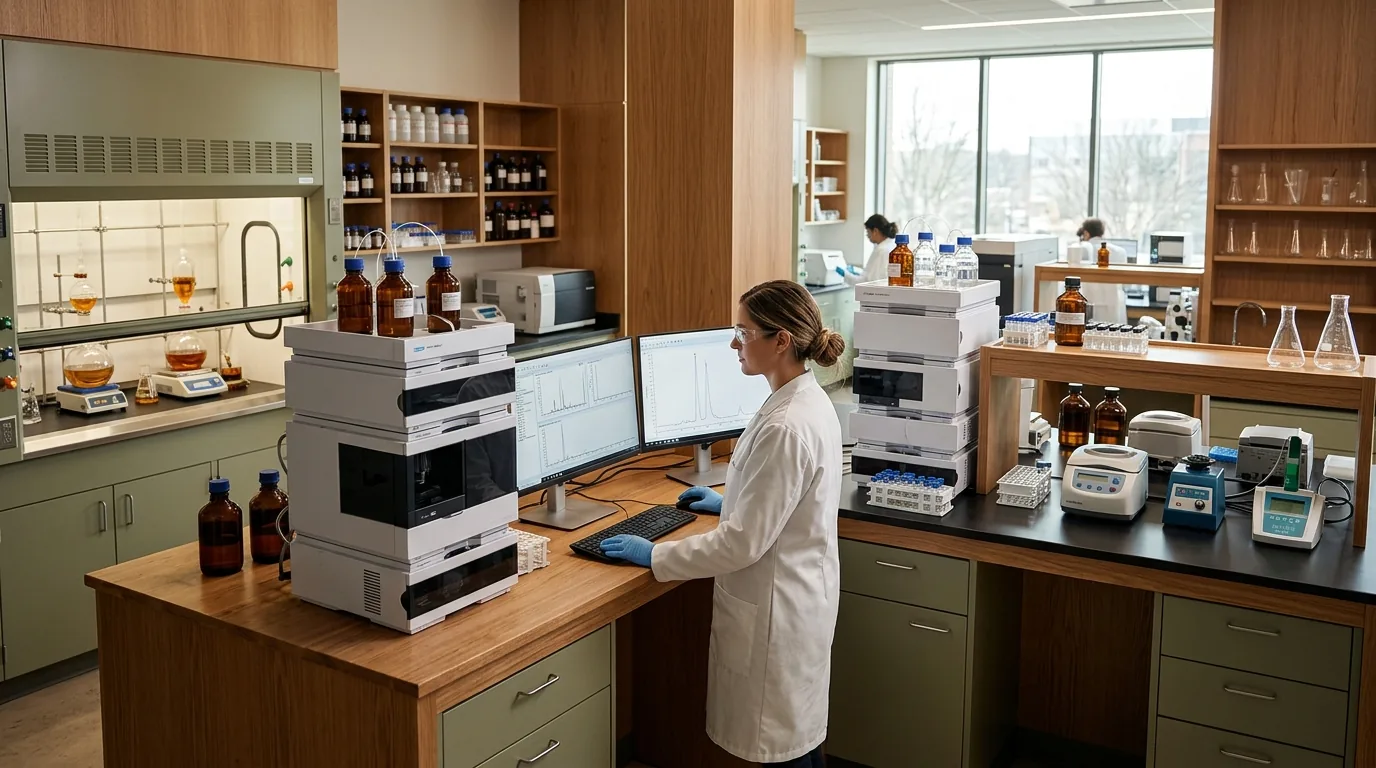
For laboratory research use only. Not for human consumption. This guide provides factual information about quality verification methods for research peptides. ChemVerify does not make claims about the safety or quality of peptides from any specific country of origin – quality varies by manufacturer, not by geography.
TL;DR: China produces the majority of the world's research peptides, but quality varies dramatically between manufacturers. This guide covers how to evaluate Chinese peptide suppliers using CoA verification, third-party testing, and supply chain transparency – helping researchers separate legitimate manufacturers from unreliable sources.
Last verified: March 2026 | Data accuracy confirmed by ChemVerify Editorial Team
Research Use Disclaimer
This guide is intended for laboratory researchers who need to verify the quality and identity of research peptide compounds regardless of origin. The verification methods described here apply universally to peptides from any manufacturer. China is discussed specifically because it represents the largest share of global peptide synthesis capacity, making quality verification particularly relevant for researchers sourcing from this region.
China as the Global Peptide Synthesis Hub
China has become the dominant global center for solid-phase peptide synthesis (SPPS) manufacturing. This position is driven by several factors:
- Scale of production infrastructure: Chinese peptide manufacturers operate large-scale SPPS facilities with automated synthesizers capable of producing hundreds of sequences simultaneously. This manufacturing capacity significantly exceeds that of any other single country.
- Raw material supply chains: China produces the majority of Fmoc-protected amino acid building blocks used in SPPS globally. Proximity to raw material suppliers reduces production costs and lead times.
- Cost efficiency: Lower labor and overhead costs enable Chinese manufacturers to offer research peptides at significantly lower price points than Western manufacturers. This price advantage makes Chinese-manufactured peptides the primary source for many research chemical vendors worldwide.
- Vendor supply chains: A substantial number of European, North American, and Australian research peptide vendors source their inventory from Chinese manufacturers, sometimes relabeling products under their own brand. This makes verification of actual manufacturing origin and quality particularly important.
The scale of Chinese peptide manufacturing means that quality varies widely between manufacturers. Some Chinese facilities operate under stringent quality management systems (ISO 9001, ISO 17025-adjacent protocols), while others may not maintain the same level of analytical quality control. This variance is the primary reason independent verification is essential.
Common Quality Concerns
The following quality concerns are most frequently identified during independent testing of research peptides, regardless of origin. These concerns are statistically more common when sourcing from manufacturers without robust quality management systems:
- Purity variance: The most common issue is a discrepancy between the purity stated on the Certificate of Analysis and the actual purity measured by independent HPLC analysis. Vendor COAs may state 98%+ purity while independent testing reveals actual purity of 90-95% or lower. Purity discrepancies can result from degradation during storage or shipping, use of less stringent analytical methods by the manufacturer, or intentional misrepresentation.
- Endotoxin contamination: Bacterial endotoxins (lipopolysaccharides) are a significant concern for research peptides, particularly those intended for cell culture or in vitro biological assays. Endotoxin contamination can confound experimental results by triggering immune response pathways. Contamination typically results from inadequate water purification systems, non-sterile manufacturing environments, or contaminated raw materials.
- Trifluoroacetic acid (TFA) content: TFA is used as a cleavage reagent and in HPLC mobile phases during peptide synthesis and purification. Residual TFA in the final product can affect biological assay results due to its acidic nature and potential cytotoxicity. Some manufacturers do not perform TFA salt exchange (to acetate or hydrochloride salts), leaving significant TFA content in the final product without disclosure.
- Heavy metal contamination: Trace heavy metals including lead, cadmium, arsenic, and mercury can be introduced during synthesis through contaminated reagents, reaction vessels, or water supply. Heavy metal contamination is a concern for any chemical manufacturing process and is not unique to peptide synthesis.
Independent COA Verification
The Certificate of Analysis provided by a vendor is only as reliable as the laboratory that produced it. Independent COA verification involves submitting a sample of the received peptide to an accredited third-party laboratory and comparing the results against the vendor-supplied COA.
- Step 1 – Retain a verification sample: Upon receiving a peptide shipment, set aside a portion (typically 1-5 mg) in a sealed, labeled vial for independent testing. Store under the recommended conditions (usually -20C with desiccant) until testing.
- Step 2 – Select an independent laboratory: Choose a laboratory with no financial relationship to the vendor. Accredited laboratories operating under ISO 17025 or equivalent quality systems provide the most reliable results. ChemVerify works with Janoshik Analytical and MZ Biolabs for independent verification.
- Step 3 – Request matching analytical methods: For a valid comparison, the independent laboratory should use analytical methods comparable to those stated on the vendor COA. If the vendor reports HPLC purity using C18 reversed-phase at 220 nm, the independent lab should use the same or equivalent methodology.
- Step 4 – Compare results: Evaluate the independent results against the vendor COA. Acceptable variance for HPLC purity is typically within 2-3% absolute. Larger discrepancies indicate potential quality issues with the batch or inaccurate vendor documentation.
HPLC Purity Cross-Referencing
High-Performance Liquid Chromatography (HPLC) is the standard method for assessing peptide purity. When cross-referencing HPLC results between vendor COAs and independent testing, researchers should evaluate the following parameters:
- Retention time: The retention time of the main peak should be consistent with the expected value for the peptide sequence under the stated chromatographic conditions. Significant shifts in retention time may indicate the wrong compound or a modified variant.
- Peak area percentage: The purity is typically reported as the percentage of the total peak area attributable to the main (target) peptide peak at 220 nm UV detection. Compare this value between the vendor COA and independent analysis.
- Impurity profile: Examine the chromatogram for impurity peaks. Deletion sequences (missing one or more amino acids from the target sequence) are common synthesis impurities and appear as peaks with slightly different retention times. A high number of impurity peaks or a single large impurity peak warrants further investigation.
- Chromatographic conditions: Ensure the vendor and independent lab used comparable columns (C18 or C4), gradient profiles, and detection wavelengths. Differences in method can explain minor variations in reported purity.
Endotoxin Testing (LAL Assay)
Endotoxin testing is performed using the Limulus Amebocyte Lysate (LAL) assay as described in USP <85>. This test detects bacterial endotoxins (lipopolysaccharides) that can contaminate peptide products during manufacturing.
- Why it matters: Endotoxins at concentrations as low as 0.1 EU/mL can activate immune pathways in cell-based assays, potentially confounding experimental results. For research involving cell culture, immune cells, or in vitro biological systems, endotoxin testing is essential.
- Acceptable limits: For research-grade peptides used in cell culture, a common threshold is less than 0.25 EU/mg of peptide. More stringent limits may apply depending on the specific research application.
- Testing methods: The three standard LAL methods are the gel-clot method (qualitative), the turbidimetric method (quantitative), and the chromogenic method (quantitative). The chromogenic kinetic method provides the most precise quantitative results.
- When to test: Endotoxin testing is recommended for any peptide batch intended for use in cell culture, immune cell assays, or other biological systems where endotoxin contamination could affect results. It is less critical for purely analytical applications such as method development or standard curve preparation.
Heavy Metal Screening (ICP-MS)
Inductively Coupled Plasma Mass Spectrometry (ICP-MS) is the standard method for quantifying trace heavy metal contamination in peptide products, as specified in ICH Q3D (Elemental Impurities) guidelines.
- Target elements: The primary elements of concern are lead (Pb), cadmium (Cd), arsenic (As), and mercury (Hg) – classified as Class 1 elemental impurities under ICH Q3D due to their toxicity. Additional elements including chromium, nickel, copper, and vanadium (Class 2A/2B) may also be screened.
- Permitted Daily Exposure (PDE): ICH Q3D establishes PDE limits for each element based on route of exposure. While these limits are designed for pharmaceutical products, they provide useful reference thresholds for assessing research peptide quality.
- When to test: Heavy metal screening is most important for peptide batches where the manufacturing process involves metal catalysts, when sourcing from facilities with unknown quality management systems, or when the peptide will be used in biological assays where metal contamination could interfere with results.
- Analytical considerations: ICP-MS requires acid digestion of the peptide sample before analysis. The detection limits for ICP-MS are typically in the parts-per-billion (ppb) range, providing sufficient sensitivity for detecting trace contamination.
TFA Content Analysis
Trifluoroacetic acid (TFA) is ubiquitous in peptide synthesis as a cleavage reagent for Fmoc-SPPS and as an ion-pairing agent in reversed-phase HPLC purification. Residual TFA in the final product is common and can affect research applications:
- TFA as counterion: After HPLC purification using TFA-containing mobile phases, the peptide product exists as a TFA salt. This means TFA is chemically associated with basic residues (Lys, Arg, His, N-terminus) and contributes to the total mass of the lyophilized product. TFA salt content can account for 10-30% of the total weight depending on the number of basic residues.
- Impact on research: Residual TFA can lower the pH of reconstituted solutions, affect cell viability in culture assays, and interfere with certain analytical techniques (especially NMR spectroscopy where TFA produces a strong fluorine signal).
- Salt exchange options: Vendors may offer acetate or hydrochloride salt forms as alternatives to TFA salts. These salt exchange processes add cost but may be necessary for specific research applications.
- Quantification: TFA content can be measured by ion chromatography, fluorine NMR (19F-NMR), or ion-pair HPLC. If TFA content is a concern for your research application, request TFA quantification as part of your independent testing protocol.
Red Flags in Vendor Documentation
When evaluating vendor-supplied documentation for research peptides, the following characteristics may indicate quality concerns:
- Generic or template COAs: Documents that appear identical across multiple batches or products, with only the product name changed, suggest the COA may not reflect actual batch-specific testing.
- Missing chromatograms: A COA that states HPLC purity but does not include the actual chromatogram trace prevents independent verification of the stated value. Reputable suppliers provide the full chromatogram with integration data.
- Absence of mass spectrometry data: Molecular weight confirmation by mass spectrometry (ESI-MS or MALDI-TOF) is standard practice for peptide identity verification. COAs lacking MS data do not provide sufficient evidence of compound identity.
- Rounded or uniform purity values: If multiple products or batches consistently show exactly 98.0% or 99.0% purity, this may indicate generic documentation rather than actual analytical measurement. Real HPLC measurements typically produce non-round values (e.g., 97.3%, 98.6%).
- No batch or lot number: The absence of a unique batch identifier makes it impossible to trace the product back to a specific manufacturing run and prevents meaningful quality complaints or investigations.
- Missing storage and handling information: Reputable suppliers include recommended storage conditions, reconstitution guidance, and stability information. Absence of this data suggests limited quality management.
ChemVerify Independent Verification
ChemVerify provides independent, third-party verification of research peptide quality through partnerships with accredited analytical laboratories. The verification process includes:
- Blind purchase and testing: Peptides are purchased anonymously through standard customer channels and submitted to independent laboratories without vendor knowledge.
- Multi-parameter analysis: Verification includes HPLC purity assessment, mass spectrometry identity confirmation, and additional testing (endotoxin, heavy metals) where appropriate.
- COA cross-referencing: Independent analytical results are compared against vendor-supplied COAs to assess documentation accuracy.
- Public reporting: Verification results are published on the ChemVerify platform, providing researchers with independent quality data to inform procurement decisions.
Use the ChemVerify vendor comparison tools and batch verification database to access independent quality data for peptides from vendors worldwide, including those sourcing from Chinese manufacturers.
Best Practices Summary
- Always request batch-specific COAs with HPLC chromatograms and mass spectrometry data before purchasing.
- Verify vendor COA claims through independent third-party testing for critical research applications.
- Request endotoxin testing (USP <85> LAL assay) for peptides intended for cell culture or biological assays.
- Consider heavy metal screening (ICP-MS per ICH Q3D) when sourcing from facilities with unknown quality management systems.
- Evaluate the counterion form (TFA, acetate, HCl) based on your specific research application requirements.
- Use ChemVerify verification tools to access independent quality data and compare vendors objectively.
Frequently Asked Questions
Are Chinese-manufactured peptides lower quality?
Not inherently. China hosts world-class peptide synthesis facilities alongside less rigorous operations. The key differentiator is verification – top Chinese manufacturers provide comprehensive CoAs, welcome third-party audits, and maintain GMP-compliant or ISO-certified production environments.
How can I verify a Chinese peptide supplier?
Request batch-specific CoAs with HPLC and MS data, ask for facility certifications (ISO 9001, GMP), check for published supply chain documentation, and submit samples to an independent testing lab. Legitimate manufacturers will readily provide this information.
What are common quality issues with budget peptide suppliers?
Frequent problems include lower-than-stated purity, incorrect sequences or truncated peptides, TFA salt content inflating apparent weight, residual solvents, and recycled or generic CoAs that do not correspond to the actual batch shipped.
Should I always use third-party testing for Chinese peptides?
For critical research applications, yes. Third-party testing by an independent analytical lab provides an unbiased assessment of purity, identity, and concentration. This is especially important when establishing a new supplier relationship or working on high-stakes experiments.
Further Reading on ChemVerify
- Read more: Peptide Vendor Red Flags: 15 Warning Signs of Unreliable Sources → https://www.chemverify.com/learn/peptide-vendor-red-flags-checklist
- Read more: Third-Party Peptide Testing Explained → https://www.chemverify.com/learn/third-party-peptide-testing-explained
- Read more: What Is COA Verification? A Complete Guide → https://www.chemverify.com/learn/what-is-coa-verification
- Read more: How to Verify Peptide Purity: A Practical Self-Check Guide → https://www.chemverify.com/learn/how-to-verify-peptide-purity-yourself
References
Compare Verified Vendors
Browse COA-verified suppliers with exclusive discount codes and transparent pricing.
Continue Reading
Research Peptide Regulations by Country: A Comparative Overview
Comparative overview of research peptide regulatory frameworks across the United States, European Union, United Kingdom, Australia, Canada, and other jurisdictions – import requirements, scheduling status, and research use classifications.
Peptide Vendor Red Flags: 15 Warning Signs of Unreliable Sources
15 warning signs that indicate an unreliable research peptide vendor – from fake COAs and stock photos to missing batch numbers and suspicious pricing patterns.
Third-Party Peptide Testing Explained
How independent laboratories verify peptide purity through RP-HPLC, mass spectrometry, and amino acid analysis – and why third-party testing is the research standard.
What Is COA Verification? A Complete Guide
Understanding Certificate of Analysis verification for research peptides – what COAs contain, how to authenticate them, and why independent verification matters.