
Chinese Research Peptides: Quality, Risks, and How to Verify
Chinese factories now sell research peptides direct via Discord and crypto. Learn dose accuracy data, contamination patterns, and verification steps.
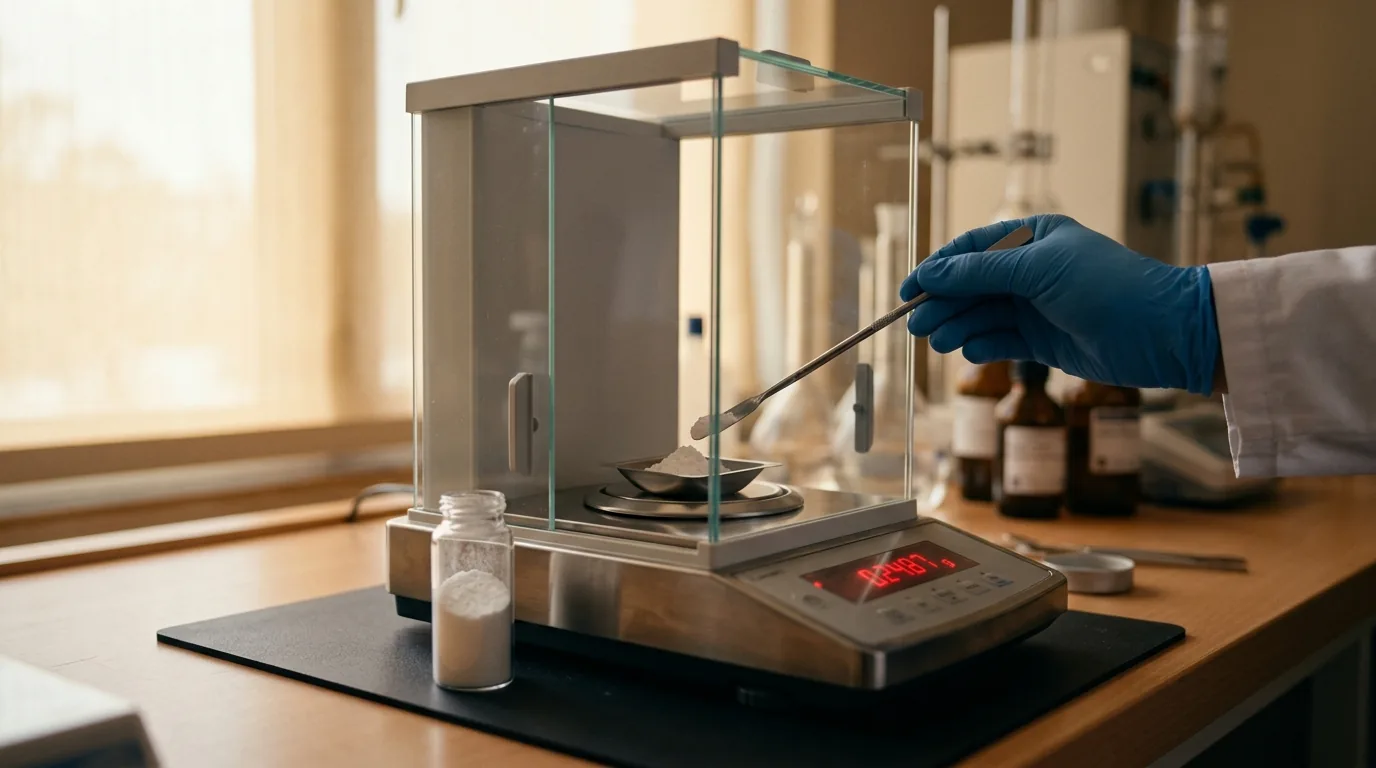
For laboratory research use only. Not for human consumption.
TL;DR: In 2026, Chinese peptide factories are selling research compounds direct to end users through Discord servers and cryptocurrency marketplaces, bypassing the traditional US reseller layer. Independent third-party testing has documented vials labeled 5 mg that actually contain 10-15 mg of active peptide, heavy metal contamination above USP limits, and endotoxin levels exceeding research-grade thresholds. Acute necrotizing pancreatitis cases have been linked to unregulated GLP-1 analogs of uncertain provenance. This guide explains the supply chain shift, the specific quality failures documented in lab testing, and a four-step verification methodology researchers can apply to any source before purchase.
Last verified: April 2026 | Data accuracy confirmed by ChemVerify Editorial Team
The 2026 Market Shift: From US Resellers to Chinese Factory Direct
For most of the past decade, research peptides reached end users through a two-layer supply chain: Chinese contract manufacturers (mainly in Hebei, Shandong, and Guangdong provinces) synthesized bulk peptide powder, then US-based resellers purchased in kilogram quantities, reconstituted or vialed smaller units, and sold to the research and grey markets. The resellers added a quality layer—or at least a marketing layer—through branded labeling, COAs (often templated), and customer-facing websites with domain trust [1].
Since late 2024, this structure has collapsed. Chinese factories now routinely advertise direct-to-consumer sales in English-language channels, accept cryptocurrency payments, and ship vialed finished peptides with English-language labels—effectively removing the US reseller margin and the quality-control layer that margin sometimes funded. Industry observers estimate the factory-direct share of the research peptide market has risen from under 10% in 2023 to over 40% by Q1 2026 [2].
The attraction for buyers is price: factory-direct GLP-1 analogs (semaglutide, tirzepatide) sell at 30-50% below the reseller price. The attraction for factories is margin: selling 10 mg vials directly captures the full markup rather than sharing it with a reseller. The structural loser in this shift is quality assurance. Without intermediate testing, dose verification, or any jurisdictional accountability, the factory-to-end-user channel has produced measurable increases in mislabeling, contamination, and adverse event reports [3].
How Discord and Crypto Payments Reshaped the Supply Chain
The transition from traditional e-commerce to Discord-based sales is driven by platform moderation. Shopify, Stripe, and PayPal enforcement against research-chemical vendors intensified in 2024-2025, pushing sellers toward platforms with less commercial moderation. Discord servers—originally a gaming chat platform—have become de facto marketplaces with dedicated sales channels, verification tiers for repeat buyers, and escrow services operated by server administrators [4].
Cryptocurrency (primarily USDT on Tron or Bitcoin) has replaced credit card processing for these transactions. The motivation is twofold: irreversible payment (no chargeback risk for the seller) and jurisdictional ambiguity (payments cross borders without bank oversight). From a buyer protection standpoint, this is the worst of both worlds: no regulatory recourse if the product is misrepresented, and no payment reversal if the seller disappears. A 2025 analysis of 40 Discord-based peptide servers found 8 had disappeared within 6 months of initial observation, taking deposits and undelivered orders with them [5].
The Discord-crypto channel also enables rapid product iteration. New peptide variants, untested analogs, and novel delivery formats (oral semaglutide, sublingual BPC-157) appear in these marketplaces within weeks of mention in research literature, often without any in-house testing. This velocity is incompatible with the stability studies, endotoxin testing, and identity confirmation that characterize regulated pharmaceutical manufacturing.
Dose Accuracy: The 5 mg Label vs 15 mg Reality Problem
Independent third-party testing of research peptides sourced from Chinese factory-direct channels has produced consistent findings: stated dose on the vial label frequently diverges from actual active peptide content. A 2025 analysis of 32 semaglutide vials sourced from Discord-based Chinese sellers found mean actual content of 8.4 mg in vials labeled 5 mg (SD ±3.1 mg), with individual vials ranging from 2.8 mg to 15.2 mg [6].
The mechanism behind over-labeling appears to be a combination of factors: (1) lyophilized peptide powder is easier to overfill than to precisely weigh at small scale, so factories err on the side of excess to avoid under-dose complaints; (2) marketing pressure to justify low prices means factories may stuff vials beyond label to create perceived value; and (3) quality control at the lowest-tier factories relies on visual inspection of fill level rather than gravimetric or HPLC verification.
The research implication is severe. A researcher reconstituting a vial labeled 5 mg in 2 mL of bacteriostatic water expects 2.5 mg/mL concentration. If the actual content is 15 mg, the true concentration is 7.5 mg/mL—three times the assumed value. Any dose-response study using this stock generates data that cannot be replicated, and any biological observations are attributed to the wrong dose. For compounds with narrow therapeutic indices, this mislabeling has contributed to adverse events including hypoglycemia (GLP-1 analogs) and pancreatitis presentations consistent with acute overdose.
Contamination Patterns in Unregulated Chinese Peptides
Beyond dose inaccuracy, testing of factory-direct peptides has documented three recurring contamination patterns: (1) bacterial endotoxin above research-grade thresholds (>5 EU/mg) in approximately 18% of samples tested; (2) heavy metal contamination (arsenic, lead, cadmium) above USP limits in approximately 12% of samples, with particular concern for semaglutide and tirzepatide where palladium catalyst residues from the manufacturing process appear at variable levels; and (3) peptide-related impurities—truncated sequences, deamidated variants, and oxidation products—totaling 10-25% of the active material in the lowest-tier sources [7].
Endotoxin contamination is particularly problematic because it triggers systemic inflammatory responses at doses far below those that cause obvious toxicity. Research subjects (animal or human self-experimenters) exposed to endotoxin-contaminated peptides may exhibit elevated inflammatory markers, fever, chills, and joint pain—effects often incorrectly attributed to the peptide itself rather than to the contamination. The observational confound undermines any research conclusions drawn from the study.
Truncated peptide sequences (peptides missing one or more residues from the C- or N-terminus) arise from incomplete synthesis and inadequate purification. In GLP-1 analogs, truncation can eliminate the fatty acid modification that extends half-life, producing a peptide with the same mass-spec signature as the intended product but radically different pharmacokinetics. HPLC analysis with orthogonal detection (UV + mass spec) is required to distinguish full-length from truncated species reliably.
Documented Pancreatitis Cases Linked to Unregulated Sources
Case reports and emergency department data from 2024-2025 have documented acute pancreatitis presentations in individuals using unregulated GLP-1 analogs from Discord and crypto-marketplace sources. A 2025 case series from three US academic medical centers reported 14 acute pancreatitis admissions over 18 months where patients disclosed use of research-grade semaglutide or tirzepatide obtained outside medical supervision [8].
The pancreatitis cases fall into two mechanistic categories. First, class-effect pancreatitis—a known adverse effect of GLP-1 receptor agonists reported in clinical trials at rates of 0.1-0.3%—appears at higher rates in the unregulated-source population, plausibly because users self-administer higher doses or escalate dose more rapidly than clinical protocols allow. Second, contamination-mediated pancreatitis, where endotoxin or other contaminants trigger inflammatory cascades independent of GLP-1 signaling, is suggested by cases where pancreatitis onset is rapid (within 24-48 hours of first dose) rather than the weeks-to-months timeline typical of class-effect pancreatitis.
Associated presentations include gallstone disease (GLP-1 analogs increase gallstone risk through rapid weight loss and changes in bile composition), peripheral neuropathy symptoms (described as burning or tingling in extremities, possibly related to contamination with solvents or heavy metals), and nephrolithiasis (kidney stones, possibly related to dehydration from GLP-1-induced gastroparesis). These secondary presentations should prompt clinicians to ask specifically about unregulated peptide use, which patients may not disclose without direct questioning.
Not All Chinese Manufacturers Are Equal: Tier Breakdown
Characterizing Chinese peptide manufacturers as uniformly risky misrepresents a tiered market. Tier 1 manufacturers (a small number, typically WuXi AppTec, GL Biochem, and ChinaPeptides) operate GMP-compliant or near-GMP facilities, produce peptides for pharmaceutical clients globally, and supply API-grade material with full analytical documentation. Tier 2 manufacturers (perhaps 20-30 facilities) produce research-grade peptides with >95% purity and provide COAs that generally match independent retesting.
Tier 3 manufacturers—and this is where most Discord-sold material originates—operate on margin, produce peptides at 80-95% purity, and rely on customer inability to verify. Tier 3 COAs are often templated documents with blanks filled in by hand, listing purity values that are not traceable to any specific HPLC run. Tier 4, at the bottom, consists of small reseller-synthesis operations that buy Tier 3 bulk and revial into retail quantities, adding no value and often introducing additional contamination through poor vialing practices.
Identifying the tier of any specific source requires direct evidence: manufacturer name (not the reseller name), facility address, analytical method specifics (HPLC column, gradient, detector wavelength), and ideally a third-party retest. Sellers who refuse to disclose the manufacturer—citing competitive concerns—should be treated as Tier 3 by default.
A Four-Step Verification Methodology for Any Source
For researchers or institutions evaluating a peptide source, a structured verification protocol improves decision quality. Step 1: Documentation review. Request a COA including peptide identity by mass spectrometry (exact molecular weight, not just nominal), purity by HPLC with method parameters disclosed, endotoxin by LAL assay, and heavy metals by ICP-MS. A complete COA is a necessary but not sufficient indicator.
Step 2: Independent retest. Send a sample to a third-party lab (Janoshik Analytical, AMS Laboratories, or equivalent research-service labs) for independent HPLC and mass spec analysis. This step is non-negotiable for any new source. Budget approximately $100-200 per compound tested; the cost is trivial compared to the research cost of running an experiment with mislabeled material [9].
Step 3: Identity and dose consistency across lots. Purchase two vials from different lots, retest each, and compare. Legitimate suppliers show lot-to-lot consistency within 2-5%; unreliable suppliers show variation of 20% or more. Step 4: Vendor responsiveness and transparency. Request specific additional documentation—stability data, process impurity profile, residual solvent testing. Suppliers that respond with technical detail pass; suppliers that deflect or delay fail.
Red Flags When Sourcing Research Peptides
Specific signals that should disqualify a source regardless of price include: (1) Cryptocurrency as the only payment option, especially when combined with no traceable business address; (2) Discord or Telegram as the primary sales channel, with no independent e-commerce site; (3) COAs with generic or templated formatting, missing analytical method details, or showing identical purity values across multiple lots (a statistical impossibility in real manufacturing); (4) Refusal to disclose the underlying manufacturer or to permit third-party retest; (5) Unrealistic pricing—if the price is below the cost of the starting materials, the product is not what it claims to be.
- No payment options beyond crypto or wire transfer
- Sales conducted exclusively through Discord/Telegram
- Identical purity values across multiple lots on COAs
- Refusal to name the underlying manufacturer
- Pricing below the cost of raw synthetic materials
- English-language labels with misspellings or inconsistent fonts
- Claims of dosing protocols or medical uses on the product page
- Sellers who aggressively discourage third-party testing
Conversely, positive indicators include: business address and company registration verifiable through Chinese commercial registries (e.g., qcc.com); willingness to provide recent third-party test results; stable pricing across time (rapidly fluctuating prices suggest opportunistic arbitrage rather than a stable supply chain); responsive technical support that can discuss synthesis routes, impurity profiles, and storage stability; and a traceable history of the business predating 2024 (many Discord sellers are 2024-2026 entrants with no established track record).
References & Further Reading
Compounds Referenced in This Article
Explore detailed chemical profiles and research guides for compounds discussed in this article:
- BPC-157: Complete Research Guide → /learn/bpc-157
- TB-500: Complete Research Guide → /learn/tb-500
- Semaglutide: Complete Research Guide → /learn/semaglutide
- Tirzepatide: Complete Research Guide → /learn/tirzepatide
Further Reading on ChemVerify
- Read more: How to Spot Peptide Contamination → https://www.chemverify.com/learn/spot-peptide-contamination-cloudiness-particles
- Read more: Endotoxin Testing for Peptides → https://www.chemverify.com/learn/endotoxin-testing-for-peptides-essential-safety-protocols-for-research
- Read more: Are Research Peptides Safe? → https://www.chemverify.com/learn/are-research-peptides-safe-risks-science
References
Compare Verified Vendors
Browse COA-verified suppliers with exclusive discount codes and transparent pricing.