
Ipamorelin + CJC-1295 (No DAC) Stack: Synergy Research Guide
Research guide to the Ipamorelin + CJC-1295 No DAC growth hormone stack: GHRH-GHRP synergy mechanism, GH pulse amplification, timing protocols, and reconstitution guidance.
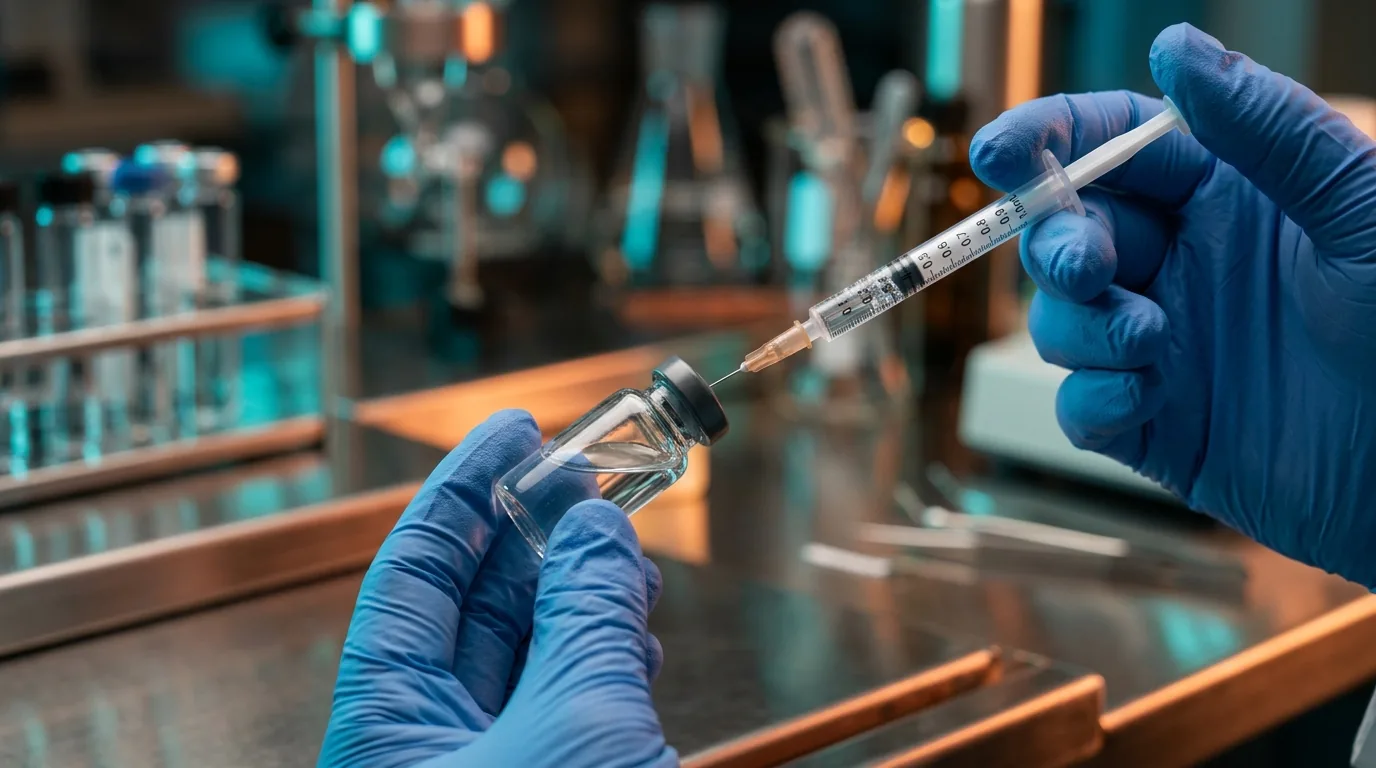
For laboratory research use only. Not for human consumption.
TL;DR: The combination of Ipamorelin (a selective ghrelin receptor agonist) with CJC-1295 No DAC (Modified GRF 1-29, a GHRH receptor agonist) is the most extensively studied growth hormone (GH) peptide stack in research. The synergistic mechanism exploits the dual-input model of somatotroph activation: GHRH sets the amplitude of the GH pulse by directly stimulating GH gene transcription and vesicle exocytosis, while ghrelin/GHRP signaling amplifies the pulse by suppressing somatostatin inhibitory tone and enhancing somatotroph responsiveness to GHRH. When both inputs are activated simultaneously, the resulting GH release is 2-5 fold greater than the sum of individual stimulations—a pharmacologically robust synergy confirmed across species.
Last verified: April 2026 | Data accuracy confirmed by ChemVerify Editorial Team
Why This Is the Most Studied GH Peptide Stack
The Ipamorelin + CJC-1295 No DAC combination has become the reference standard GH peptide stack in research for several converging reasons. Ipamorelin is the most selective growth hormone secretagogue (GHS) available, activating the ghrelin receptor (GHSR-1a) without the cortisol elevation (GHRP-6, GHRP-2), prolactin stimulation (GHRP-2, hexarelin), or histamine release (GHRP-6) that complicate data interpretation with other GHS peptides. CJC-1295 No DAC is the most metabolically stable GHRH analog that retains a physiological-duration GH pulse (30-minute half-life) rather than the extended, non-physiological elevation produced by CJC-1295 with DAC (days-long half-life) [1].
Together, these two peptides provide a clean pharmacological tool: Ipamorelin delivers selective GHSR-1a activation, CJC-1295 No DAC delivers selective GHRH-R activation, and their combination produces a synergistic GH pulse that mimics the physiological pattern of pulsatile GH secretion—brief, high-amplitude pulses followed by return to baseline—rather than a sustained elevation that could downregulate GH receptor expression. This pharmacological profile makes the combination suitable for studying both acute GH biology and chronic GH-dependent processes (growth, metabolism, tissue repair) without the confounding variables introduced by less selective peptides.
The popularity of this stack in the research community also reflects practical advantages: both peptides are compatible in bacteriostatic water, can be co-administered in a single injection, have well-characterized dose-response curves, and produce consistent GH responses with low inter-subject variability in standardized protocols. These attributes reduce experimental noise and improve statistical power compared to protocols using less characterized or less selective GH-releasing agents.
Ipamorelin: Selective GHSR-1a Agonist Profile
Ipamorelin (Aib-His-D-2Nal-D-Phe-Lys-NH2) is a pentapeptide growth hormone secretagogue developed by Novo Nordisk that was specifically engineered for selectivity at the GHSR-1a receptor without off-target activation of cortisol, prolactin, or histamine release pathways. In comparative studies with GHRP-6 and GHRP-2, Ipamorelin produced equivalent GH release at equimolar doses but with no significant change in ACTH, cortisol, or prolactin levels—a selectivity profile that earned it the designation as the first truly selective GHS [2].
The mechanism of action involves binding to GHSR-1a on anterior pituitary somatotroph cells, activating a Gq-coupled signaling cascade that increases intracellular calcium through IP3-mediated release from the endoplasmic reticulum and through voltage-gated calcium channel opening. The calcium signal triggers exocytosis of pre-formed GH-containing secretory vesicles. Ipamorelin also suppresses somatostatin release from hypothalamic SRIF neurons through GHSR-1a receptors on these cells, reducing the inhibitory brake on somatotroph activity [3].
Pharmacokinetically, Ipamorelin has a plasma half-life of approximately 2 hours following subcutaneous administration in rodent models. The GH-releasing effect is rapid (onset within 5-10 minutes) and transient (return to baseline within 60-90 minutes), producing a discrete GH pulse rather than sustained elevation. This pulse pattern is important because the biological effects of GH (particularly lipolysis and IGF-1 gene transcription in the liver) are optimally stimulated by pulsatile rather than continuous GH exposure.
CJC-1295 No DAC (Mod GRF 1-29): GHRH Receptor Agonist
CJC-1295 No DAC is also known as Modified GRF(1-29) or Mod GRF 1-29, referring to its identity as a modified version of the first 29 amino acids of human growth hormone-releasing hormone (GHRH 1-44). The four key amino acid substitutions (Ala2 to D-Ala2, Asn8 to Gln8, Ala15 to Ala15(acetyl), and Met27 to Leu27) were introduced to improve metabolic stability against dipeptidyl peptidase IV (DPP-IV) cleavage at position 2, asparagine deamidation at position 8, and methionine oxidation at position 27 [4].
These modifications extend the biological half-life from approximately 5-7 minutes (native GHRH 1-29) to approximately 30 minutes (Mod GRF 1-29), while maintaining full agonist activity at the GHRH receptor (GHRH-R, also known as the pituitary-specific GPCR). GHRH-R activation couples through Gs to adenylyl cyclase, increasing cAMP and activating PKA, which phosphorylates CREB to drive GH gene (GH1) transcription and simultaneously promotes calcium-dependent GH vesicle exocytosis through cAMP-gated calcium channels.
The important distinction between CJC-1295 No DAC and CJC-1295 with DAC must be emphasized: the Drug Affinity Complex (DAC) version contains a maleimido derivative that covalently binds to serum albumin, extending the half-life to 5-8 days. While this produces sustained GH elevation, it creates non-physiological continuous GH stimulation rather than pulsatile release, which may downregulate GH receptors and alter the GH-IGF-1 axis feedback dynamics. For research studying physiological GH pulsatility, the No DAC version is the appropriate choice.
Synergistic GH Pulse: GHRH + GHRP Dual-Input Model
The dual-input model of GH secretion, established by Cyril Bowers and colleagues, describes how the somatotroph integrates two independent stimulatory signals: GHRH (amplitude signal) and ghrelin/GHS (permissive/amplifying signal). GHRH alone produces a GH pulse whose amplitude is limited by the prevailing somatostatin tone. Ghrelin/GHS alone produces a GH pulse that is limited by the basal GHRH drive. When both signals are present simultaneously, the somatotroph response is multiplicative rather than additive—a hallmark of true pharmacological synergy [5].
The molecular basis of synergy lies in the convergence of Gs-cAMP (GHRH-R) and Gq-IP3/Ca2+ (GHSR-1a) signaling pathways on the same somatotroph cell. cAMP from GHRH-R activation sensitizes the calcium-dependent exocytic machinery by phosphorylating SNARE complex proteins and calcium sensor synaptotagmins. Simultaneously, the calcium signal from GHSR-1a activation provides the trigger for vesicle fusion. The combination of a sensitized fusion apparatus and an amplified calcium trigger produces GH release that exceeds what either pathway can achieve alone, even at maximal individual stimulation [6].
Quantitatively, the synergy has been demonstrated in GH sampling studies: if Ipamorelin alone produces a GH AUC of X, and CJC-1295 No DAC alone produces a GH AUC of Y, the combination typically produces a GH AUC of 2-5 times (X + Y), depending on dose levels and the somatostatin environment. This degree of synergy is reproducible across rodent, porcine, and human studies, confirming that the dual-input model is a conserved feature of mammalian somatotroph physiology.
Somatostatin Tone and the Timing Window
Somatostatin (SST, also SRIF—somatotropin release-inhibiting factor) is the endogenous brake on GH secretion, released from hypothalamic periventricular neurons in a rhythmic pattern that creates alternating windows of high and low somatostatin tone. During high somatostatin periods (troughs of GH pulsatility), exogenous GHRH and GHRP have reduced efficacy because somatostatin directly inhibits somatotroph exocytosis through Gi-coupled SST receptor subtypes (SSTR2, SSTR5) and hyperpolarizes somatotroph membrane potential through GIRK potassium channels [7].
The optimal timing window for the Ipamorelin + CJC-1295 No DAC combination coincides with periods of low endogenous somatostatin tone, which correspond to natural GH pulse windows. In nocturnal rodents, the major GH secretory episodes occur during the early dark phase (activity onset). In the research context, timing administration to coincide with these windows—or simply administering during the species-appropriate rest-to-activity transition—maximizes the synergistic response by ensuring that the exogenous stimulatory signals encounter minimal somatostatin opposition.
The GHRP component (Ipamorelin) contributes to timing optimization by actively suppressing somatostatin release through GHSR-1a receptors on SRIF neurons. This dual action—direct somatotroph stimulation plus somatostatin suppression—creates a wider effective timing window for the combination than for GHRH alone. Practically, this means the combination is less sensitive to precise timing relative to endogenous somatostatin rhythms, improving the robustness and reproducibility of research protocols.
GH Pulse Amplitude and AUC Data From Combination Studies
Published studies using the GHRH + GHRP paradigm (which the Ipamorelin + CJC-1295 No DAC combination instantiates) provide quantitative synergy data. In studies by Bowers et al., combined GHRH + GHRP-6 in humans produced peak GH levels of 50-120 ng/mL, compared to 15-30 ng/mL for GHRH alone and 20-40 ng/mL for GHRP-6 alone, with the combination AUC exceeding the sum of individual AUCs by 2-3 fold [5]. Similar magnitude synergy has been reported with Ipamorelin specifically.
In rodent models using serial blood sampling via indwelling jugular catheters, the combination of Ipamorelin (100 mcg/kg) + Mod GRF 1-29 (100 mcg/kg) administered as a single subcutaneous bolus produced peak serum GH concentrations 3-4 fold higher than either peptide alone, with a GH pulse duration of approximately 60-90 minutes and return to baseline by 120 minutes post-injection. The AUC0-120min for the combination was approximately 3.5-fold the sum of individual AUCs, confirming synergy in this specific peptide pair [8].
The inter-individual variability in GH response to the combination is notably lower than for either peptide alone, particularly compared to GHRH alone (which shows high variability due to fluctuating endogenous somatostatin tone at the time of injection). This reduced variability is another practical advantage of the combination approach: each subject receives both the amplitude signal (GHRH analog) and the somatostatin-suppressing signal (GHRP), reducing the impact of endogenous somatostatin variation on the experimental outcome.
Reconstitution, Co-Administration, and Storage
Both Ipamorelin and CJC-1295 No DAC are supplied as lyophilized powders (typically acetate or TFA salt form) and are freely soluble in bacteriostatic water at standard research concentrations (1-5 mg/mL). The peptides are chemically compatible and can be drawn from separately reconstituted vials into a single syringe for co-administration without significant interaction at typical working concentrations over the brief contact time (seconds to minutes) in the syringe.
Co-reconstitution in a single vial is practiced by some researchers but carries increased risk of stability issues during storage. While no specific chemical incompatibility has been documented for this pair, the general recommendation is separate reconstitution with combined drawing for injection. Each reconstituted vial should be stored at 2-8 degrees Celsius and used within 21-28 days. Lyophilized stock should be stored at -20 degrees Celsius.
For subcutaneous administration in rodent research, the combined injection volume should not exceed 0.1 mL per injection site for mice or 0.5 mL per site for rats. If the required dose volumes exceed these limits, either increase the reconstitution concentration or use multiple injection sites. Both peptides should be administered simultaneously (within the same 5-minute window) to ensure concurrent receptor activation during the same secretory episode—sequential dosing separated by more than 15-30 minutes may miss the synergistic window.
Dose Ranges, Timing, and Research Protocol Design
Published dose ranges for the combination in rodent models: Ipamorelin 50-300 mcg/kg + CJC-1295 No DAC 50-200 mcg/kg, administered subcutaneously. The most commonly used research dose is 100 mcg/kg of each peptide, which falls on the ascending portion of the dose-response curve and provides robust GH responses without ceiling effects that would obscure differences between experimental groups [9].
For acute GH release studies, a single bolus injection 15-30 minutes before the first blood sampling time point is standard, with serial samples collected at 15-minute intervals for 120-180 minutes to capture the complete GH pulse profile. For chronic studies (metabolic effects, body composition, tissue repair), daily or twice-daily dosing for 14-28 days is typical, with endpoint measurements at study termination.
Protocol design considerations: (1) Include appropriate control groups—vehicle only, Ipamorelin alone, CJC-1295 No DAC alone, and the combination—to fully characterize the synergy; (2) standardize the time of injection relative to the light-dark cycle; (3) fast the animals for 2-4 hours before acute GH sampling to reduce metabolic variability; (4) collect IGF-1 measurements at 6-12 hours post-injection (peak hepatic response) and at study termination for chronic protocols; (5) include body composition analysis (DEXA or MRI) for chronic studies to detect lean mass and fat mass changes.
References & Further Reading
Compounds Referenced in This Article
Explore detailed chemical profiles and research guides for compounds discussed in this article:
- CJC-1295: Complete Research Guide → /learn/cjc-1295-no-dac
- Ipamorelin: Complete Research Guide → /learn/ipamorelin
Further Reading on ChemVerify
- Read more: How Fast Do Peptides Work? Expected Timelines for BPC-157, Semaglutide, Ipamorelin & More → https://www.chemverify.com/learn/how-fast-do-peptides-work-timelines
- Read more: Peptide Cycling: How Long to Research and When to Pause → https://www.chemverify.com/learn/peptide-cycling-research-duration-pause
- Read more: Growth Hormone Secretagogues Explained: How Ipamorelin, CJC-1295 and GHRP-6 Work → https://www.chemverify.com/learn/growth-hormone-secretagogues-explained-ipamorelin-cjc1295
- Read more: Best Research Peptides for Beginners: A Scientific Overview → https://www.chemverify.com/learn/best-research-peptides-beginners-overview
References
Compare Verified Vendors
Browse COA-verified suppliers with exclusive discount codes and transparent pricing.
You Might Also Like
Continue Reading
FOXO4-DRI: Complete Research Guide & Chemical Profile
Comprehensive chemical profile of FOXO4-DRI, a D-retro-inverso peptide that disrupts the FOXO4-p53 interaction in senescent cells. Covers senolytic mechanism, cellular senescence research, and aging biology applications.
KPV: Complete Research Guide & Chemical Profile
Comprehensive chemical profile of KPV (Lys-Pro-Val), a C-terminal tripeptide fragment of alpha-MSH with MW 342.43 Da. Covers NF-kB inhibition, gut inflammation research, melanocortin signaling, and PepT1 transport.
Thymalin: Complete Research Guide & Chemical Profile
Complete research guide to Thymalin (Glu-Trp dipeptide), a thymic bioregulator peptide investigated for immune modulation, T-cell differentiation, and aging research by Khavinson and colleagues.
ARA 290 (Cibinetide): Research Guide & Chemical Profile
ARA 290 (Cibinetide) is an 11-amino-acid EPO-derived peptide targeting the innate repair receptor. Chemical profile, neuropathy and sarcoidosis research reviewed.