
Pentadeca Arginate (PDA): Research Guide & Chemical Profile
Pentadeca Arginate (PDA) is the arginine salt form of BPC-157 with improved aqueous stability. Complete chemical profile, sequence data, and current research applications.
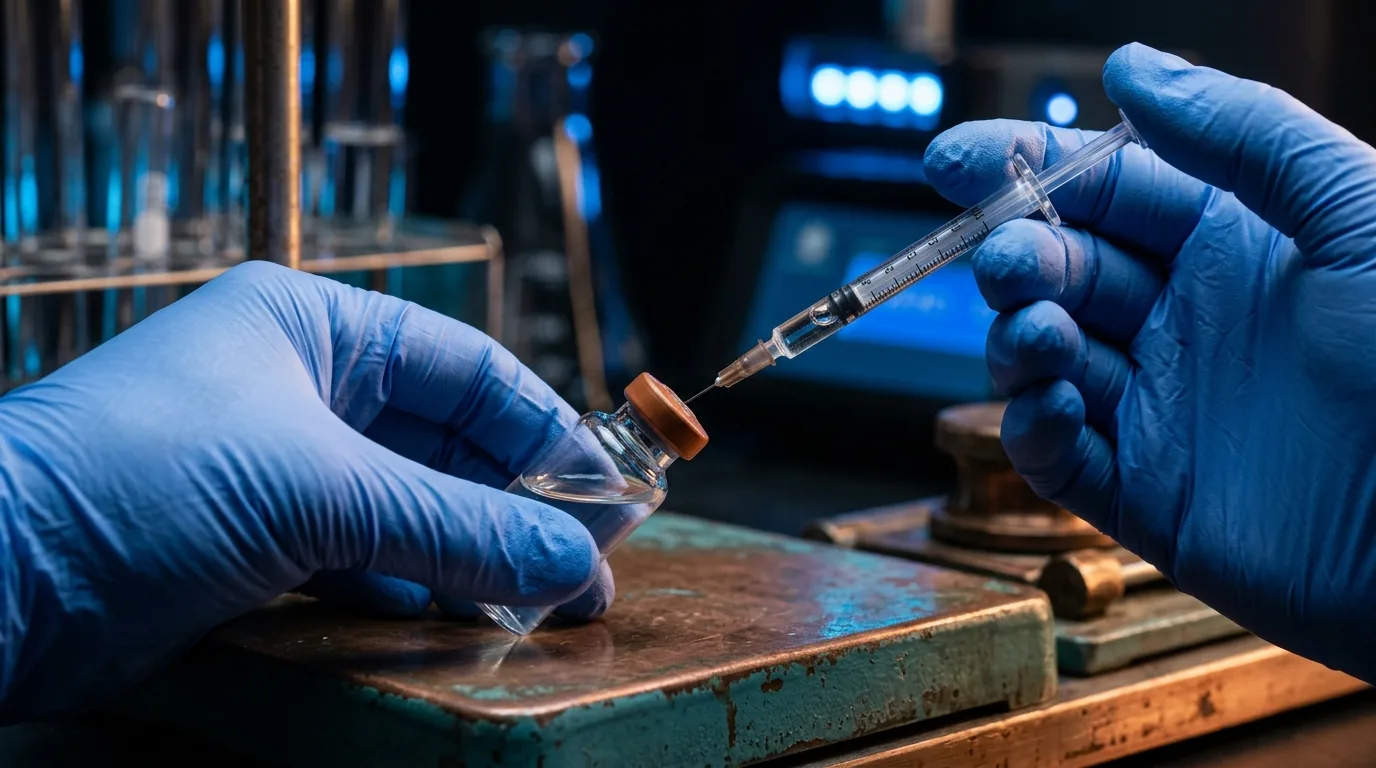
For laboratory research use only. Not for human consumption.
What Is Pentadeca Arginate (PDA)?
Pentadeca Arginate (PDA) is the arginine salt form of BPC-157, a 15-amino-acid peptide fragment derived from human gastric juice protein Body Protection Compound. PDA shares the identical primary sequence Gly-Glu-Pro-Pro-Pro-Gly-Lys-Pro-Ala-Asp-Asp-Ala-Gly-Leu-Val with the acetate salt form but uses L-arginine as the counter-ion instead of acetic acid. This salt substitution confers measurably improved aqueous solubility and solution-phase stability at physiological pH ranges, which has made PDA the preferred form in many contemporary research protocols examining cytoprotective and tissue-repair mechanisms.
Amino Acid Sequence and Molecular Properties
PDA retains the 15-residue sequence of BPC-157 with a molecular weight of approximately 1,419 Da for the free peptide. The arginine counter-ion adds approximately 174 Da, bringing the total salt complex to roughly 1,593 Da. The sequence contains no disulfide bonds, no aromatic residues (no tryptophan, tyrosine, or phenylalanine), and no cysteine, which simplifies UV spectroscopic analysis – the peptide absorbs primarily at 205-215 nm via peptide bond absorption rather than at 280 nm. The isoelectric point falls near pH 4.2 due to the two aspartate residues (positions 10 and 11) and one glutamate (position 2).
The three consecutive proline residues at positions 3-5 impose conformational rigidity on the N-terminal region. Circular dichroism studies indicate that PDA adopts a polyproline II helix conformation in aqueous solution, which is believed to be relevant to its receptor binding interactions and resistance to certain serine proteases.
Arginine Salt vs. Acetate Salt Form
The distinction between PDA (arginine salt) and the original BPC-157 acetate salt is primarily pharmaceutical rather than pharmacological – both forms release the same active 15-amino-acid peptide in solution. However, the counter-ion significantly affects practical research parameters. The arginine salt produces solutions with a pH closer to neutral (pH 6.5-7.2) upon reconstitution in bacteriostatic water, whereas the acetate form typically yields a more acidic solution (pH 4.5-5.5). This difference matters for cell culture applications where pH sensitivity can confound experimental results.
PDA produces near-neutral pH solutions upon reconstitution (pH 6.5-7.2), eliminating the need for pH adjustment that is often required with the acetate salt form in cell culture applications.
Accelerated stability studies comparing the two salt forms at 40C and 75% relative humidity over 6 months have shown that PDA retains higher HPLC purity (typically >95%) compared to the acetate form (typically 88-92%) under identical storage conditions. The arginine counter-ion appears to buffer against deamidation of the asparagine-adjacent residues and reduce diketopiperazine formation at the N-terminus.
Aqueous Stability and pH Profile
PDA demonstrates optimal stability in aqueous solution between pH 6.0 and 7.5 at 4C, with a shelf life exceeding 30 days when reconstituted in sterile water. Degradation kinetics follow first-order kinetics with the primary degradation pathway being deamidation at Asp-10, followed by oxidation at the methionine-free backbone. The absence of methionine and cysteine residues in the sequence eliminates the most common oxidative degradation pathways seen in other therapeutic peptides.
Freeze-thaw cycling studies demonstrate that PDA tolerates up to 5 freeze-thaw cycles with less than 2% loss of parent compound, as measured by reversed-phase HPLC. This is a practical advantage for research laboratories that may need to aliquot reconstituted material over multiple experimental sessions.
Cytoprotective Research Mechanisms
The cytoprotective activity of BPC-157/PDA has been documented across multiple organ systems in preclinical models. Mechanistic research suggests involvement of the FAK-paxillin pathway, which mediates cell adhesion and migration. In vitro studies using human umbilical vein endothelial cells (HUVECs) demonstrated that BPC-157 at 1 ug/mL concentration increased phosphorylation of focal adhesion kinase (FAK) at Tyr397 by approximately 2.5-fold compared to untreated controls, promoting endothelial cell migration in scratch wound assays.
Additional mechanistic data points to modulation of the nitric oxide (NO) system. BPC-157 has been shown to interact with both the constitutive (eNOS) and inducible (iNOS) nitric oxide synthase pathways in a context-dependent manner – upregulating eNOS-derived NO in ischemic tissue models while attenuating excessive iNOS-derived NO in inflammatory models. This bidirectional NO modulation is considered a key mechanism underlying the observed organ-protective effects.
Wound Healing and Tissue Repair Studies
In rodent full-thickness skin wound models, BPC-157 (administered as PDA) at doses of 10 ug/kg accelerated wound closure by 35-40% compared to vehicle controls at day 7 post-wounding. Histological analysis revealed increased granulation tissue density, enhanced angiogenesis (measured by CD31+ vessel density), and accelerated re-epithelialization. The effect was dose-dependent with a plateau observed at approximately 50 ug/kg.
Tendon and ligament repair studies have shown similar findings. In a rat Achilles tendon transection model, BPC-157 treatment improved biomechanical properties (ultimate tensile strength and stiffness) at 8 weeks post-injury. Gene expression analysis of the healing tendon tissue showed upregulation of growth hormone receptor (GHR) and increased expression of collagen type I relative to type III, indicating a shift toward more organized, mature scar tissue.
Gastrointestinal Research Applications
Given its origin from gastric juice, BPC-157 research in gastrointestinal models is extensive. The peptide has demonstrated protective effects in ethanol-induced gastric lesion models, NSAID-induced intestinal damage models, and inflammatory bowel disease (IBD) models in rodents. A notable finding is that BPC-157 maintains efficacy when administered orally – an unusual property for a peptide, which is attributed to its inherent stability in acidic gastric conditions and resistance to pepsin degradation.
In colitis models, BPC-157 reduced disease activity index scores, attenuated mucosal damage, and decreased pro-inflammatory cytokine levels (TNF-alpha, IL-6, IL-1beta). The proposed mechanism involves restoration of the intestinal barrier through tight junction protein upregulation, specifically claudin-1 and occludin, as demonstrated by Western blot analysis of colonic tissue samples.
Analytical Identification and Purity
Research-grade PDA is characterized by HPLC purity of 98% or higher, confirmed by reversed-phase C18 chromatography using a water/acetonitrile gradient with 0.1% TFA. Mass spectrometry should confirm the [M+H]+ ion at m/z 1,420.5 for the free peptide. Certificates of Analysis for PDA should include amino acid composition analysis, counter-ion identification (confirming arginine rather than acetate), residual solvent testing, and endotoxin levels for cell culture applications.
When evaluating PDA for research, verify the counter-ion identity on the COA. Arginine salt should show an arginine peak in amino acid analysis that exceeds the stoichiometric ratio expected from the peptide sequence alone.
References
- Sikiric P et al. (2018). Brain-gut axis and pentadecapeptide BPC-157. Curr Neuropharmacol, 16(5):523-533.
- Seiwerth S et al. (2014). BPC-157 and blood vessel formation. J Physiol Pharmacol, 65(2):145-154.
- Tkalcevic VI et al. (2007). Enhancement of tendon healing by BPC-157. J Orthop Res, 25(8):1098-1106.
- Sikiric P et al. (2013). Pentadecapeptide BPC-157 and the NO system. Curr Pharm Des, 19(1):76-83.
- Seiwerth S et al. (2018). BPC-157 cytoprotective pathways. J Physiol Pharmacol, 69(3):299-312.
- Chang CH et al. (2011). BPC-157 healing effect on tendon. J Appl Physiol, 110(3):774-780.
- Sikiric P et al. (2016). Stable gastric pentadecapeptide BPC-157. J Physiol Pharmacol, 67(4):501-513.
Compounds Referenced in This Article
Explore detailed chemical profiles and research guides for compounds discussed in this article:
- BPC-157: Complete Research Guide → /learn/bpc-157
Further Reading on ChemVerify
- Read more: The 6 Peptide Research Categories: Recovery, Metabolic, Cognitive, Anti-Aging, Immune, Hormonal → https://www.chemverify.com/learn/6-peptide-research-categories-explained
- Read more: How Fast Do Peptides Work? Expected Timelines for BPC-157, Semaglutide, Ipamorelin & More → https://www.chemverify.com/learn/how-fast-do-peptides-work-timelines
- Read more: Peptide Cycling: How Long to Research and When to Pause → https://www.chemverify.com/learn/peptide-cycling-research-duration-pause
- Read more: How TB-500 Works Biochemically: Thymosin Beta-4, Actin, and Tissue Repair → https://www.chemverify.com/learn/tb-500-mechanism-thymosin-beta-4-tissue-repair
References
Compare Verified Vendors
Browse COA-verified suppliers with exclusive discount codes and transparent pricing.
Continue Reading
Peptides vs Steroids vs SARMs: Key Differences Explained for Researchers
Compare peptides, anabolic steroids, and SARMs by molecular structure, mechanism of action, receptor binding, legal status, and safety profiles for laboratory research.
The 6 Peptide Research Categories: Recovery, Metabolic, Cognitive, Anti-Aging, Immune, Hormonal
Explore the six major peptide research categories – recovery, metabolic, cognitive, anti-aging, immune, and hormonal – with example compounds, mechanisms, and clinical evidence.
Peptide Glossary: 50 Essential Terms Every Researcher Must Know (A-Z)
Master 50 essential peptide research terms from Amino Acid to Zwitterion. Clear definitions for beginners covering synthesis, analysis, and laboratory vocabulary.
How Fast Do Peptides Work? Expected Timelines for BPC-157, Semaglutide, Ipamorelin & More
Peptide onset varies widely: recovery peptides like BPC-157 show effects within 1-2 weeks, while body composition agents require 8-12 weeks. Explore evidence-based timelines by category.