
Peptide Degradation Products: What Happens When Peptides Break Down
Learn about common peptide degradation pathways – oxidation, deamidation, hydrolysis, aggregation, and racemization – and how to detect breakdown products.
For laboratory research use only. Not for human consumption.
Why Peptides Degrade and Why It Matters
Peptides are thermodynamically unstable molecules that undergo spontaneous chemical and physical degradation in solution. The rate and pathway of degradation depend on the peptide's amino acid sequence, solution conditions (pH, temperature, ionic strength), exposure to light and oxygen, and the presence of metal ion catalysts. Understanding these degradation pathways is essential for interpreting analytical data, designing appropriate storage conditions, and troubleshooting unexpected experimental results.
Degradation products can confound research in multiple ways: they may possess altered biological activity (either enhanced or reduced), they can interfere with analytical quantification methods, and they may produce toxic or inflammatory effects not attributable to the parent peptide. A peptide that has partially degraded during storage may produce inconsistent results across experiments – a common but underrecognized source of irreproducibility in peptide research.
Oxidation: Methionine, Tryptophan, and Cysteine Vulnerability
Oxidation is the most readily observed chemical degradation pathway in peptides. Methionine residues are oxidized to methionine sulfoxide (+16 Da mass shift) by reactive oxygen species, dissolved oxygen, peroxides in excipients, and UV light exposure. The reaction proceeds through a single electron transfer mechanism and is catalyzed by trace metal ions (Fe2+, Cu2+) at parts-per-billion concentrations. Methionine sulfoxide can be further oxidized to methionine sulfone (+32 Da), though this is less common under typical storage conditions.
Tryptophan is oxidized to a variety of products including N-formylkynurenine, kynurenine, and 5-hydroxytryptophan, producing characteristic UV absorbance changes (loss of the 280 nm tryptophan absorbance) and mass shifts of +4, +16, or +32 Da depending on the specific oxidation product. Cysteine residues undergo oxidation to form disulfide bonds (either intramolecular or intermolecular) or to sulfenic acid (+16 Da), sulfinic acid (+32 Da), and sulfonic acid (+48 Da). Free cysteine oxidation is one of the fastest degradation reactions in peptide chemistry.
Deamidation: The Most Common Chemical Degradation
Deamidation converts asparagine (Asn) to a mixture of aspartate (Asp) and isoaspartate (isoAsp) through a cyclic succinimide intermediate, producing a +1 Da mass shift. The reaction rate depends critically on the identity of the residue immediately C-terminal to the asparagine: Asn-Gly sequences deamidate with half-lives as short as 1-3 days at pH 7.4 and 37 degrees Celsius, while Asn-Leu or Asn-Val sequences are relatively stable (half-lives measured in months). Glutamine undergoes analogous deamidation but at approximately 100-fold slower rates.
Deamidation introduces a negative charge (converting the neutral amide to a carboxylate) and can produce backbone isomerization (through the isoaspartate pathway), both of which may significantly alter peptide conformation and biological activity. Deamidation is accelerated at alkaline pH, elevated temperatures, and in the presence of buffer components that catalyze the succinimide formation step. Detecting deamidation requires high-resolution mass spectrometry (to resolve the +1 Da shift) or ion-exchange chromatography (to separate the charge variants).
Hydrolysis and Peptide Bond Cleavage
Hydrolysis of peptide bonds is thermodynamically favored but kinetically slow under physiological conditions in the absence of proteases. Non-enzymatic peptide bond hydrolysis occurs preferentially at Asp-Pro sequences (due to the unique cyclic imide mechanism facilitated by the proline ring) and at Asp-Xxx bonds in general. The rate of non-enzymatic hydrolysis increases at acidic pH (below pH 4) and elevated temperatures, but is typically slow enough at pH 5-8 and refrigeration temperatures that it is not a major concern during normal storage periods.
In contrast, enzymatic hydrolysis by trace protease contamination is a rapid and common degradation pathway in incompletely purified peptide preparations or when reconstituted peptides are handled with non-sterile equipment. Proteolytic degradation produces truncated peptide fragments that may retain partial biological activity and can be difficult to separate from the parent peptide by standard HPLC methods if the cleavage occurs near the peptide terminus. Use of protease inhibitors (PMSF, aprotinin, or commercial cocktails) in reconstitution buffers can prevent enzymatic hydrolysis.
Aggregation: From Soluble Oligomers to Insoluble Precipitates
Peptide aggregation – the self-association of peptide molecules into dimers, oligomers, and ultimately insoluble precipitates – is driven by hydrophobic interactions, beta-sheet formation, and disulfide bond formation between molecules. Aggregation is promoted by high peptide concentration, elevated temperature, mechanical agitation (shaking, vortexing), repeated freeze-thaw cycles, and air-liquid interfaces where peptides accumulate and unfold. Aggregation is often irreversible once visible precipitates have formed.
Soluble aggregates (dimers, trimers, small oligomers) represent a particularly insidious form of degradation because they may not be detected by standard HPLC methods that operate under denaturing conditions – the aggregates dissociate during analysis, appearing as the intact monomer on the chromatogram. Size-exclusion chromatography (SEC) under native (non-denaturing) conditions is required to detect soluble aggregates. Dynamic light scattering (DLS) provides a complementary technique for detecting the presence of aggregated species in solution.
Racemization and Isomerization
Racemization – the conversion of L-amino acids to their D-enantiomers – occurs at the alpha-carbon of amino acid residues through base-catalyzed abstraction of the alpha-hydrogen. The rate of racemization depends on the amino acid identity (aspartate and serine are most susceptible) and is accelerated at alkaline pH, elevated temperatures, and in the presence of metal ion catalysts. Racemization introduces a subtle structural change that does not alter molecular weight but can profoundly affect biological activity, as most biological receptors are stereospecific.
Isomerization of aspartate to isoaspartate (through the same succinimide intermediate involved in deamidation) produces a beta-peptide bond at the affected position, inserting an extra methylene group into the backbone. This structural change alters local conformation and can disrupt secondary structure elements. Detecting racemization requires chiral chromatographic methods (Marfey's analysis or chiral HPLC), while isoaspartate can be detected by the isoaspartyl methyltransferase (PIMT) enzymatic assay or by electron transfer dissociation (ETD) mass spectrometry.
Analytical Methods for Detecting Degradation Products
Reversed-phase HPLC is the first-line method for detecting peptide degradation. Degradation products typically differ in hydrophobicity from the parent peptide (oxidized species are more hydrophilic; aggregates may be more hydrophobic) and appear as new peaks on the chromatogram. Comparing HPLC profiles at time zero and after storage provides a visual assessment of degradation extent. High-resolution mass spectrometry coupled to HPLC (LC-MS) provides simultaneous separation and identification of degradation products based on their mass shifts.
For comprehensive degradation profiling, a multi-method approach is recommended: RP-HPLC for overall purity trending, LC-MS for identification of degradation products by mass shift, SEC for aggregation detection, ion-exchange chromatography for charge variant separation (deamidation products), and circular dichroism for secondary structure changes. Forced degradation studies – deliberately exposing the peptide to stress conditions (heat, light, oxidants, pH extremes) – can predict which degradation pathways are most relevant for a given sequence and guide the design of optimal storage conditions.
Strategies to Minimize Peptide Degradation
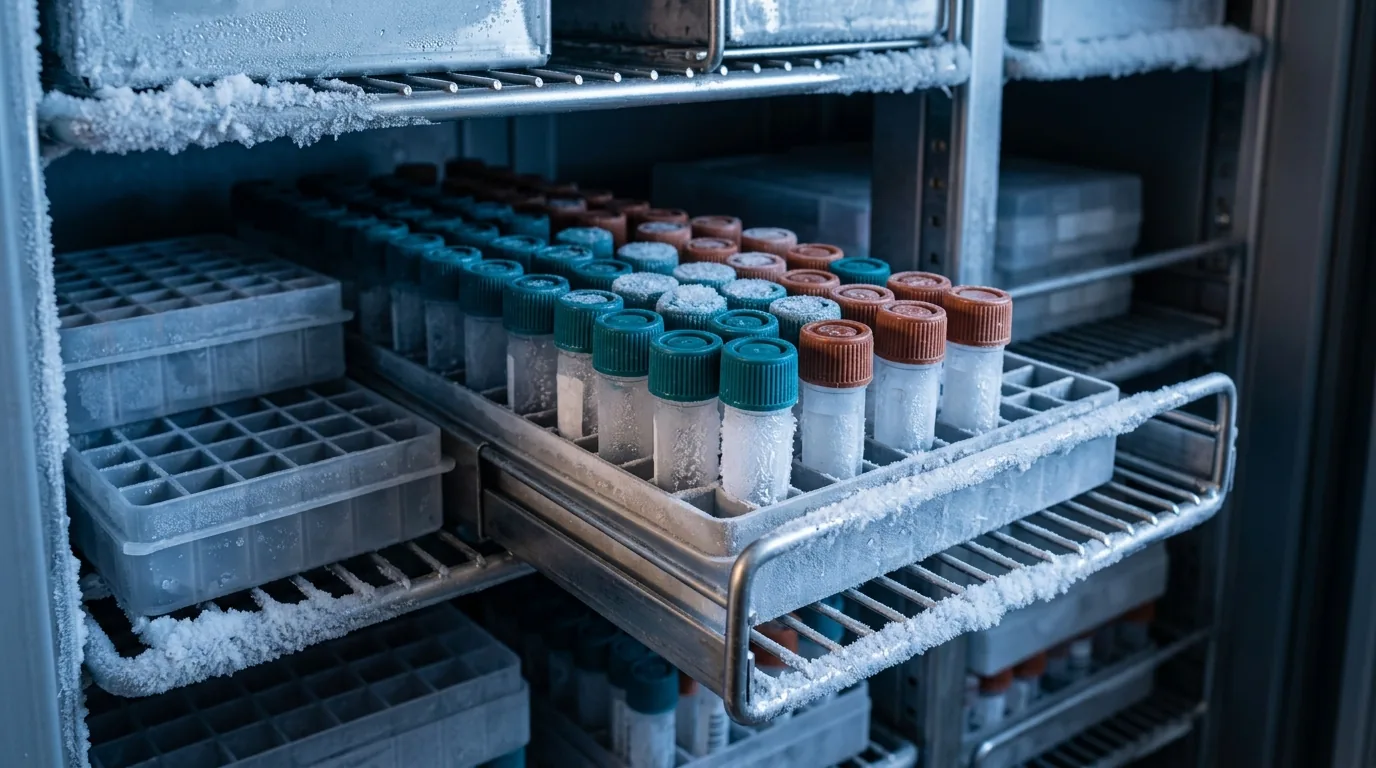
Storage as lyophilized powder at -20 degrees Celsius or below is the single most effective strategy for minimizing peptide degradation, as most degradation pathways require water and are temperature-dependent. When peptides must be stored in solution, maintaining pH between 4 and 6 (where both deamidation and hydrolysis rates are minimized), purging the headspace with nitrogen or argon (to prevent oxidation), and adding antioxidants (0.1% ascorbic acid or 1-10 mM methionine) can substantially extend solution stability.
For methionine-containing peptides, the addition of free methionine (1-10 mM) to the reconstitution buffer acts as a sacrificial antioxidant, being preferentially oxidized instead of the methionine residue in the peptide. Chelating agents (EDTA at 0.1-1 mM) remove trace metal ions that catalyze oxidation. Aliquoting reconstituted peptides into single-use portions and storing at -80 degrees Celsius minimizes both degradation and freeze-thaw-related aggregation. Amber vials or foil wrapping protects light-sensitive peptides from photodegradation.
References
- Manning MC et al. (2010). Stability of protein pharmaceuticals: an update. Pharm Res, 27(4):544-575.
- Geiger T, Clarke S (1987). Deamidation, isomerization, and racemization at asparaginyl and aspartyl residues. J Biol Chem, 262(2):785-794.
- Li S et al. (1995). Chemical instability of protein pharmaceuticals. J Pharm Sci, 84(12):1340-1349.
- Wang W (2005). Protein aggregation and its inhibition in biopharmaceutics. Int J Pharm, 289(1-2):1-30.
- Torosantucci R et al. (2014). Oxidation of therapeutic proteins and peptides. Pharm Res, 31(3):541-553.
- Cleland JL et al. (1993). The development of stable protein formulations. Crit Rev Ther Drug Carrier Syst, 10(4):307-377.
- Wakankar AA, Borchardt RT (2006). Formulation considerations for proteins susceptible to asparagine deamidation and aspartate isomerization. J Pharm Sci, 95(11):2321-2336.
Further Reading on ChemVerify
- Read more: Peptide Storage Temperature Guide → https://www.chemverify.com/learn/peptide-storage-temperature-guide-freeze-refrigerate
- Read more: What Is HPLC Purity? → https://www.chemverify.com/learn/what-is-hplc-purity-peptide-analysis
References
Compare Verified Vendors
Browse COA-verified suppliers with exclusive discount codes and transparent pricing.