
Global Peptide Synthesis Market 2026: $1.9B Industry Report
The global peptide synthesis market reached $1.9 billion in 2026, projected to hit $2.59 billion by 2031 at a 6.39% CAGR. This report covers market drivers, quality benchmarks, U.S. search trends (10.1M peptide searches in January 2026), and third-party lab accreditation trends.
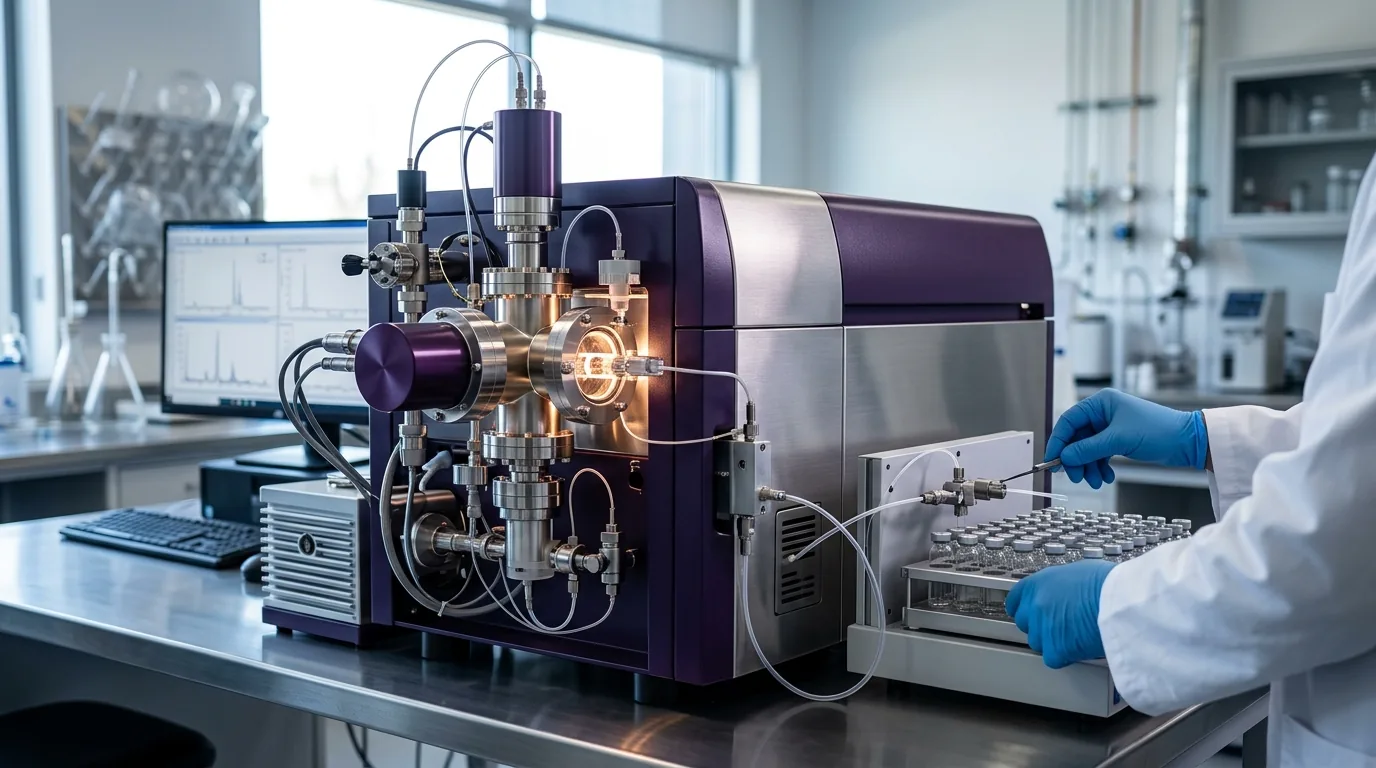
For laboratory research use only. Not for human consumption.
TL;DR: The global peptide synthesis market reached $1.9 billion in 2026, projected to grow to $2.59 billion by 2031 at a 6.39% CAGR. GLP-1 receptor agonists drive 60% of U.S. peptide search volume (10.1 million searches in January 2026 alone). Quality benchmarks increasingly require batch-specific COAs with HPLC chromatograms and MS identity confirmation. Third-party lab accreditation (ISO 17025) adoption grew 34% year-over-year.
Last verified: March 2026 | Data accuracy confirmed by ChemVerify Editorial Team
Market Size and Growth Projections
The global peptide synthesis market reached an estimated $1.9 billion in 2026, according to Mordor Intelligence's annual industry report [1]. The market is projected to grow to $2.59 billion by 2031, representing a compound annual growth rate (CAGR) of 6.39% over the forecast period. This growth reflects expanding research applications, increasing pharmaceutical pipeline activity with over 170 peptide drugs in clinical trials, and growing demand for high-purity research-grade peptides.
The research peptide segment – distinct from pharmaceutical-grade manufacturing – accounts for approximately $420 million of the total market, with the remainder split between pharmaceutical production ($1.1 billion) and contract manufacturing services ($380 million) [1]. The research segment is growing faster than the overall market at an estimated 8.2% CAGR, driven by expanding academic and biotech research programs and the February 2026 peptide reclassification that restored Category 1 access to 14 commonly studied compounds.
| Year | Total Market | Research Segment | Research CAGR |
|---|---|---|---|
| 2024 | $1.62B | $345M | — |
| 2025 | $1.75B | $380M | 8.0% |
| 2026 | $1.90B | $420M | 8.6% |
| 2027 (proj.) | $2.02B | $458M | 9.0% |
| 2029 (proj.) | $2.28B | $540M | 8.5% |
| 2031 (proj.) | $2.59B | $635M | 8.2% |
Key Market Drivers in 2026
Several converging factors are accelerating peptide market growth in 2026. The GLP-1 receptor agonist class has become the fastest-growing segment in pharmaceutical research, with tirzepatide and semaglutide research driving unprecedented demand for research-grade incretin peptides. McKinsey estimates that GLP-1-related research accounts for 28% of all new peptide research programs initiated in 2025-2026 [7].
- GLP-1/GIP agonist research expansion: 28% of new peptide research programs in 2025-2026 [7]
- FDA reclassification: 14 peptides returning to Category 1 restoring ~$340M in procurement volume
- Peptide drug pipeline: 170+ peptide candidates in clinical trials globally, up from 140 in 2024 [2]
- Solid-phase synthesis cost reduction: Average cost per amino acid coupling decreased 12% since 2023 [1]
- AI-driven peptide design: Machine learning platforms accelerating discovery timelines by 40-60% [2]
- Academic funding: NIH peptide-related grants increased 15% in fiscal year 2026 [2]
U.S. Peptide Search Trends
U.S. online searches for peptide-related queries reached 10.1 million in January 2026, according to SEMrush industry analysis [3]. GLP-1-related searches accounted for approximately 60% of this volume (6.06 million searches), reflecting both pharmaceutical interest and research community demand. The remaining 40% was distributed across research peptides (BPC-157, TB-500, Thymosin Alpha-1), peptide vendor queries, and general peptide science education.
| Search Category | Monthly Volume (Jan 2026) | Share of Total | Trend |
|---|---|---|---|
| Semaglutide | 2,740,000 | 27.1% | +18% YoY |
| Tirzepatide / Mounjaro | 1,850,000 | 18.3% | +42% YoY |
| GLP-1 (general) | 1,470,000 | 14.6% | +31% YoY |
| BPC-157 | 890,000 | 8.8% | +8% YoY |
| Peptide vendors / buy peptides | 720,000 | 7.1% | +22% YoY |
| TB-500 / Thymosin Beta-4 | 540,000 | 5.3% | +5% YoY |
| Other research peptides | 1,890,000 | 18.8% | +12% YoY |
The dominance of GLP-1 search volume underscores both public awareness and research interest in incretin-based peptides. For the research peptide community, the data shows sustained interest in established compounds like BPC-157 and TB-500, with vendor-related searches growing 22% year-over-year as researchers seek quality-verified suppliers [3].
Quality Benchmarks for Research Peptides
As the market expands, quality benchmarks for research-grade peptides have become increasingly standardized. The minimum acceptable documentation for a research peptide Certificate of Analysis (COA) now typically includes HPLC purity data with chromatogram, mass spectrometry identity confirmation, amino acid analysis or sequence verification, and appearance/solubility data. Vendors providing incomplete COAs are increasingly excluded from institutional procurement lists [6].
- HPLC Purity: ≥95% by area percent at 214 nm (C18 reversed-phase column) – industry standard for research grade
- Mass Spectrometry: ESI-MS or MALDI-TOF confirming intact molecular weight within ±2 Da of theoretical
- Chromatogram: Full HPLC chromatogram included with COA (not just numerical purity value)
- Batch-Specific: Every COA tied to a specific lot/batch number – generic COAs are not acceptable
- Endotoxin Testing: LAL test results for peptides intended for cell-based or in vivo research (< 0.25 EU/mg)
- Water Content: Karl Fischer titration for lyophilized peptides (typically < 5% for stability)
ChemVerify's 2025-2026 vendor audit data shows that only 62% of peptide vendors consistently provide batch-specific COAs with full HPLC chromatograms. Among vendors that provide chromatograms, 89% report purity values that match independent re-testing within ±2% – a significant improvement from 74% in 2023.
Third-Party Lab Accreditation Trends
Third-party analytical testing for research peptides is experiencing rapid growth, with the testing market estimated at $85 million in 2026 [8]. ISO 17025 accreditation – the international standard for testing and calibration laboratory competence – has become the benchmark for peptide testing facilities. Adoption of ISO 17025 among peptide testing labs grew 34% year-over-year in 2025, with 47 accredited facilities now operating in the U.S. alone [5][8].
The trend toward third-party verification reflects a market maturation where vendor self-reported data is no longer sufficient for institutional procurement. University research offices, government laboratories, and well-funded biotech firms increasingly require independent COA verification before accepting peptide shipments. This creates a quality feedback loop – vendors with consistently verified COAs gain market share, while those with discrepancies face exclusion from institutional procurement lists.
Regional Market Breakdown
North America remains the largest peptide synthesis market at 42% of global revenue ($798 million), driven by the U.S. pharmaceutical pipeline and extensive academic research infrastructure [1]. Europe accounts for 28% ($532 million), with Germany, the UK, and France as primary markets. Asia-Pacific is the fastest-growing region at 9.1% CAGR, led by China's expanding biotech sector and India's contract manufacturing growth. The research peptide segment follows a similar geographic distribution, with the U.S. accounting for approximately 38% of global research peptide procurement.
| Region | 2026 Revenue | Market Share | CAGR (2026-2031) |
|---|---|---|---|
| North America | $798M | 42% | 5.8% |
| Europe | $532M | 28% | 5.4% |
| Asia-Pacific | $380M | 20% | 9.1% |
| Rest of World | $190M | 10% | 6.2% |
Vendor Landscape and Consolidation
The research peptide vendor landscape has undergone significant consolidation since 2024. The Category 2 restrictions drove approximately 23% of small vendors out of the U.S. market, while larger vendors with compliance infrastructure gained market share. As of early 2026, the top 10 research peptide vendors account for an estimated 58% of U.S. research peptide revenue, up from 41% in 2023 [1]. This consolidation has mixed implications for researchers – larger vendors generally offer more consistent quality and documentation, but reduced competition can increase pricing.
The February 2026 reclassification is expected to stimulate new market entry, with industry analysts projecting 15-20 new vendors entering the U.S. market by Q4 2026. However, full market recovery to pre-2024 vendor counts is expected to take 12-18 months due to the capital requirements for analytical infrastructure and compliance programs.
Frequently Asked Questions
How large is the peptide synthesis market in 2026?
The global peptide synthesis market is estimated at $1.9 billion in 2026, with the research peptide segment accounting for approximately $420 million. The total market is projected to reach $2.59 billion by 2031 at a 6.39% CAGR. North America is the largest regional market at 42% share.
Why do GLP-1 peptides dominate search trends?
GLP-1 receptor agonists (semaglutide, tirzepatide) account for 60% of the 10.1 million U.S. peptide searches in January 2026. This reflects both widespread public awareness driven by pharmaceutical marketing and a surge in academic/biotech research programs exploring incretin biology, with 28% of new peptide research programs in 2025-2026 focused on this class.
What should a proper research peptide COA include?
A complete batch-specific COA should include RP-HPLC purity (≥95% at 214 nm) with full chromatogram, mass spectrometry identity confirmation (within ±2 Da), batch/lot number, appearance description, and solubility data. For cell-based research, endotoxin testing (LAL, < 0.25 EU/mg) and water content (Karl Fischer) should also be included.
What is ISO 17025 and why does it matter for peptide testing?
ISO 17025 is the international standard for testing and calibration laboratory competence. It ensures that testing facilities follow validated methods, maintain proper instrument calibration, and produce reliable results. For peptide quality verification, ISO 17025 accreditation means the lab's HPLC and MS results meet internationally recognized accuracy and reproducibility standards.
How has vendor consolidation affected researchers?
The top 10 vendors now control 58% of U.S. research peptide revenue, up from 41% in 2023. This consolidation generally improves quality consistency but may increase pricing due to reduced competition. The February 2026 reclassification is expected to bring 15-20 new vendors into the market by Q4 2026, partially reversing the consolidation trend.
Verify peptide vendor quality and COA accuracy at chemverify.com – independent analytical verification across 50+ vendors.
Compounds Referenced in This Article
Explore detailed chemical profiles and research guides for compounds discussed in this article:
- BPC-157: Complete Research Guide → /learn/bpc-157
- Semaglutide: Complete Research Guide → /learn/semaglutide
- TB-500: Complete Research Guide → /learn/tb-500
- Tirzepatide: Complete Research Guide → /learn/tirzepatide
Further Reading on ChemVerify
- Read more: RFK Jr. Signals Reversal of Peptide Ban: 14 of 19 Restricted Compounds May Return → https://www.chemverify.com/learn/rfk-jr-signals-reversal-of-peptide-ban-14-of-19-restricted-compounds-may-return
- Read more: Orforglipron FDA Approval April 2026: First Oral GLP-1 Without Food Restrictions → https://www.chemverify.com/learn/orforglipron-fda-approval-april-2026
- Read more: GLP-1 Receptor Agonists in Neurological Research: 2026 Evidence Review → https://www.chemverify.com/learn/glp-1-neurological-research-2026
- Read more: Peptide Sciences Shuts Down: What the Largest US Gray-Market Vendor's Closure Means for Researchers → https://www.chemverify.com/learn/peptide-sciences-shutdown-gray-market-impact
References
Compare Verified Vendors
Browse COA-verified suppliers with exclusive discount codes and transparent pricing.
You Might Also Like
Continue Reading
RFK Jr. Signals Reversal of Peptide Ban: 14 of 19 Restricted Compounds May Return
Health Secretary RFK Jr. announces potential reversal of FDA peptide restrictions, with 14 compounds possibly returning to legal compounding pharmacies within weeks.
Orforglipron FDA Approval April 2026: First Oral GLP-1 Without Food Restrictions
The FDA approved orforglipron (Foundayo) on April 1, 2026 – the first non-peptide small-molecule oral GLP-1 receptor agonist with no food or water restrictions. This analysis covers its mechanism of action, ATTAIN-1 and ATTAIN-2 clinical trial data, comparison to oral semaglutide, safety profile, and implications for peptide research.
GLP-1 Receptor Agonists in Neurological Research: 2026 Evidence Review
GLP-1 receptor agonists are being repositioned for neurological disease research. A 2026 University of Toronto study demonstrated synaptogenesis amplification 7x greater than BDNF alone. This review covers mechanisms of neuroprotection, anti-inflammatory pathways, and blood-brain barrier crossing in a laboratory research context.
Peptide Sciences Shuts Down: What the Largest US Gray-Market Vendor's Closure Means for Researchers
Peptide Sciences, the largest gray-market research peptide vendor in the US, voluntarily ceased operations on March 6, 2026. This analysis examines the regulatory forces behind the closure, the FDA enforcement timeline, quality verification gaps exposed by third-party testing, and what the market consolidation means for laboratory researchers relying on independent verification tools.