
Peptide Research for Joint Health: BPC-157, TB-500, and Collagen Peptides
Review current laboratory research on BPC-157, TB-500, and collagen peptides for connective tissue repair – mechanisms, study findings, and chemical properties.
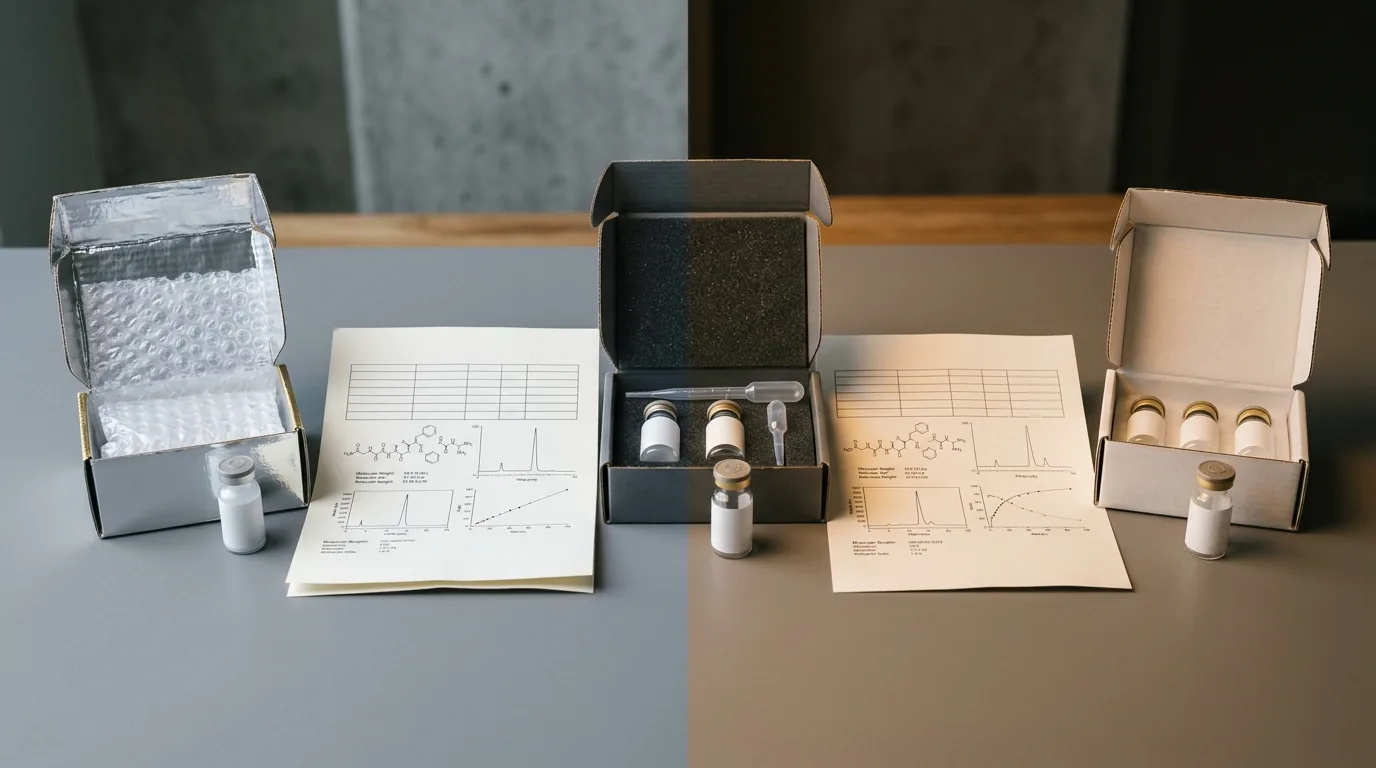
For laboratory research use only. Not for human consumption.
Peptide Research in Connective Tissue Biology
Connective tissue injuries – affecting tendons, ligaments, cartilage, and synovial membranes – represent a major focus of regenerative biology research. Several peptides have emerged as subjects of intensive laboratory investigation for their observed effects on connective tissue cell proliferation, extracellular matrix synthesis, and angiogenesis in preclinical models. This article reviews the chemical properties, proposed mechanisms, and published research findings for three peptide families with the most substantial research literature in the connective tissue space.
It is essential to distinguish between laboratory research findings (in vitro cell studies and animal models) and clinical evidence in humans. The peptides discussed in this article are research compounds with varying levels of preclinical evidence. No claims regarding therapeutic efficacy are made or implied. All data presented reflects published laboratory research conducted under controlled experimental conditions.
BPC-157: Chemical Properties and Research Findings
BPC-157 (Body Protection Compound-157) is a synthetic pentadecapeptide (15 amino acids, sequence Gly-Glu-Pro-Pro-Pro-Gly-Lys-Pro-Ala-Asp-Asp-Ala-Gly-Leu-Val, molecular weight 1,419.5 Da) derived from a fragment of human gastric juice protein. It is typically supplied as the acetate salt and is freely soluble in water at physiological pH. BPC-157 is notably stable in gastric juice – an unusual property for a peptide of this size – which has made it a subject of interest in gastrointestinal and musculoskeletal research.
Published animal studies have reported accelerated healing of transected Achilles tendons in rats (Staresinic et al., 2003), improved recovery of medial collateral ligament injuries (Chang et al., 2011), and enhanced bone-tendon junction healing (Krivic et al., 2006). Proposed mechanisms include upregulation of growth hormone receptor expression, activation of the FAK-paxillin pathway involved in cell migration, stimulation of nitric oxide synthesis, and modulation of the VEGF-mediated angiogenic response. However, the majority of studies originate from a single research group, and independent replication remains limited.
TB-500 (Thymosin Beta-4): Mechanism and Studies
TB-500 is a synthetic fragment of thymosin beta-4 (Tbeta4), a 43-amino acid naturally occurring peptide (molecular weight 4,921 Da) that is one of the most abundant intracellular peptides in mammalian cells. TB-500 typically refers to a commercially available synthetic version encompassing the active region of the full-length thymosin beta-4 molecule. The peptide is soluble in water and saline, and is typically supplied as a lyophilized acetate salt.
Thymosin beta-4 is the primary G-actin sequestering peptide in eukaryotic cells, playing a central role in cytoskeletal dynamics, cell motility, and wound repair. Published research has demonstrated effects on dermal wound healing in animal models (Malinda et al., 1999), corneal epithelial repair (Sosne et al., 2002), and cardiac tissue repair following experimentally induced myocardial infarction (Bock-Marquette et al., 2004). The mechanism involves promotion of cell migration through actin cytoskeleton reorganization, stimulation of angiogenesis, and reduction of inflammatory signaling through NF-kappaB modulation.
Collagen-Derived Peptides in Cartilage Research
Collagen peptides (also called collagen hydrolysates) are enzymatically digested fragments of type I, II, or III collagen, typically ranging from 2 to 10 kDa in molecular weight. Unlike specific-sequence synthetic peptides such as BPC-157, collagen hydrolysates are heterogeneous mixtures of peptide fragments. Research interest centers on specific bioactive sequences within these hydrolysates – particularly the tripeptide Gly-Pro-Hyp (glycine-proline-hydroxyproline) and related sequences that have demonstrated chondroprotective effects in laboratory studies.
In vitro studies using human chondrocyte cultures have shown that specific collagen-derived peptides stimulate type II collagen synthesis and proteoglycan production (Ohara et al., 2010). Animal studies in surgically induced osteoarthritis models have reported reduced cartilage degradation and improved joint histology scores following oral administration of collagen hydrolysates (Dar et al., 2017). The proposed mechanism involves direct stimulation of chondrocyte biosynthetic activity through specific peptide-receptor interactions, rather than simple provision of amino acid building blocks.
Molecular Mechanisms: Growth Factors and Signaling Pathways
The connective tissue repair effects observed with these peptides appear to converge on several shared molecular pathways. Vascular endothelial growth factor (VEGF)-mediated angiogenesis is upregulated by both BPC-157 and thymosin beta-4, providing enhanced blood supply to injured tissues. Transforming growth factor beta (TGF-beta) signaling – a master regulator of extracellular matrix synthesis – is modulated by all three peptide families, though through distinct upstream mechanisms.
Fibroblast growth factor (FGF) signaling plays a critical role in tendon and ligament fibroblast proliferation and is reportedly enhanced by BPC-157 in rat tendon fibroblast cultures. Matrix metalloproteinase (MMP) activity, which governs extracellular matrix turnover, is modulated by collagen-derived peptides that act as competitive substrates or allosteric inhibitors of specific MMP isoforms. Understanding these pathway-level interactions is essential for interpreting the biological significance of observed effects and for designing appropriately controlled experiments.
Limitations of Current Research
Several important limitations apply to the current body of research on connective tissue peptides. For BPC-157, the majority of published studies originate from a limited number of research groups, and large-scale independent replication studies are lacking. Dose-response relationships are incompletely characterized in most published studies, and the optimal concentration ranges for specific tissue types remain undefined. The peptide's mechanism of action has not been fully elucidated at the molecular level.
For thymosin beta-4, the relationship between the full-length endogenous peptide and commercially available synthetic fragments requires clarification – synthetic TB-500 preparations may not fully recapitulate the activity of native thymosin beta-4. Collagen peptide research is complicated by the heterogeneous nature of hydrolysate preparations, making it difficult to attribute observed effects to specific peptide sequences. Across all three peptide families, translation from animal model findings to human biology remains unvalidated in controlled clinical settings.
Chemical Property Comparison Table
BPC-157 has a molecular weight of 1,419.5 Da, consists of 15 amino acids, is highly water soluble, and demonstrates unusual stability in acidic conditions. TB-500 (thymosin beta-4 fragment) has a molecular weight of approximately 4,921 Da for the full-length sequence, consists of 43 amino acids, is water soluble, and is the primary G-actin sequestering peptide in mammalian cells. Collagen-derived peptides range from 2,000-10,000 Da, are heterogeneous mixtures, are water soluble, and contain characteristic Gly-X-Y repeat sequences where X is often proline and Y is often hydroxyproline.
All three peptide types are typically supplied as lyophilized powders and should be reconstituted according to vendor specifications. Storage conditions after reconstitution follow standard peptide handling protocols: 2-8 degrees Celsius for short-term use, -20 degrees Celsius or below for long-term storage, with avoidance of repeated freeze-thaw cycles. Researchers should verify the identity and purity of all peptides by mass spectrometry and HPLC before use in experiments.
Future Research Directions
Several research directions could substantially advance the field. Standardized, independently replicated dose-response studies using validated outcome measures would strengthen the evidence base for all three peptide families. Comparative studies examining combinations of these peptides could reveal synergistic or antagonistic interactions relevant to experimental design. Development of sustained-release formulations (hydrogels, microspheres) for localized delivery to specific tissue sites could improve experimental reproducibility.
Proteomic and transcriptomic profiling of peptide-treated connective tissue cells would provide unbiased mechanistic insight beyond candidate-pathway approaches. Single-cell RNA sequencing could reveal whether peptide effects are uniform across cell populations or restricted to specific subpopulations of fibroblasts, tenocytes, or chondrocytes. These approaches would help transition the field from descriptive observations toward mechanistic understanding.
References
- Staresinic M et al. (2003). Gastric pentadecapeptide BPC 157 accelerates healing of transected rat Achilles tendon. J Orthop Res, 21(6):976-983.
- Chang CH et al. (2011). BPC 157 enhances the recovery of injured medial collateral ligament in rats. Life Sci, 88(21-22):912-918.
- Bock-Marquette I et al. (2004). Thymosin beta-4 activates integrin-linked kinase and promotes cardiac cell migration. Nature, 432(7016):466-472.
- Malinda KM et al. (1999). Thymosin beta-4 accelerates wound healing. J Invest Dermatol, 113(3):364-368.
- Sosne G et al. (2002). Thymosin beta-4 promotes corneal wound healing. Invest Ophthalmol Vis Sci, 43(7):2163-2168.
- Ohara H et al. (2010). Collagen-derived dipeptide Pro-Hyp stimulates fibroblast activity. J Dermatol Sci, 58(2):137-142.
- Dar QA et al. (2017). Daily oral consumption of hydrolyzed type 1 collagen reduces cartilage degradation. Osteoarthritis Cartilage, 25(9):1507-1515.
Further Reading on ChemVerify
- Read more: BPC-157 Chemical Profile → https://www.chemverify.com/peptides/bpc-157
- Read more: TB-500 Chemical Profile → https://www.chemverify.com/peptides/tb-500
- Read more: Peptide Half-Life Comparison Table → https://www.chemverify.com/learn/peptide-half-life-comparison-table-minutes-days
References
Compare Verified Vendors
Browse COA-verified suppliers with exclusive discount codes and transparent pricing.