
Peptides vs Anabolic Steroids: Key Biochemical Differences Explained
Discover the fundamental biochemical differences between peptides and anabolic steroids, including their molecular structure, mechanisms of action, and research applications.
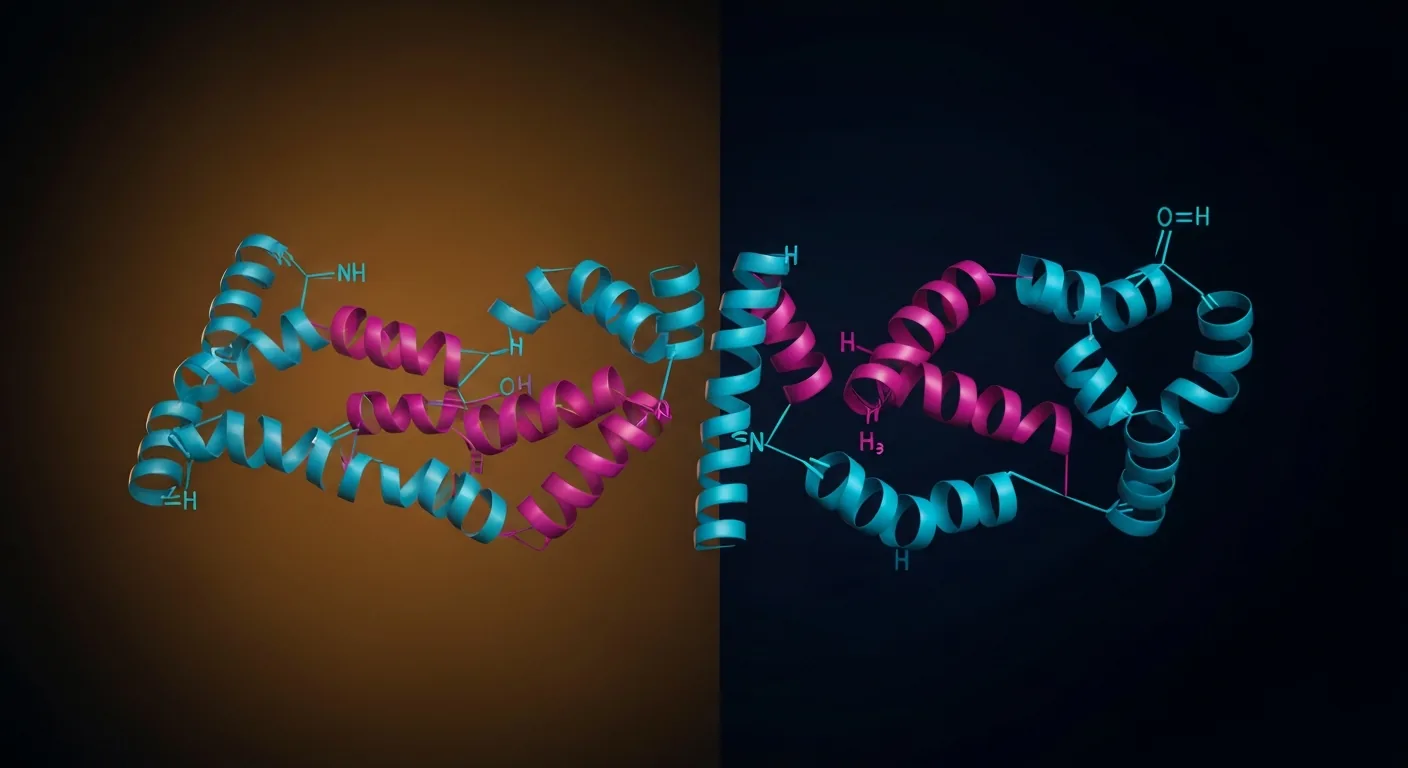
Understanding the biochemical differences between peptides and anabolic steroids is crucial for researchers working in molecular biology, endocrinology, and pharmaceutical development. While both classes of compounds can influence physiological processes, their fundamental molecular structures, mechanisms of action, and biological effects differ significantly at the cellular level.
TL;DR: Peptides and anabolic steroids are fundamentally different biochemical classes. Peptides are short amino acid chains (typically 2–50 residues) that act as signaling molecules, while anabolic steroids are synthetic derivatives of testosterone with a four-ring carbon structure. Their mechanisms of action, metabolism, and regulatory classification differ entirely.
Last verified: March 2026 | Data accuracy confirmed by ChemVerify Editorial Team
This comprehensive analysis explores the key biochemical distinctions between peptides and anabolic steroids, providing researchers with essential knowledge for proper identification, handling, and application in research settings.
Molecular Structure and Composition
The most fundamental difference between peptides and anabolic steroids lies in their molecular architecture and chemical composition. These structural differences directly influence their biological activity, stability, and interaction with cellular components.
Peptide Fundamentals
Peptides are composed of amino acid chains linked by peptide bonds (amide linkages). These molecules range from dipeptides (2 amino acids) to large proteins containing hundreds of amino acids. The sequence and arrangement of amino acids determine the peptide's three-dimensional structure and biological function.
- Primary structure: Linear sequence of amino acids
- Secondary structure: Alpha-helices and beta-sheets
- Tertiary structure: Three-dimensional folding pattern
- Quaternary structure: Multiple polypeptide subunit assembly
Research peptides like BPC-157 and TB-500 exemplify how amino acid sequences create specific biological activities through their unique structural conformations.
Anabolic Steroid Fundamentals
Anabolic steroids are synthetic derivatives of testosterone with a characteristic four-ring carbon structure called the steroid backbone. This cyclopentanoperhydrophenanthrene core consists of three cyclohexane rings and one cyclopentane ring fused together.
- Rigid four-ring steroid nucleus structure
- 17β-hydroxy group at carbon-17 position
- Various functional group modifications at specific positions
- Lipophilic properties due to steroid backbone
Mechanism of Action Differences
The biochemical mechanisms by which peptides and anabolic steroids exert their effects represent fundamentally different approaches to cellular signaling and gene regulation.
Peptide Receptor Signaling
Peptides typically function through cell surface receptor binding, initiating cascade signaling pathways that amplify the initial signal. This extracellular signaling mechanism allows for rapid, reversible responses to peptide hormones.
- G-protein coupled receptor (GPCR) activation
- Receptor tyrosine kinase (RTK) phosphorylation
- Second messenger system activation (cAMP, IP3/DAG)
- Protein kinase cascade amplification
- Rapid onset and offset of biological effects
For example, growth hormone-releasing peptides like Ipamorelin activate GPCR pathways, leading to increased intracellular cAMP levels and subsequent growth hormone release from pituitary cells.
Steroid Hormone Receptor Binding
Anabolic steroids cross cell membranes and bind directly to intracellular androgen receptors (AR), forming steroid-receptor complexes that act as transcription factors. This mechanism results in direct gene expression modulation.
- Passive diffusion across cell membrane
- Cytoplasmic or nuclear receptor binding
- Heat shock protein dissociation
- DNA binding domain activation
- Direct transcriptional regulation of target genes
Biosynthesis and Metabolic Pathways
The biosynthetic origins and metabolic processing of peptides versus anabolic steroids reveal distinct cellular machinery and regulatory mechanisms involved in their production and degradation.
Peptide Synthesis Process
Peptide biosynthesis occurs through ribosomal translation of mRNA templates, followed by post-translational modifications that create the final bioactive peptide. This process allows for precise sequence control and modification.
- mRNA translation on ribosomes
- Signal peptide cleavage
- Post-translational modifications (glycosylation, phosphorylation)
- Propeptide processing by specific enzymes
- Cellular trafficking and secretion
Peptides like Tesamorelin undergo specific enzymatic processing to remove signal sequences and activate the mature hormone form.
Steroid Hormone Synthesis
Steroid biosynthesis follows the cholesterol biosynthetic pathway, utilizing specific enzymatic reactions to modify the steroid backbone. This process occurs primarily in steroidogenic tissues like gonads and adrenal glands.
- Cholesterol as precursor molecule
- Cytochrome P450 enzyme-mediated reactions
- Side-chain cleavage and hydroxylation reactions
- Conversion of pregnenolone to testosterone
- Tissue-specific enzyme expression patterns
Pharmacokinetic Properties
The absorption, distribution, metabolism, and excretion profiles of peptides and anabolic steroids differ substantially due to their contrasting molecular properties.
Peptides generally exhibit hydrophilic characteristics, limiting membrane permeability and requiring specific transport mechanisms or injection for systemic delivery. Their metabolism involves proteolytic enzymes that cleave peptide bonds.
- Limited oral bioavailability due to proteolytic degradation
- Rapid clearance through kidney filtration
- Susceptibility to peptidase enzymes
- Short plasma half-lives (minutes to hours)
- Requirement for cold storage to maintain stability
Anabolic steroids demonstrate lipophilic properties enabling membrane penetration and longer tissue residence times. Their metabolism occurs primarily through hepatic enzyme systems.
Research Applications and Implications
The distinct biochemical properties of peptides versus anabolic steroids create different research applications and experimental considerations for scientists studying their effects.
Peptide research focuses on understanding receptor-mediated signaling pathways, developing targeted therapeutic approaches, and investigating physiological regulation mechanisms. Studies with peptides like Semaglutide examine metabolic pathway modulation through specific receptor activation.
Anabolic steroid research emphasizes genomic effects, muscle protein synthesis pathways, and long-term tissue adaptations. These studies require extended observation periods to capture transcriptional and translational changes.
Analytical and Testing Considerations
The biochemical differences between peptides and anabolic steroids necessitate distinct analytical approaches for identification, quantification, and purity assessment in research settings.
Peptide analysis typically employs mass spectrometry techniques like LC-MS/MS for sequence confirmation and purity determination. The amino acid composition allows for specific fragmentation patterns that aid in structural identification.
Anabolic steroid analysis utilizes gas chromatography-mass spectrometry (GC-MS) or liquid chromatography methods optimized for steroid backbone detection. The rigid ring structure provides characteristic fragmentation and retention patterns.
The fundamental biochemical differences between peptides and anabolic steroids encompass molecular structure, mechanism of action, biosynthesis, and pharmacokinetic properties. These distinctions are essential for researchers to understand when designing experiments, interpreting results, and ensuring proper handling protocols for each compound type.
Frequently Asked Questions
What is the main biochemical difference between peptides and steroids?
Peptides are polymers of amino acids linked by peptide bonds, while anabolic steroids are lipid-derived molecules built on a cyclopentanoperhydrophenanthrene (four-ring) carbon skeleton. Peptides bind to cell surface receptors, whereas steroids typically cross the cell membrane and interact with intracellular receptors.
Are peptides classified the same as steroids under drug regulations?
No. Anabolic steroids are Schedule III controlled substances in the US and similarly restricted in most countries. Research peptides generally fall under different regulatory frameworks, though specific peptides may be individually scheduled. The regulatory treatment reflects their distinct pharmacological profiles.
How do detection methods differ for peptides vs. steroids?
Steroids are detected primarily by gas chromatography–mass spectrometry (GC-MS) due to their volatility and thermal stability. Peptides require liquid chromatography–mass spectrometry (LC-MS/MS) because they are thermally labile and non-volatile. Different analytical approaches reflect their distinct chemical properties.
Do peptides and steroids have different stability profiles?
Yes. Peptides are generally less stable – susceptible to hydrolysis, oxidation, and enzymatic degradation – requiring careful storage (lyophilized, frozen). Steroids are more chemically stable with longer shelf lives at room temperature due to their robust carbon ring structure.
Compounds Referenced in This Article
Explore detailed chemical profiles and research guides for compounds discussed in this article:
- BPC-157: Complete Research Guide → /learn/bpc-157
- Ipamorelin: Complete Research Guide → /learn/ipamorelin
- Semaglutide: Complete Research Guide → /learn/semaglutide
- TB-500: Complete Research Guide → /learn/tb-500
- Tesamorelin: Complete Research Guide → /learn/tesamorelin
Further Reading on ChemVerify
- Read more: AI-Guided High-Throughput Screening Accelerates Antimicrobial Peptide-Mimicking Polymer Discovery → https://www.chemverify.com/learn/ai-guided-antimicrobial-peptide-polymer-discovery
- Read more: Re-Engineering Insulin for Oral Delivery: Structural Modifications and Formulation Advances → https://www.chemverify.com/learn/insulin-oral-delivery-peptide-engineering
- Read more: Cyclic Lipopeptides: Biosurfactant Peptides as Next-Generation Drug Delivery Modulators → https://www.chemverify.com/learn/cyclic-lipopeptides-drug-delivery-modulators
- Read more: Microneedle-Delivered Peptide Decoy Receptors Show Promise in Psoriasis Treatment → https://www.chemverify.com/learn/microneedle-peptide-decoy-receptors-psoriasis
- Read more: GLP-1 Receptor Agonists Demonstrate Cardiorenal Protection in Chronic Kidney Disease: Meta-Analysis → https://www.chemverify.com/learn/glp1-receptor-agonists-cardiorenal-protection-ckd
References
Compare Verified Vendors
Browse COA-verified suppliers with exclusive discount codes and transparent pricing.
You Might Also Like
Continue Reading
GLP-1 Receptor Agonists Demonstrate Cardiorenal Protection in Chronic Kidney Disease: Meta-Analysis
A systematic review and meta-analysis of 9 trials involving over 21,000 patients confirms that GLP-1 receptor agonist peptides significantly reduce adverse kidney and cardiovascular events in chronic kidney disease.
Cyclic Lipopeptides: Biosurfactant Peptides as Next-Generation Drug Delivery Modulators
A 2026 review explores how cyclic lipopeptides – peptide-based biosurfactants produced via microbial fermentation – serve dual roles as both structural building blocks and bioactive compounds in advanced nanocarrier delivery systems.
Re-Engineering Insulin for Oral Delivery: Structural Modifications and Formulation Advances
A comprehensive 2026 review examines cutting-edge strategies to overcome the challenges of oral insulin delivery, including PEGylation, lipidation, cyclization, and nanocarrier technologies that enhance peptide stability and bioavailability.
Microneedle-Delivered Peptide Decoy Receptors Show Promise in Psoriasis Treatment
A 2026 study introduces engineered cell-membrane vesicles expressing IL-17RA as peptide-based decoy receptors, delivered via dissolving microneedles, demonstrating significant reduction in psoriasis severity in preclinical models.