
Unnatural Products and Novartis: A $1.7 Billion Deal for Synthetic Macrocyclic Peptides
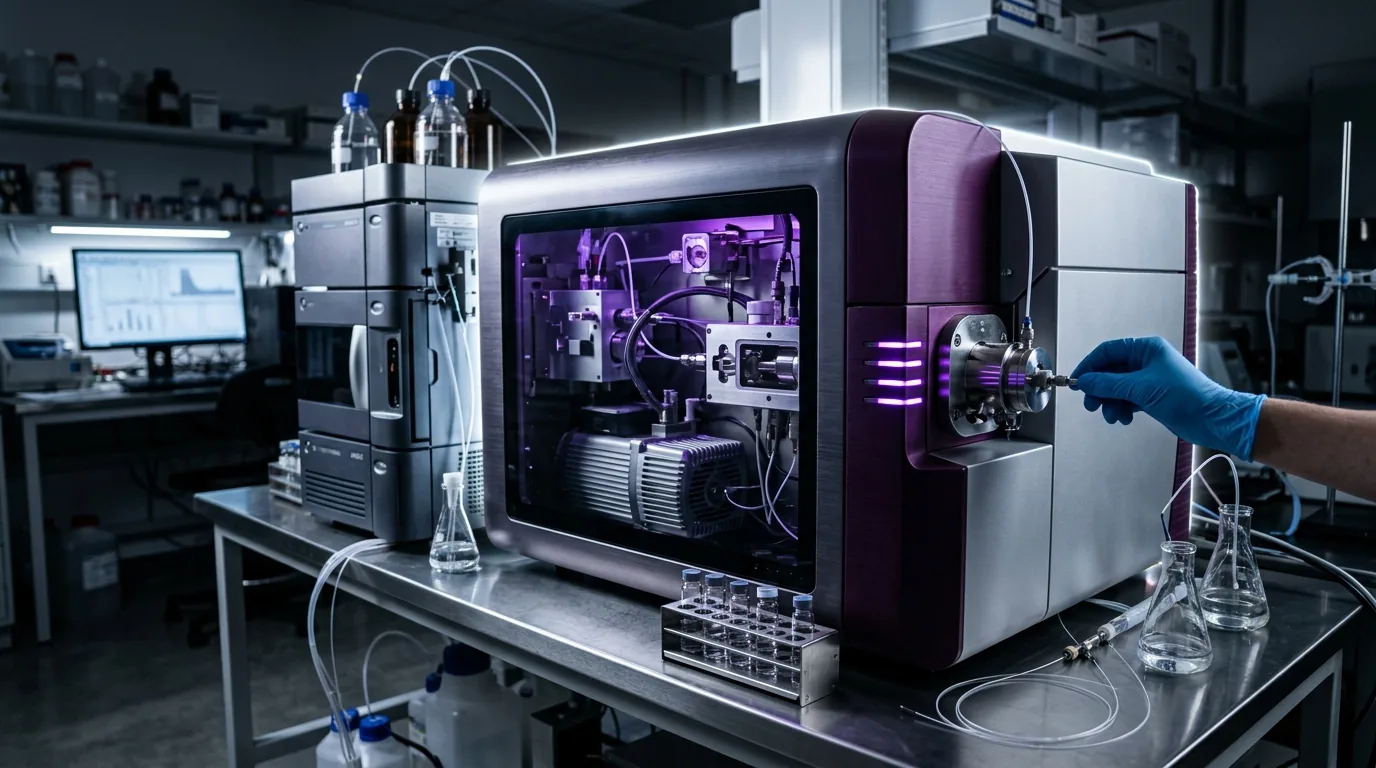
Novartis has entered a licensing agreement with Unnatural Products worth up to $1.7 billion in milestones to develop orally delivered macrocyclic peptide therapeutics for cardiovascular targets. The deal leverages UNP's CycloSEL platform, which screens massive synthetic macrocycle libraries using affinity selections and tandem mass spectrometry to identify drug-like hits against historically undruggable targets.
For laboratory research use only. Not for human consumption.
Deal Overview: $100 Million Upfront, $1.7 Billion in Milestones
In February 2026, Novartis and Unnatural Products (UNP), a Santa Cruz, California-based biotechnology company, announced a licensing agreement to develop macrocyclic peptide therapeutics targeting historically undruggable cardiovascular disease targets. The deal includes up to $100 million in upfront and pre-IND milestone payments, with total development, regulatory, and commercial milestones reaching up to $1.7 billion. Additionally, UNP will receive tiered royalties ranging from mid-single to low double-digit percentages on annual net sales of any commercialized products.
Under the terms of the agreement, Novartis assumes responsibility for IND-enabling studies and all subsequent clinical development, manufacturing, and global commercialization. UNP retains its proprietary platform and continues to advance its own pipeline of macrocyclic peptide drug candidates across multiple therapeutic areas.
The deal structure – $100M upfront with $1.7B in biobucks – signals that large pharmaceutical companies increasingly view synthetic macrocycles as a validated therapeutic modality capable of addressing high-value targets.
What Are Synthetic Macrocyclic Peptides?
Macrocyclic peptides are a class of cyclic compounds typically containing 12 or more atoms in a ring structure. They occupy a unique chemical space between traditional small molecules (molecular weight <500 Da) and large biologics such as monoclonal antibodies. This intermediate position confers a distinctive combination of properties: the target selectivity and binding affinity characteristic of biologics, paired with the cell permeability and potential oral bioavailability of small molecules.
Unlike genetically encoded peptide libraries – which rely on ribosomal machinery and are constrained to natural amino acids – synthetic macrocycles incorporate non-natural building blocks, unnatural amino acids, and chemical modifications that expand the accessible chemical diversity. This synthetic flexibility enables the construction of molecules with optimized pharmacokinetic properties, including enhanced metabolic stability, membrane permeability, and resistance to proteolytic degradation.
- Molecular weight typically ranges from 500 to 2,000 Da, placing them in the 'beyond rule of five' (bRo5) chemical space
- Ring closure constrains the peptide backbone, reducing conformational entropy and improving binding affinity
- Non-natural amino acids and N-methylation can shield amide bonds from enzymatic cleavage
- Intramolecular hydrogen bonding can promote membrane-permeable conformations in nonpolar environments
The CycloSEL Platform: Cyclic Self-Encoded Libraries
Central to UNP's discovery engine is the CycloSEL (Cyclic Self-Encoded Libraries) platform – a barcode-free, fully synthetic, ultra-high-throughput screening system for drug-like macrocycles. Most existing high-throughput discovery platforms for macrocyclic peptides rely on genetically encoded libraries, such as mRNA display or phage display, which produce large peptide macrocycles not inherently optimized for drug-like properties. CycloSEL takes a fundamentally different approach.
The platform couples the combinatorial synthesis of massive macrocycle libraries – validated at scales exceeding 16 million members – with affinity-based selections against therapeutic targets. Hit identification is performed by tandem mass spectrometry (MS/MS), which decodes the structure of selected binders directly from their fragmentation patterns, eliminating the need for genetic barcodes or encoding tags entirely.
Because the libraries are fully synthetic, they can be deliberately enriched in drug-like features from the outset. This means the chemical building blocks and macrocyclization strategies are chosen to favor properties such as membrane permeability, metabolic stability, and oral absorption – properties that genetically encoded libraries typically lack and that must be painstakingly engineered into hits post-discovery.
In published validation studies, CycloSEL identified a macrocyclic binder to WDR5 – a protein-protein interaction target relevant to acute myeloid leukemia – with a binding affinity of 8 nM. This hit was subsequently optimized to a compound demonstrating potent disruption of the oncogenic WDR5-MLL interaction with excellent serum stability and passive membrane permeability.
Beyond the Rule of Five: Oral Bioavailability of Macrocycles
Lipinski's Rule of Five has long served as a heuristic for predicting oral bioavailability in drug candidates. However, macrocyclic peptides routinely exceed these thresholds in molecular weight, hydrogen bond donors, and hydrogen bond acceptors – yet a substantial fraction achieves oral bioavailability regardless. Research indicates that approximately 40% of approved macrocyclic drugs are administered orally, challenging the assumption that large molecules cannot cross biological membranes effectively.
Several structural strategies contribute to the oral absorption of macrocycles. Intramolecular hydrogen bonding allows polar NH groups to be shielded from the solvent environment during membrane transit, effectively creating a 'chameleon' molecule that presents a polar surface in aqueous environments and a nonpolar surface within the lipid bilayer. N-methylation of backbone amides reduces the number of exposed hydrogen bond donors while simultaneously increasing lipophilicity and conformational rigidity.
The constrained ring topology of macrocycles also reduces the entropic penalty of binding, as the molecule is pre-organized into a bioactive conformation. This pre-organization not only improves target affinity but also reduces the flexibility-dependent exposure of polar surface area, which is a key determinant of membrane permeability in the bRo5 space.
Cardiovascular Targets and the Undruggable Proteome
The Novartis-UNP agreement specifically targets cardiovascular disease – a therapeutic area where protein-protein interactions (PPIs) play critical roles in disease pathology but have historically resisted modulation by conventional small molecules. PPIs typically involve large, flat, and featureless binding interfaces spanning 1,500 to 3,000 square angstroms, which are poorly suited for the compact binding pockets that small molecules require.
Macrocyclic peptides, with their larger molecular footprint and pre-organized three-dimensional structures, can engage these extended PPI surfaces with high affinity and selectivity. Published examples in the cardiovascular space include an orally bioavailable macrocyclic peptide inhibitor of PCSK9 binding to the LDL receptor – a target of major clinical interest for cholesterol management – demonstrating that the modality can deliver functional molecules against validated cardiovascular targets.
The convergence of platform technologies like CycloSEL with therapeutic areas rich in undruggable targets suggests that macrocyclic peptides may unlock a new wave of cardiovascular therapeutics beyond the current landscape of antibodies, antisense oligonucleotides, and traditional small molecules.
Competitive Landscape: UNP's Growing Deal Portfolio
The Novartis collaboration is not UNP's first major partnership. In 2024, the company signed a deal with Merck & Co. valued at up to $220 million in milestone payments. More recently, argenx entered a collaboration with UNP worth up to $1.5 billion in biobucks, aimed at generating orally available macrocyclic peptide drugs against undisclosed undruggable targets. Additional collaborations with BridgeBio across multiple therapeutic areas further diversify UNP's partnership portfolio.
In March 2026, UNP closed a $45 million Series B financing round led by The Venture Collective, with participation from argenx, Droia Ventures, Merck Global Health Innovation Fund, Artis Ventures, and First Spark Ventures. The proceeds will support continued development of the CycloSEL platform and advancement of UNP's proprietary pipeline of macrocyclic peptide therapeutics.
UNP operates within a growing competitive landscape that includes other macrocycle-focused companies and platform technologies such as DNA-encoded libraries (DELs), mRNA display (RaPID system), and computational de novo design approaches. What distinguishes UNP is its fully synthetic, barcode-free approach that yields hits already enriched in drug-like properties – potentially reducing the time and cost of lead optimization.
Implications for Peptide Research and Drug Discovery
The magnitude of the Novartis-UNP deal reflects a broader industry trend toward modalities that bridge the gap between biologics and small molecules. As the pharmaceutical industry exhausts readily druggable targets with conventional approaches, the demand for chemical matter capable of modulating PPIs, allosteric sites, and conformationally dynamic proteins continues to grow.
For the research community, synthetic macrocyclic peptides are an active research area. Key areas of active research include the development of predictive computational models for macrocycle permeability, the expansion of non-natural building block libraries, the optimization of scalable synthesis routes for clinical manufacturing, and the elucidation of structure-permeability relationships in the bRo5 chemical space.
- Affinity selection mass spectrometry (AS-MS) as a hit identification strategy is gaining traction across multiple discovery platforms
- Combinatorial macrocycle libraries of 10 million+ members are now technically feasible
- Machine learning models for predicting macrocycle conformations and membrane permeability are under active development
- The integration of AI-guided design with high-throughput synthesis creates a feedback loop that accelerates lead optimization
From a regulatory perspective, the FDA has approved several macrocyclic drugs – including cyclosporine A, vancomycin, and more recently lorlatinib – establishing a precedent for the clinical development of this modality. The pathway from discovery to approval is well-characterized, and the deal structures now being signed suggest that pharmaceutical companies view the remaining technical challenges as manageable.
Conclusion: Macrocycles as a Therapeutic Modality
The $1.7 billion Novartis-UNP licensing agreement marks a significant milestone in the maturation of synthetic macrocyclic peptides as a therapeutic drug class. By combining UNP's CycloSEL platform – with its ability to screen millions of drug-like synthetic macrocycles via affinity selection and mass spectrometry – with Novartis's clinical development and commercialization capabilities, the collaboration is positioned to advance a new generation of orally delivered therapeutics against cardiovascular targets that have historically eluded conventional drug modalities.
The deal also reinforces the strategic positioning of macrocyclic peptides at the intersection of peptide science and medicinal chemistry. As platforms capable of generating and screening bRo5 chemical matter at scale continue to mature, the historically sharp boundary between 'druggable' and 'undruggable' targets may increasingly become a historical artifact rather than a fundamental constraint.
Further Reading on ChemVerify
- Read more: Pinnacle Medicines Raises $89M for Next-Generation Oral Peptides → https://www.chemverify.com/learn/pinnacle-medicines-raises-89m-oral-peptides
- Read more: Luna18: The Oral Peptide Achieving 47% Bioavailability – A Potential Game-Changer → https://www.chemverify.com/learn/luna18-oral-peptide-47-percent-bioavailability
- Read more: ICOTYDE (Icotrokinra): First Targeted Oral Peptide for Plaque Psoriasis – FDA Approved → https://www.chemverify.com/learn/icotyde-icotrokinra-fda-approved-oral-peptide-plaque-psoriasis
- Read more: AI-Powered Peptide Discovery 2026: How CreoPep, PepMimic and Machine Learning Are Reshaping the Pipeline → https://www.chemverify.com/learn/ai-powered-peptide-discovery-2026
References
Compare Verified Vendors
Browse COA-verified suppliers with exclusive discount codes and transparent pricing.
Continue Reading
Luna18: The Oral Peptide Achieving 47% Bioavailability – A Potential Game-Changer
Luna18 (paluratide), an 11-mer cyclic peptide discovered via mRNA display, achieved 21–47% oral bioavailability across preclinical species without permeation enhancers – a landmark result that redefines what is chemically achievable for oral peptide delivery.
ICOTYDE (Icotrokinra): First Targeted Oral Peptide for Plaque Psoriasis – FDA Approved
The FDA has approved ICOTYDE (icotrokinra), the first and only targeted oral peptide that blocks the IL-23 receptor, for moderate-to-severe plaque psoriasis. This macrocyclic peptide from Johnson & Johnson represents a paradigm shift from injectable biologics to oral peptide therapeutics in immune-mediated inflammatory disease.
Pinnacle Medicines Raises $89M for Next-Generation Oral Peptides
Pinnacle Medicines has closed an oversubscribed $89 million Series B financing to advance its oral peptide therapeutics pipeline into clinical trials, with a lead program targeting asthma and COPD expected to enter human testing by late 2026.
AI-Powered Peptide Discovery 2026: How CreoPep, PepMimic and Machine Learning Are Reshaping the Pipeline
An advanced overview of the machine-learning platforms – CreoPep, PepMimic, PepINVENT, and KCM – that are accelerating peptide candidate generation, affinity optimization, and library screening in 2026. Covers computational methodologies, clinical pipeline statistics, and the shift toward AI-first discovery workflows.