
What Is Endotoxin? Why LAL Testing Matters for Peptide Safety
Understand endotoxins (lipopolysaccharides), how they contaminate research peptides, and why LAL testing is the gold standard for detecting bacterial contamination.
For laboratory research use only. Not for human consumption.
Endotoxins: What They Are and Why They Matter
Endotoxins are lipopolysaccharide (LPS) molecules that form a structural component of the outer membrane of Gram-negative bacteria. Unlike exotoxins that are actively secreted by living bacteria, endotoxins are released when bacterial cells die and disintegrate. They are extraordinarily stable – resistant to autoclaving (121 degrees Celsius), dry heat below 250 degrees Celsius, pH extremes, and most chemical disinfectants. This thermal and chemical stability makes endotoxins a persistent contamination concern in any laboratory material that contacts water during manufacturing.
Endotoxin contamination in research peptides is a significant confounding variable because LPS is one of the most potent activators of the innate immune system. Even picogram-per-milliliter concentrations can trigger toll-like receptor 4 (TLR4) signaling, activating NF-kappaB pathways and inducing production of pro-inflammatory cytokines (TNF-alpha, IL-1beta, IL-6). Research conducted with endotoxin-contaminated peptides may produce misleading results that are attributable to the LPS contamination rather than the peptide itself.
How Endotoxins Contaminate Research Peptides
Endotoxin contamination can be introduced at multiple points during peptide manufacturing: through the water used in synthesis and purification (if not adequately treated with reverse osmosis and deionization), from glassware and equipment surfaces that harbor bacterial biofilms, from raw materials (amino acids, coupling reagents, resins) that are not endotoxin-controlled, and from the lyophilization and packaging environment. Gram-negative bacteria are ubiquitous in water systems, and even brief exposure of peptide solutions to non-sterile water can introduce detectable endotoxin levels.
Post-manufacturing contamination occurs when reconstituted peptides are handled with non-sterile equipment or stored in containers that were not depyrogenated. Standard laboratory glassware – even when autoclaved – may retain endotoxin unless specifically treated with dry heat at 250 degrees Celsius for 30 minutes or longer. Plastic consumables (pipette tips, microcentrifuge tubes) that are labeled 'sterile' are not necessarily endotoxin-free unless explicitly certified as pyrogen-free by the manufacturer.
Biological Effects of Endotoxin Contamination
In cell culture systems, endotoxin contamination activates monocytes, macrophages, and dendritic cells through TLR4/MD-2 receptor complexes, triggering a cascade of inflammatory signaling that can obscure or mimic the effects being studied. Experiments investigating peptide effects on immune cell function, cytokine production, cell proliferation, or apoptosis are particularly vulnerable to endotoxin confounding. As little as 0.1 ng/mL of LPS can produce measurable cytokine responses in sensitive cell lines.
In animal models, endotoxin contamination can cause fever, hypotension, disseminated intravascular coagulation, and multi-organ failure depending on the dose and route of administration. Even at sub-pyrogenic doses, endotoxin primes the immune system, altering baseline inflammatory status and potentially amplifying or masking the effects of the peptide under investigation. Researchers who observe unexpected inflammatory responses in their peptide studies should consider endotoxin contamination as a primary differential diagnosis.
The LAL Test: Gold Standard for Endotoxin Detection
The Limulus Amebocyte Lysate (LAL) test exploits the coagulation cascade of the horseshoe crab (Limulus polyphemus). Horseshoe crab blood cells (amebocytes) contain a serine protease zymogen called Factor C that is activated specifically by endotoxin. This activation triggers an enzymatic cascade that culminates in the cleavage of coagulogen to coagulin, forming a gel. The LAL test has been the regulatory standard for endotoxin detection in pharmaceutical products since the 1970s and remains the most widely used method.
The sensitivity of modern LAL assays extends to 0.005 Endotoxin Units per milliliter (EU/mL), where 1 EU corresponds to approximately 100 picograms of reference standard endotoxin (RSE). This extraordinary sensitivity is necessary because the biological threshold for endotoxin effects in sensitive cell-based assays and animal models can be as low as 0.1 EU/mL. The United States Pharmacopeia (USP) Chapter 85 and European Pharmacopoeia Chapter 2.6.14 define the standardized methodology for LAL testing.
LAL Testing Methods Compared
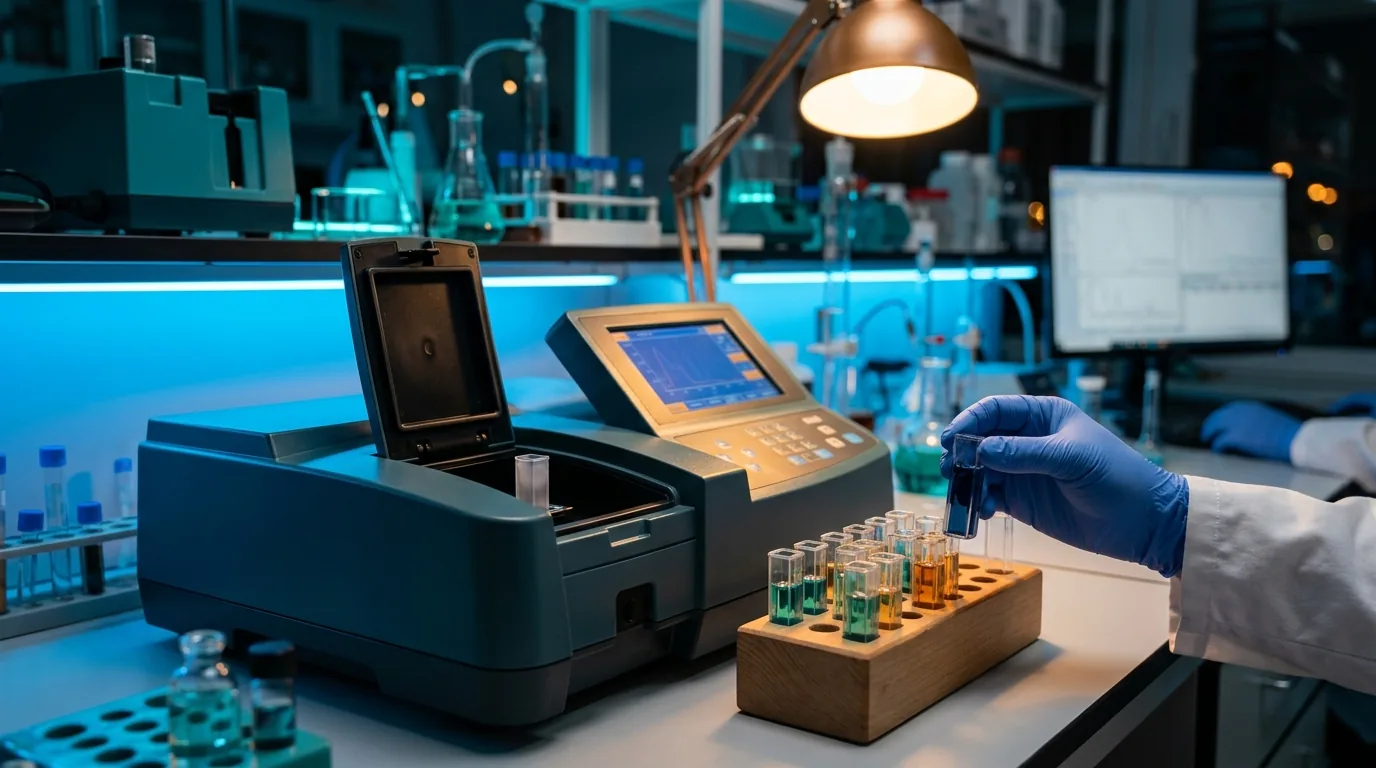
Three LAL test formats are in common use. The gel-clot method is the simplest and least expensive: the sample is mixed with LAL reagent, incubated at 37 degrees Celsius for 60 minutes, and the tube is inverted – a firm gel indicates endotoxin above the labeled sensitivity. The turbidimetric method measures the increase in optical density (turbidity) as the coagulation cascade proceeds, providing a quantitative result proportional to endotoxin concentration. The chromogenic method substitutes a synthetic chromogenic substrate for natural coagulogen, producing a yellow color (p-nitroaniline) that is measured spectrophotometrically.
Recombinant Factor C (rFC) assays represent the newest generation of endotoxin detection technology. These assays use recombinant horseshoe crab Factor C protein produced in insect cells, eliminating the need for horseshoe crab blood harvesting. rFC assays offer comparable sensitivity to traditional LAL (0.005 EU/mL), reduced susceptibility to beta-glucan interference (a common source of false positives in traditional LAL), and improved lot-to-lot consistency. The European Pharmacopoeia has accepted rFC as an alternative to LAL since 2020.
Acceptable Endotoxin Limits for Research Peptides
There is no universal regulatory standard for endotoxin levels in research-use-only peptides, as regulatory endotoxin limits (USP, EP) apply specifically to pharmaceutical products intended for parenteral administration. However, the pharmaceutical limit of 5 EU per kilogram of body weight per hour provides a useful reference framework. For cell culture applications, endotoxin levels below 0.1 EU/mL in the final working concentration are generally considered acceptable to avoid confounding inflammatory responses.
Premium research peptide vendors typically provide endotoxin testing data on their certificates of analysis, reporting results as less than a specified limit (e.g., less than 0.5 EU/mg or less than 1.0 EU/mg). Vendors that do not include endotoxin data on their CoA may not be testing for it, which represents a significant quality gap. When endotoxin-sensitive experiments are planned, researchers should specifically request endotoxin testing data or perform in-house LAL testing before use.
How to Read an Endotoxin Test Report
An endotoxin test report should specify the test method used (gel-clot, kinetic turbidimetric, kinetic chromogenic, or rFC), the sensitivity of the assay (the lowest detectable concentration, typically 0.005-0.5 EU/mL), the result expressed in Endotoxin Units per milligram (EU/mg) or per milliliter (EU/mL), and whether the result is below the limit of detection (reported as less than the sensitivity value) or a specific quantitative value. The report should also confirm that positive and negative controls passed, validating the assay performance.
Be aware of units: EU/mg (endotoxin units per milligram of peptide) and EU/mL (endotoxin units per milliliter of solution) convey different information. A peptide with 0.5 EU/mg reconstituted at 10 mg/mL would have 5 EU/mL in the stock solution, but only 0.05 EU/mL when diluted to a 0.1 mg/mL working concentration. Always calculate the endotoxin concentration at the final working dilution to determine whether it falls within acceptable limits for the planned experiment.
Preventing Endotoxin Contamination in the Lab
Depyrogenation of glassware requires dry heat at 250 degrees Celsius for a minimum of 30 minutes – standard autoclaving does not destroy endotoxin. Use certified pyrogen-free plasticware for all steps involving reconstituted peptides. Reconstitute peptides using water that is both sterile and certified endotoxin-free (LAL reagent water or equivalent). Standard bacteriostatic water, while sterile, is not always certified endotoxin-free – check the manufacturer's specifications.
Minimize the number of manipulations (transfers, dilutions, aliquoting) performed on reconstituted peptide solutions, as each step introduces potential contamination from equipment surfaces and the environment. Work in a laminar flow hood or biosafety cabinet. Store reconstituted peptides in sealed, pyrogen-free containers and avoid repeated entry into vials with needles, as the rubber stopper is a potential source of particulate and microbial contamination with repeated punctures.
References
- Raetz CRH, Whitfield C (2002). Lipopolysaccharide endotoxins. Annu Rev Biochem, 71:635-700.
- Dawson ME (2005). Endotoxin limits for parenteral drug products. LAL Update, 22(1):1-7.
- Ding JL, Ho B (2010). Endotoxin detection – from Limulus amebocyte lysate to recombinant Factor C. Subcell Biochem, 53:187-208.
- United States Pharmacopeia (2023). USP Chapter 85: Bacterial Endotoxins Test. USP-NF.
- European Pharmacopoeia (2020). Chapter 2.6.14: Bacterial Endotoxins. EDQM.
- Schwarz H et al. (2017). Residual endotoxin contaminations in recombinant proteins. Curr Opin Biotechnol, 44:91-96.
- Gorbet MB, Sefton MV (2005). Endotoxin: the uninvited guest. Biomaterials, 26(34):6811-6817.
Further Reading on ChemVerify
- Read more: How to Read a Certificate of Analysis for Peptides → https://www.chemverify.com/learn/how-to-read-certificate-of-analysis-peptides
- Read more: What Is HPLC Purity? → https://www.chemverify.com/learn/what-is-hplc-purity-peptide-analysis
References
Compare Verified Vendors
Browse COA-verified suppliers with exclusive discount codes and transparent pricing.