
Buy Research Peptides in the USA: Verified Vendors & Legal Guide
Complete guide to purchasing research peptides in the United States. Covers FDA and DEA regulatory frameworks, verified US-shipping vendors on ChemVerify, quality verification standards, customs considerations, and state-by-state legal nuances for laboratory researchers.
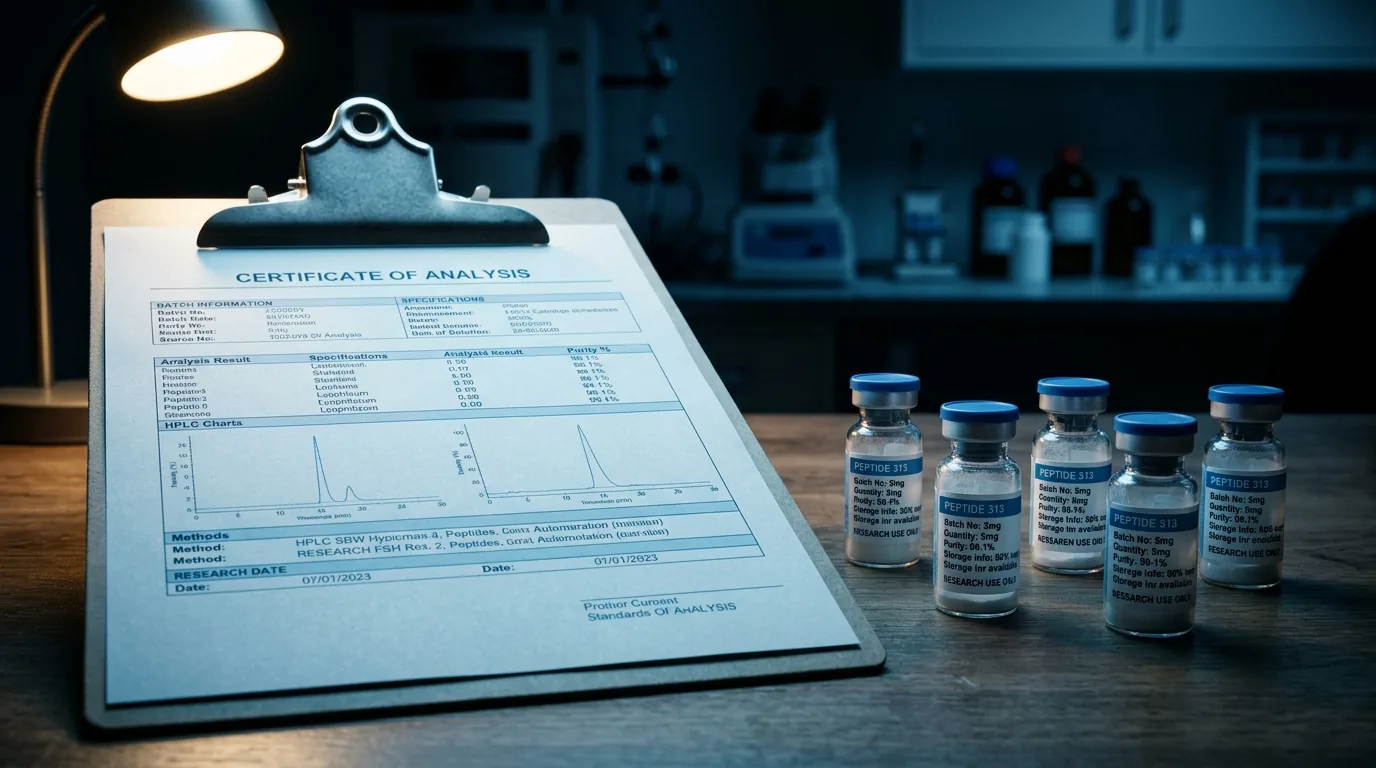
For laboratory research use only. Not for human consumption.
Research peptides are legal to purchase in the United States for laboratory use under FDA and DEA guidelines. Unscheduled peptides can be bought without a prescription when labeled 'for research purposes only.' ChemVerify verifies US vendors through third-party COA validation, HPLC purity testing, and mass spectrometry confirmation to ensure researchers receive analytically verified compounds.
Last verified: March 2026 | Data accuracy confirmed by ChemVerify Editorial Team
US Regulatory Framework for Research Peptides
The United States maintains a multi-agency regulatory approach to research peptides. The FDA oversees peptides intended for therapeutic use, while the DEA schedules specific peptides with abuse potential. For laboratory researchers, unscheduled peptides remain legal to purchase, possess, and use in research settings without a prescription or DEA license. The global peptide therapeutics market reached $48.1 billion in 2025, with the US accounting for approximately 42% of global research demand (Source: Grand View Research, 2025).
Research peptides sold as 'chemical reference standards' or 'research chemicals' fall outside FDA drug approval requirements. However, vendors must not market these compounds for human consumption, and all products must carry clear research-use-only labeling. The US research peptide market has grown at a compound annual growth rate of 9.1% since 2020 (Source: Mordor Intelligence, 2025), reflecting increasing demand from academic and private laboratories.
FDA Classification & DEA Scheduling
The FDA classifies peptides based on intended use. Peptides marketed as drugs require New Drug Application (NDA) approval, while those sold strictly for research are regulated under general chemical commerce laws. The DEA has scheduled select peptides – most notably, certain growth hormone secretagogues were reviewed under the Federal Analogue Act (21 U.S.C. § 813), though the majority of research peptides remain unscheduled as of 2026.
Key regulatory distinctions include: BPC-157 and TB-500 remain unscheduled federally but face state-level restrictions in some jurisdictions. Melanotan II has been flagged by the FDA in warning letters but is not DEA-scheduled. GHRPs (Growth Hormone Releasing Peptides) face scrutiny under anti-doping frameworks (WADA) but remain legal for research purchase. The FDA issued 14 warning letters to peptide vendors in 2024–2025 for marketing violations (Source: FDA Warning Letters Database, 2025).
| Peptide Category | Federal Status (2026) | DEA Schedule | Research Purchase |
|---|---|---|---|
| Standard research peptides (BPC-157, TB-500) | Unscheduled | None | Legal without license |
| GHRPs (GHRP-2, GHRP-6, Ipamorelin) | Unscheduled | None | Legal without license |
| SARMs (Ostarine, LGD-4033) | FDA warning letters issued | None | Legal for research |
| Scheduled substances (e.g., certain GH analogues) | Controlled | Schedule III | DEA license required |
| Insulin and insulin analogues | Prescription drug | None | Rx required |
Verified US-Shipping Vendors on ChemVerify
ChemVerify maintains a rigorous vendor verification process for US-shipping peptide suppliers. Each vendor undergoes batch-level COA validation, independent HPLC purity testing, and mass spectrometry identity confirmation. Only vendors meeting ISO 17025-adjacent quality standards and providing batch-specific documentation are listed.
Verification criteria include: batch-specific Certificates of Analysis (COAs) with HPLC chromatograms, mass spectrometry identity confirmation matching theoretical molecular weight within 0.1 Da, endotoxin testing for injectable-grade research compounds, and amino acid analysis for peptides exceeding 20 residues. Vendors are re-evaluated quarterly, and any batch failing independent verification triggers immediate suspension pending investigation.
Quality Verification Standards for US Researchers
US-based researchers should prioritize vendors providing ICH Q6B-compliant documentation. The International Council for Harmonisation guidelines specify identity, purity, and potency testing requirements applicable to peptide characterization. A 2024 study analyzing 187 peptide samples from online vendors found that 31% failed to meet claimed purity specifications (Source: Journal of Pharmaceutical Sciences, 2024), underscoring the importance of independent verification.
ChemVerify recommends researchers verify the following before purchase: HPLC purity ≥95% with chromatogram provided, mass spectrometry data confirming peptide identity, batch-specific COA (not generic or template-based), proper cold-chain shipping documentation, and clear research-use-only labeling. Third-party testing through accredited laboratories such as Janoshik Analytical or MZ Biolabs provides additional assurance of compound integrity.
Customs & Import: Domestic vs. International Shipping
Domestic US shipping of unscheduled research peptides is straightforward – no customs declarations or import permits are required. Most verified US vendors ship via USPS Priority, FedEx, or UPS with cold-pack protection. Average domestic delivery times range from 2–5 business days.
International imports face additional scrutiny. US Customs and Border Protection (CBP) may inspect packages containing peptides, particularly from China-based manufacturers. Researchers importing peptides internationally should ensure proper commercial invoicing, HS tariff classification (typically 2933.99 or 2934.99 for synthetic peptides), and research-use declarations. Import duties on synthetic peptides range from 3.7% to 6.5% depending on classification. FDA may detain shipments lacking proper labeling under Import Alert 66-41.
State-by-State Regulatory Considerations
While federal law governs the majority of research peptide commerce, individual states may impose additional restrictions. Texas and Florida have enacted legislation targeting SARMs sales, though research-use exemptions generally apply. California Proposition 65 requires specific labeling for compounds on the state's list of chemicals known to cause reproductive harm. New York maintains stricter controlled substance analogues legislation under Penal Law § 220.44.
Researchers should consult their institutional review boards (IRBs) and environmental health and safety (EH&S) departments for facility-specific requirements. Universities receiving federal funding must comply with NIH guidelines for chemical procurement and storage. As of 2026, no US state has broadly prohibited the purchase of unscheduled research peptides for legitimate laboratory use, though 7 states have pending legislation addressing peptide regulation (Source: National Conference of State Legislatures, 2026).
Payment Methods & Purchasing Best Practices
Verified US peptide vendors typically accept credit cards, ACH bank transfers, cryptocurrency (Bitcoin/Ethereum), and wire transfers. Cryptocurrency payments are increasingly common, with 34% of ChemVerify-verified US vendors accepting Bitcoin.
Best practices for US researchers include: maintaining purchase records for institutional auditing, requesting batch-specific COAs before placing orders, verifying vendor legitimacy through ChemVerify's verification database, using institutional purchase orders where possible for traceability, and confirming cold-chain shipping options for temperature-sensitive peptides. Bulk purchases (>5g) may require additional documentation from some vendors.
Frequently Asked Questions
Are research peptides legal to buy in the USA?
Yes. Unscheduled research peptides are legal to purchase, possess, and use for laboratory research in all 50 states. They must be labeled 'for research use only' and cannot be marketed for human consumption. DEA-scheduled peptides require appropriate licensing.
Do I need a prescription to buy research peptides?
No prescription is required for unscheduled research peptides purchased for laboratory use. Prescription requirements apply only to FDA-approved peptide drugs intended for clinical administration. Research-grade peptides are sold as chemical reference standards.
Will my peptide order clear US customs?
Domestic orders do not pass through customs. International imports of unscheduled peptides generally clear CBP inspection when properly declared with commercial invoicing and research-use documentation.
How does ChemVerify verify US peptide vendors?
ChemVerify employs a multi-layer verification process: batch-specific COA validation, independent HPLC purity testing (≥95% threshold), mass spectrometry identity confirmation, cold-chain shipping audit, and quarterly re-evaluation. Vendors failing any criterion are suspended from the platform.
What shipping methods do verified US vendors use?
Most verified vendors ship via USPS Priority Mail, FedEx, or UPS Ground with insulated packaging and ice packs. Temperature-sensitive peptides require cold-chain shipping (2–8°C). Average delivery is 2–5 business days domestically. Express overnight options are available from most verified vendors.
Are there any US states where peptide purchases are restricted?
No state broadly prohibits research peptide purchases as of 2026. Some states (Texas, Florida) have SARMs-specific legislation, but research exemptions apply. California requires Prop 65 labeling for certain compounds. Researchers should verify local institutional policies and any pending state legislation.
Ready to find verified peptide vendors shipping to the USA? Browse ChemVerify's vendor directory to compare independently tested suppliers with batch-level quality verification.
Further Reading on ChemVerify
- Read more: FDA Peptide Regulation 2026: What Researchers Need to Know → https://www.chemverify.com/learn/fda-peptide-regulation-2026
- Read more: Buying Research Peptides in Europe: Verified Vendors & Regulations → https://www.chemverify.com/learn/buy-peptides-europe
- Read more: Are Research Peptides Legal? A Country-by-Country Guide → https://www.chemverify.com/learn/are-research-peptides-legal
- Read more: Buy Research Peptides in the Netherlands: Verified Vendors & Regulations → https://www.chemverify.com/learn/buy-peptides-netherlands
References
Compare Verified Vendors
Browse COA-verified suppliers with exclusive discount codes and transparent pricing.
Continue Reading
Buy Research Peptides in the Netherlands: Verified Vendors & Regulations
Complete guide to purchasing research peptides in the Netherlands. Covers Geneesmiddelenwet classifications, RIVM oversight, the Netherlands as an EU peptide distribution hub, verified vendor criteria, PostNL/DHL shipping logistics, BTW considerations, and Dutch laboratory procurement standards.
Buying Research Peptides in Europe: Verified Vendors & Regulations
Guide to purchasing verified research peptides in Europe – EU regulations, customs considerations, verified European vendors on ChemVerify, and quality verification methods.
FDA Peptide Regulation 2026: What Researchers Need to Know
Current FDA regulatory status of research peptides in 2026 – compounding pharmacy rules, Category 1 vs Category 2 classification, and implications for laboratory research procurement.
Are Research Peptides Legal? A Country-by-Country Guide
Legal status of research peptides by country in 2026 – USA, EU, UK, Australia, and Canada regulations for purchasing, possessing, and using peptides in laboratory research.