
Complete Peptide Reconstitution Guide: Step-by-Step Process
Learn the essential peptide reconstitution process with our comprehensive guide. Master proper techniques, storage methods, and safety protocols for research peptides.
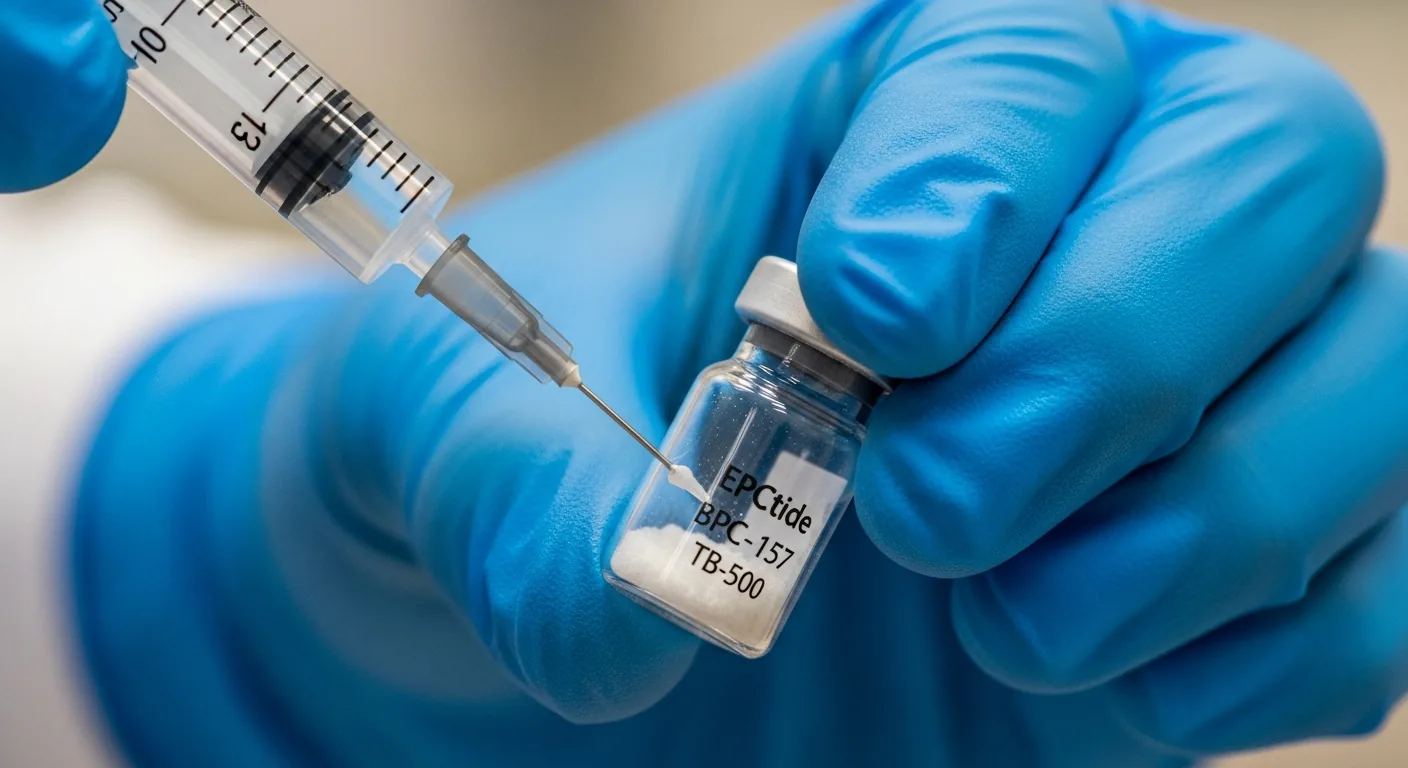
Peptide reconstitution is a critical process in research applications that requires precision, sterile technique, and careful attention to detail. This comprehensive guide provides researchers with the essential knowledge and step-by-step procedures for properly reconstituting lyophilized peptides while maintaining their structural integrity and biological activity.
TL;DR: Peptide reconstitution follows a precise sequence: select the appropriate solvent based on peptide properties, add solvent slowly along the vial wall, swirl gently (never vortex), and verify complete dissolution before use. Correct technique preserves peptide integrity and ensures accurate concentration for downstream experiments.
Last verified: March 2026 | Data accuracy confirmed by ChemVerify Editorial Team
What is Peptide Reconstitution?
Peptide reconstitution refers to the process of dissolving lyophilized (freeze-dried) peptides in an appropriate solvent to create a usable solution for research purposes. Lyophilization removes water from peptides, creating a stable powder that can be stored long-term without degradation.
The reconstitution process must be performed carefully to ensure the peptide maintains its three-dimensional structure and biological functionality. Improper techniques can lead to aggregation, precipitation, or degradation of the peptide molecules.
Research peptides should only be reconstituted immediately before use or when ready for storage as a solution. Once reconstituted, most peptides have limited stability compared to their lyophilized form.
Essential Materials and Equipment
Successful peptide reconstitution requires specific materials and equipment to maintain sterility and accuracy. Having the proper tools ensures reproducible results and prevents contamination.
- Bacteriostatic water for injection (preferred solvent)
- Sterile saline solution (alternative solvent)
- Insulin syringes or micropipettes for accurate measurement
- Sterile vials for storage
- Alcohol swabs for sterilization
- Laminar flow hood or clean workspace
- Personal protective equipment (gloves, safety glasses)
- Analytical balance for weighing
Sterile Technique Basics
Maintaining sterile conditions throughout the reconstitution process is essential for preventing bacterial contamination. All surfaces, equipment, and hands should be properly sanitized before beginning the procedure.
Work in a clean environment, preferably under a laminar flow hood. If a hood is not available, work quickly in a clean area away from air currents and potential contaminants.
Step-by-Step Reconstitution Process
The peptide reconstitution guide follows a systematic approach to ensure consistent and reliable results. Each step must be performed with precision and attention to sterile technique.
Preparation Phase
- Remove the peptide vial from refrigerated storage and allow it to reach room temperature
- Prepare your workspace with all necessary materials within easy reach
- Put on sterile gloves and safety equipment
- Clean the work surface with 70% isopropyl alcohol
- Remove the protective cap from the peptide vial and clean the rubber stopper with an alcohol swab
Proper Mixing Technique
The mixing technique is crucial for successful reconstitution. Draw the calculated volume of bacteriostatic water into a sterile syringe. Insert the needle into the peptide vial at a slight angle, allowing the water to run down the side of the vial rather than directly onto the peptide powder.
Gently swirl the vial in a circular motion to dissolve the peptide. Avoid vigorous shaking or vortexing, as this can damage the peptide structure. Allow the solution to sit for several minutes if complete dissolution doesn't occur immediately.
Never shake vigorously or use ultrasonic baths to dissolve peptides, as mechanical stress can cause irreversible damage to the molecular structure.
Calculating Reconstitution Volumes
Accurate volume calculations are essential for achieving the desired peptide concentration. The reconstitution volume directly affects the final concentration and dosing accuracy for research applications.
Concentration Formulas
To calculate the final concentration after reconstitution, use the formula: Concentration (mg/mL) = Peptide mass (mg) ÷ Reconstitution volume (mL). For example, a 5mg peptide vial reconstituted with 2mL of water yields a concentration of 2.5mg/mL.
Always verify the peptide mass listed on the vial label, as actual content may vary slightly from the nominal amount due to manufacturing tolerances and moisture content.
Common Dilution Ratios
- 1mg peptide + 1mL water = 1mg/mL concentration
- 2mg peptide + 2mL water = 1mg/mL concentration
- 5mg peptide + 5mL water = 1mg/mL concentration
- 10mg peptide + 10mL water = 1mg/mL concentration
Storage and Handling of Reconstituted Peptides
Proper storage of reconstituted peptides is critical for maintaining stability and preventing degradation. The storage conditions depend on the specific peptide properties and intended use timeline.
Refrigeration Guidelines
Store reconstituted peptides in the refrigerator at 2-8°C (36-46°F) for short-term use. Most reconstituted peptides remain stable for 2-4 weeks when properly stored in sterile conditions.
For longer storage periods, aliquot the solution into smaller vials to minimize freeze-thaw cycles. Label each vial with the peptide name, concentration, reconstitution date, and storage conditions.
Stability Considerations
Peptide stability varies significantly between different compounds. Research peptides like BPC-157 and TB-500 may have different stability profiles that affect storage duration and conditions.
Always consult the specific storage recommendations provided with each peptide, as some compounds may require frozen storage or have shorter stability windows after reconstitution.
Common Mistakes and Troubleshooting
Understanding common reconstitution mistakes helps researchers avoid issues and achieve consistent results. Many problems can be prevented by following proper techniques and using appropriate materials.
- Using tap water instead of bacteriostatic water can introduce contaminants
- Adding solvent too quickly can cause foaming and protein denaturation
- Insufficient mixing may leave undissolved peptide particles
- Exposure to extreme temperatures can cause degradation
- Using non-sterile equipment increases contamination risk
- Incorrect volume calculations lead to dosing errors
If precipitation occurs after reconstitution, gentle warming to room temperature and slow swirling may help dissolve the peptide. However, avoid heating above 37°C as this can cause irreversible damage.
Safety Precautions and Best Practices
Research peptide handling requires adherence to safety protocols to protect both the researcher and the integrity of the samples. Always wear appropriate personal protective equipment and work in well-ventilated areas.
- Wear nitrile gloves to prevent skin contact
- Use safety glasses to protect eyes from splashes
- Work in a fume hood when possible
- Dispose of contaminated materials properly
- Keep detailed records of all procedures
- Never eat, drink, or smoke in the work area
- Wash hands thoroughly after handling peptides
Research peptides are for laboratory use only and should never be used for human consumption. Always follow institutional safety guidelines and regulatory requirements.
Proper peptide reconstitution is fundamental to successful research outcomes. By following this comprehensive guide and maintaining strict adherence to sterile techniques, researchers can ensure reliable and reproducible results in their peptide-based studies.
Frequently Asked Questions
Why should I never vortex lyophilized peptides during reconstitution?
Vortexing creates excessive shear forces and foaming that can denature peptides and cause them to adhere to the vial walls. Gentle swirling or slow rotation allows the solvent to dissolve the lyophilized cake without disrupting peptide structure. If dissolution is slow, let the vial sit at room temperature for 10–15 minutes and swirl again.
What solvent should I use if my peptide does not dissolve in water?
For hydrophobic peptides that resist aqueous dissolution, try adding a small amount of DMSO, acetic acid (for basic peptides), or dilute ammonium hydroxide (for acidic peptides) before adding water. Start with the minimum effective amount of organic co-solvent – typically 10–20% – to maintain compatibility with biological assays.
How do I know if reconstitution was successful?
A properly reconstituted peptide solution should be clear and free of visible particles or turbidity. Opalescence, precipitate, or gel formation indicates incomplete dissolution or aggregation. If issues persist after gentle warming and swirling, the solvent system may need adjustment.
Can I reconstitute a peptide, use some, and freeze the rest?
Yes, but aliquot the solution into single-use portions before freezing. Repeated freeze-thaw cycles damage peptides through ice crystal formation and concentration effects. Use small volumes in separate vials so each aliquot is thawed only once before use.
Compounds Referenced in This Article
Explore detailed chemical profiles and research guides for compounds discussed in this article:
- Bacteriostatic Water: Complete Research Guide → /learn/bacteriostatic-water
- BPC-157: Complete Research Guide → /learn/bpc-157
- TB-500: Complete Research Guide → /learn/tb-500
Further Reading on ChemVerify
- Read more: RFK Jr. Signals Reversal of Peptide Ban: 14 of 19 Restricted Compounds May Return → https://www.chemverify.com/learn/rfk-jr-signals-reversal-of-peptide-ban-14-of-19-restricted-compounds-may-return
- Read more: AI-Guided High-Throughput Screening Accelerates Antimicrobial Peptide-Mimicking Polymer Discovery → https://www.chemverify.com/learn/ai-guided-antimicrobial-peptide-polymer-discovery
- Read more: Re-Engineering Insulin for Oral Delivery: Structural Modifications and Formulation Advances → https://www.chemverify.com/learn/insulin-oral-delivery-peptide-engineering
- Read more: Cyclic Lipopeptides: Biosurfactant Peptides as Next-Generation Drug Delivery Modulators → https://www.chemverify.com/learn/cyclic-lipopeptides-drug-delivery-modulators
- Read more: Microneedle-Delivered Peptide Decoy Receptors Show Promise in Psoriasis Treatment → https://www.chemverify.com/learn/microneedle-peptide-decoy-receptors-psoriasis
References
Compare Verified Vendors
Browse COA-verified suppliers with exclusive discount codes and transparent pricing.
You Might Also Like
Continue Reading
RFK Jr. Signals Reversal of Peptide Ban: 14 of 19 Restricted Compounds May Return
Health Secretary RFK Jr. announces potential reversal of FDA peptide restrictions, with 14 compounds possibly returning to legal compounding pharmacies within weeks.
AI-Guided High-Throughput Screening Accelerates Antimicrobial Peptide-Mimicking Polymer Discovery
Researchers at Zhejiang University combined machine learning with automated high-throughput synthesis to efficiently discover antimicrobial polymers that mimic the action of natural antimicrobial peptides, screening over 13,000 candidates to find top performers.
Re-Engineering Insulin for Oral Delivery: Structural Modifications and Formulation Advances
A comprehensive 2026 review examines cutting-edge strategies to overcome the challenges of oral insulin delivery, including PEGylation, lipidation, cyclization, and nanocarrier technologies that enhance peptide stability and bioavailability.
Cyclic Lipopeptides: Biosurfactant Peptides as Next-Generation Drug Delivery Modulators
A 2026 review explores how cyclic lipopeptides – peptide-based biosurfactants produced via microbial fermentation – serve dual roles as both structural building blocks and bioactive compounds in advanced nanocarrier delivery systems.