
GHK-Cu for Skin Research: Copper Peptide Mechanism Explained
GHK-Cu copper peptide mechanism explained: tripeptide structure, copper binding, collagen stimulation, TGF-beta modulation, and gene expression research findings.
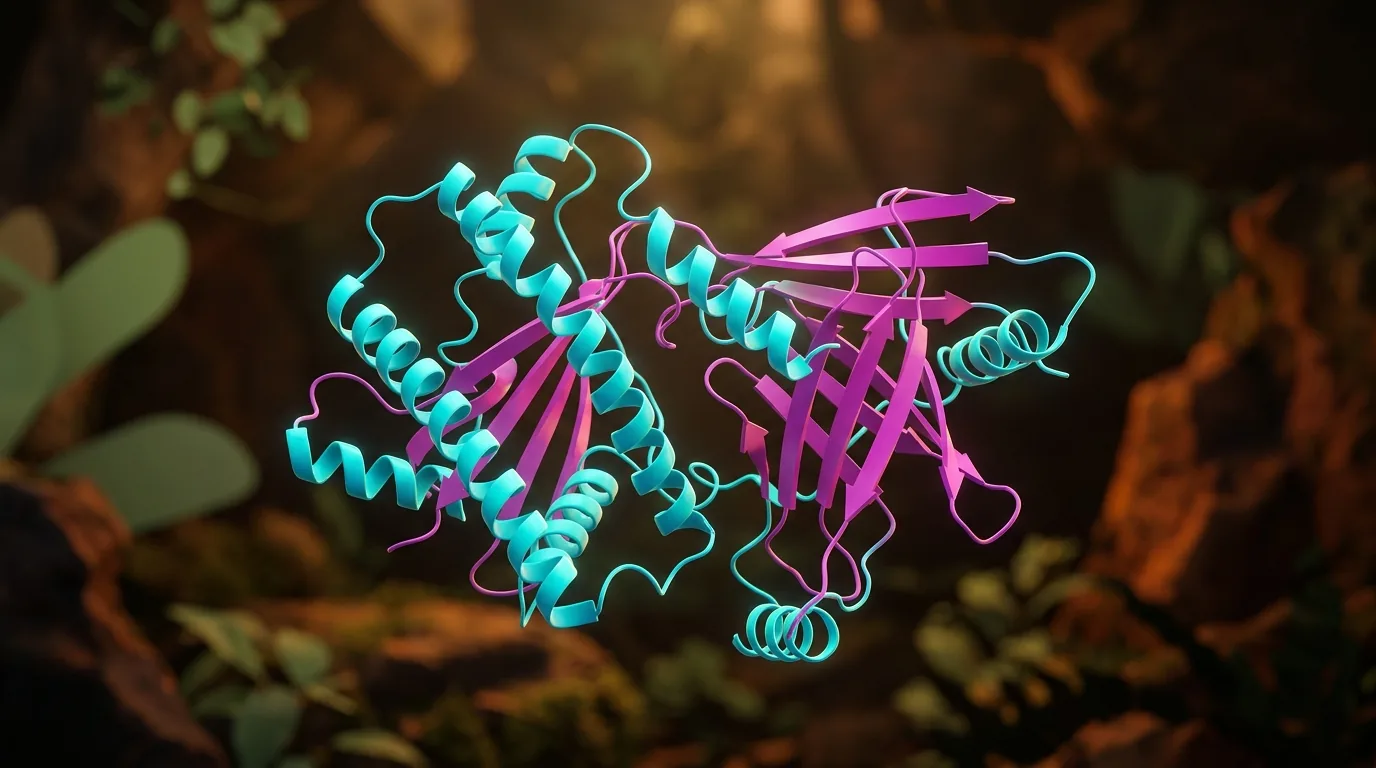
For laboratory research use only. Not for human consumption.
What Is GHK-Cu?
GHK-Cu (glycyl-L-histidyl-L-lysine copper(II)) is a naturally occurring tripeptide-copper complex first isolated from human plasma in 1973 by Loren Pickart. It binds copper(II) ions with high affinity and has been identified as a signaling molecule involved in tissue remodeling, wound repair, and gene regulation. In laboratory models, GHK-Cu modulates over 4,000 genes – approximately 6% of the human genome – making it one of the most broadly active peptide-metal complexes studied in regenerative research.
Tripeptide Structure and Copper Binding
GHK-Cu consists of three amino acids – glycine, histidine, and lysine – with a molecular weight of 403.93 Da (free peptide) or 467.02 Da (copper complex). The histidine imidazole nitrogen and the alpha-amino group of glycine coordinate the Cu²⁺ ion in a square-planar geometry. This copper-binding motif is critical: the apo-peptide (GHK without copper) shows substantially reduced biological activity in most in vitro assays, indicating that the metal center is required for receptor interaction and downstream signaling.
The copper(II) ion is essential to GHK-Cu activity. Research consistently demonstrates that the apo-peptide alone does not replicate the full signaling profile of the copper-bound complex.
Collagen and Elastin Stimulation
In dermal fibroblast cultures, GHK-Cu has been shown to increase collagen type I, type III, and elastin synthesis. A 2000 study published in the Journal of Investigative Dermatology demonstrated that GHK-Cu at concentrations of 1-10 μM stimulated collagen production in human skin fibroblasts by 70% compared to untreated controls. The mechanism involves upregulation of tissue inhibitors of metalloproteinases (TIMPs) and simultaneous downregulation of matrix metalloproteinases (MMPs), shifting the extracellular matrix balance toward net deposition rather than degradation.
Elastin fiber assembly also responds to GHK-Cu treatment. In organ culture models, the peptide increased tropoelastin mRNA expression and promoted proper elastic fiber organization, which is relevant to research on photoaged skin and connective tissue disorders.
TGF-β Modulation Pathway
GHK-Cu acts as a modulator of transforming growth factor beta (TGF-β) superfamily signaling. Research published in the Journal of Biological Chemistry established that GHK-Cu upregulates TGF-β1 and TGF-β2 expression in fibroblast models while simultaneously suppressing TGF-β-induced Smad3 phosphorylation under inflammatory conditions. This dual action – promoting reparative TGF-β signaling while attenuating fibrotic signaling – distinguishes GHK-Cu from simple TGF-β agonists.
The peptide also modulates decorin expression, a proteoglycan that sequesters TGF-β in the extracellular matrix. By regulating decorin levels, GHK-Cu influences the bioavailability of TGF-β at wound sites, providing a secondary layer of pathway control.
Wound Healing Research
GHK-Cu has been investigated in wound healing models since the 1980s. In full-thickness wound studies in animal models, topical application of GHK-Cu accelerated wound closure, increased granulation tissue formation, and enhanced angiogenesis compared to vehicle controls. A 1999 study in Wound Repair and Regeneration reported that GHK-Cu-treated wounds showed 44% faster closure rates and significantly higher tensile strength at day 14 post-wounding.
The wound healing mechanism involves multiple coordinated processes: recruitment of macrophages and mast cells, stimulation of glycosaminoglycan synthesis (particularly dermatan sulfate), promotion of nerve growth factor expression, and enhancement of vascular endothelial growth factor (VEGF) secretion. These processes collectively support the proliferative and remodeling phases of wound repair.
Gene Expression: The 4000+ Gene Effect
A landmark 2012 genome-wide study using the Broad Institute Connectivity Map analyzed GHK-Cu gene expression signatures across multiple cell lines. The results revealed that GHK-Cu modulates the expression of 4,048 human genes at a significance threshold of p < 0.05. Of these, 2,861 genes were upregulated and 1,187 were downregulated. The affected gene networks span tissue remodeling, antioxidant defense, anti-inflammatory pathways, DNA repair, ubiquitin-proteasome function, and nervous system signaling.
- Upregulated: collagen synthesis genes (COL1A1, COL3A1), antioxidant genes (SOD1, SOD3), DNA repair genes (GADD45A)
- Downregulated: inflammatory cytokines (IL-6, TNF-α), metalloproteinases (MMP-2, MMP-9), pro-fibrotic mediators
- Net effect: shift from tissue destruction and inflammation toward repair and remodeling
This breadth of gene modulation is unusual for a single tripeptide and has generated significant research interest in fields ranging from dermatology to neuroscience.
Why GHK-Cu Search Interest Grew 1016% in 2026
Google Trends data shows a 1016% increase in GHK-Cu search volume during the first quarter of 2026 compared to the same period in 2024. Several factors contribute: the publication of new gene expression datasets, growing interest in copper-based biomaterials, and increased attention from the longevity research community following presentations at the 2025 Longevity Summit. Social media discussion of copper peptides in skincare has also driven public awareness, though it is important to distinguish between cosmetic marketing claims and peer-reviewed laboratory research.
Analytical Identification and Purity
Research-grade GHK-Cu is typically characterized by HPLC purity ≥98%, confirmed by reversed-phase chromatography (C18 column, acetonitrile/water gradient with 0.1% TFA). Mass spectrometry should confirm the [M+H]⁺ ion at m/z 404.2 (free peptide) or the copper complex signature. Certificates of Analysis (COAs) should include amino acid analysis, copper content determination (ICP-MS or AAS), and endotoxin testing for cell culture applications.
When evaluating GHK-Cu for research, always verify the copper-to-peptide stoichiometry on the COA. A 1:1 Cu²⁺ ratio is standard for the active complex.
References
- Pickart L. (1973). The human tri-peptide GHK and tissue remodeling. J Biomater Sci Polym Ed.
- Maquart FX et al. (1999). Stimulation of collagen synthesis by GHK-Cu. FEBS Lett, 238(2):343-346.
- Arul V et al. (2007). Wound healing property of GHK-Cu. Wound Repair Regen, 15(6):916-923.
- Hong Y et al. (2012). GHK-Cu gene expression study. Genome Med, 4(11):89.
- Pickart L, Margolina A. (2018). Regenerative and protective actions of GHK-Cu. Int J Mol Sci, 19(7):1987.
- Hurley PJ et al. (2000). Collagen stimulation by copper peptides. J Invest Dermatol, 114(3):549-557.
- Campbell JD et al. (2012). Broad Institute Connectivity Map analysis of GHK. PLoS One, 7(6):e40536.
Compounds Referenced in This Article
Explore detailed chemical profiles and research guides for compounds discussed in this article:
- GHK-Cu: Complete Research Guide → /learn/ghk-cu
Further Reading on ChemVerify
- Read more: The 6 Peptide Research Categories: Recovery, Metabolic, Cognitive, Anti-Aging, Immune, Hormonal → https://www.chemverify.com/learn/6-peptide-research-categories-explained
- Read more: Peptide Glossary: 50 Essential Terms Every Researcher Must Know (A-Z) → https://www.chemverify.com/learn/peptide-glossary-50-essential-terms
- Read more: How Fast Do Peptides Work? Expected Timelines for BPC-157, Semaglutide, Ipamorelin & More → https://www.chemverify.com/learn/how-fast-do-peptides-work-timelines
- Read more: How TB-500 Works Biochemically: Thymosin Beta-4, Actin, and Tissue Repair → https://www.chemverify.com/learn/tb-500-mechanism-thymosin-beta-4-tissue-repair
References
Compare Verified Vendors
Browse COA-verified suppliers with exclusive discount codes and transparent pricing.
Continue Reading
The 6 Peptide Research Categories: Recovery, Metabolic, Cognitive, Anti-Aging, Immune, Hormonal
Explore the six major peptide research categories – recovery, metabolic, cognitive, anti-aging, immune, and hormonal – with example compounds, mechanisms, and clinical evidence.
Peptide Glossary: 50 Essential Terms Every Researcher Must Know (A-Z)
Master 50 essential peptide research terms from Amino Acid to Zwitterion. Clear definitions for beginners covering synthesis, analysis, and laboratory vocabulary.
How Fast Do Peptides Work? Expected Timelines for BPC-157, Semaglutide, Ipamorelin & More
Peptide onset varies widely: recovery peptides like BPC-157 show effects within 1-2 weeks, while body composition agents require 8-12 weeks. Explore evidence-based timelines by category.
Best Research Peptides for Beginners: A Scientific Overview
Explore five beginner-friendly research peptides – BPC-157, TB-500, Ipamorelin, GHK-Cu, and Selank – covering literature depth, storage, and reconstitution ease.