
Best Research Peptides for Beginners: A Scientific Overview
Explore five beginner-friendly research peptides – BPC-157, TB-500, Ipamorelin, GHK-Cu, and Selank – covering literature depth, storage, and reconstitution ease.
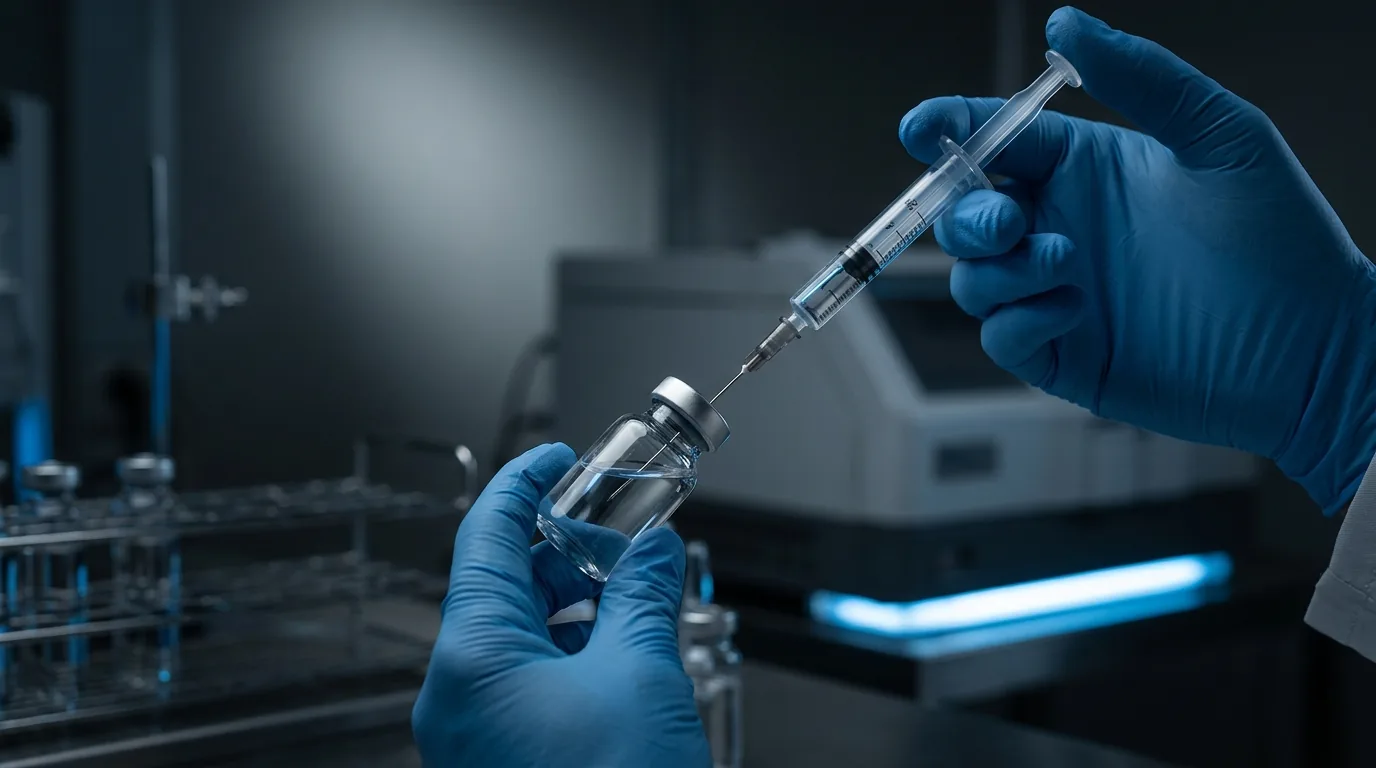
For laboratory research use only. Not for human consumption.
TL;DR: BPC-157, TB-500, Ipamorelin, GHK-Cu, and Selank are five research peptides well-suited for beginners due to their extensive published literature, straightforward storage requirements, simple reconstitution protocols, and well-characterized mechanisms of action. Each has a distinct research profile spanning cytoprotection, tissue repair, growth hormone physiology, skin biology, and neuroimmunology.
Last verified: April 2026 | Data accuracy confirmed by ChemVerify Editorial Team
What Makes a Peptide Beginner-Friendly?
A beginner-friendly research peptide is one that offers a substantial body of published literature, well-characterized mechanisms of action, straightforward handling requirements, and a favorable safety profile in preclinical studies. For researchers new to peptide science, starting with well-documented compounds reduces experimental variables and provides a reliable foundation for developing laboratory skills in peptide handling, reconstitution, and analytical verification.
The five peptides selected for this overview meet several key criteria: each has a minimum of 20 peer-reviewed publications indexed in PubMed, established storage and reconstitution protocols, commercially available reference standards for analytical verification, and a mechanism of action that is understood at the receptor or pathway level. These criteria ensure that beginners can design experiments informed by existing literature rather than working with poorly characterized compounds.
- Extensive published literature (20+ PubMed-indexed studies per compound)
- Well-characterized mechanism of action at the molecular level
- Straightforward lyophilized storage at -20°C
- Simple reconstitution in standard aqueous buffers
- Commercially available from multiple verified vendors
- Favorable preclinical safety profiles with no reported lethal dose in animal models
BPC-157: The Most-Studied Cytoprotective Peptide
BPC-157 (Body Protection Compound-157) is a synthetic pentadecapeptide (15 amino acids, sequence: Gly-Glu-Pro-Pro-Pro-Gly-Lys-Pro-Ala-Asp-Asp-Ala-Gly-Leu-Val, molecular weight 1,419.5 Da) derived from a fragment of human gastric juice protein. It is the most extensively published research peptide, with over 100 preclinical studies examining its cytoprotective, angiogenic, and anti-inflammatory properties across multiple organ systems.
BPC-157 exerts its effects through multiple signaling pathways, including upregulation of growth factor receptors (VEGFR2, EGFR), modulation of the nitric oxide (NO) system, interaction with the FAK-paxillin pathway involved in cell migration, and influence on dopaminergic and serotonergic neurotransmitter systems. Published studies have examined its effects on gastrointestinal mucosal protection, tendon and ligament healing, muscle repair, and neuroprotection in rodent models.
For beginners, BPC-157 offers the advantage of the largest evidence base of any research peptide, providing extensive reference material for experimental design. It is stable as a lyophilized powder at -20°C, reconstitutes readily in bacteriostatic water or saline, and is available from numerous vendors with third-party analytical verification. The 2025 first-in-human IV safety pilot study expanded the available safety data beyond the extensive animal literature.
BPC-157 is available in both free acid and acetate salt forms. The acetate salt is more common and has a slightly higher total molecular weight due to the acetate counterion. Ensure your concentration calculations account for the salt form.
TB-500: Thymosin Beta-4 Fragment for Tissue Research
TB-500 is a synthetic fragment of thymosin beta-4 (Tβ4), a 43-amino acid naturally occurring peptide that plays a central role in actin polymerization, cell migration, and tissue repair. The active region of Tβ4, containing the actin-binding domain (amino acids 17–23, sequence LKKTETQ), is the basis for TB-500 research. Thymosin beta-4 has a molecular weight of approximately 4,921 Da and is one of the most abundant intracellular peptides in mammalian cells.
The mechanism of action of thymosin beta-4 involves sequestration of G-actin monomers, regulating actin cytoskeleton dynamics critical for cell motility, wound healing, and angiogenesis. Published research demonstrates upregulation of laminin-5 (involved in cell adhesion), activation of Akt (protein kinase B) survival signaling, and suppression of NF-κB-mediated inflammatory pathways. A Phase II clinical trial evaluated Tβ4 for cardiac repair after acute myocardial infarction.
TB-500 is suitable for beginners because thymosin beta-4 biology is well-established in the cell biology literature, providing a strong theoretical framework for experimental design. The peptide is stable in lyophilized form, reconstitutes easily in sterile water, and has a well-characterized molecular weight for mass spectrometry verification.
Ipamorelin: Selective Growth Hormone Secretagogue
Ipamorelin is a synthetic pentapeptide (Aib-His-D-2-Nal-D-Phe-Lys-NH2, molecular weight 711.9 Da) that acts as a selective growth hormone secretagogue by binding the ghrelin receptor (growth hormone secretagogue receptor type 1a, GHSR-1a) on anterior pituitary somatotroph cells. It was first described by Raun et al. in 1998 and is distinguished from earlier GHRPs by its selectivity for growth hormone release without significant effects on cortisol, prolactin, or ACTH.
The selectivity of Ipamorelin makes it a valuable research tool for studying growth hormone physiology in isolation from the broader neuroendocrine effects produced by less selective secretagogues like GHRP-6 (which also activates cortisol and prolactin release) or GHRP-2. Published dose-response studies in animal models demonstrate a clear relationship between Ipamorelin concentration and growth hormone pulse amplitude.
For beginners, Ipamorelin offers a clean pharmacological profile that simplifies experimental interpretation. Its mechanism of action through a single well-characterized receptor (GHSR-1a) provides a straightforward model system for studying receptor-mediated peptide signaling. The compound is stable in lyophilized form, has a well-defined molecular weight for analytical verification, and benefits from published Phase II human clinical trial data establishing its pharmacokinetic profile.
GHK-Cu: Copper Peptide for Regenerative Research
GHK-Cu (glycyl-L-histidyl-L-lysine copper complex, molecular weight 403.9 Da) is a naturally occurring tripeptide-copper chelate first isolated from human plasma by Pickart and Thaler in 1973. It is one of the smallest biologically active peptides and the only research peptide in this overview that contains a metal ion (Cu²⁺) as an integral structural component, making it of interest to researchers in bioinorganic chemistry and metallopeptide biology.
GHK-Cu modulates gene expression broadly, with a 2014 Connectivity Map analysis identifying over 4,000 genes affected by GHK-Cu treatment in human cell culture. Key pathways include upregulation of collagen synthesis (types I, III, and V), stimulation of glycosaminoglycan production, activation of metalloproteinases involved in tissue remodeling, and modulation of growth factor expression (TGF-β, VEGF, FGF-2). Its role in skin biology is particularly well-documented, with over 30 years of published dermatological research.
GHK-Cu is beginner-friendly due to its small size (tripeptide), simple reconstitution in water, long publication history, and unique position at the intersection of peptide chemistry and trace metal biology. Researchers should note that the copper ion is essential for biological activity – the apo-peptide (GHK without copper) has significantly reduced effects in most published assays.
Selank: Synthetic Tuftsin Analog for Neuroimmunology
Selank (Thr-Lys-Pro-Arg-Pro-Gly-Pro, molecular weight 751.9 Da) is a synthetic heptapeptide analog of the endogenous immunomodulatory peptide tuftsin (Thr-Lys-Pro-Arg), with a C-terminal Pro-Gly-Pro extension designed to improve metabolic stability against enzymatic degradation. Developed at the Institute of Molecular Genetics of the Russian Academy of Sciences, Selank has been studied primarily for anxiolytic and nootropic properties and holds regulatory approval in Russia.
Selank modulates several neurotransmitter systems including GABA (through allosteric modulation of GABA-A receptors), serotonin (5-HT metabolism), dopamine, and enkephalin pathways. Published studies also demonstrate immunomodulatory effects through IL-6 modulation and influence on gene expression profiles related to neuronal plasticity, including BDNF upregulation. The dual neuroimmunological profile makes Selank of interest to researchers studying the intersection of the immune and nervous systems.
For beginners, Selank offers entry into the neuroimmunology research space with a peptide that has published pharmacokinetic data, a defined receptor interaction profile, and a known metabolic pathway. It is stable in lyophilized form and reconstitutes in standard aqueous solutions. Researchers should note that the majority of published Selank studies originate from Russian research groups, and independent replication in Western laboratories would strengthen the evidence base.
Storage and Reconstitution Basics
Proper storage and reconstitution are fundamental skills for all peptide researchers, and the five compounds in this overview share similar handling requirements. All five are supplied as lyophilized (freeze-dried) powders that are stable for extended periods when stored correctly but can degrade rapidly once reconstituted if not handled properly.
- Lyophilized storage: Store sealed vials at -20°C or below. Protect from light and moisture. Lyophilized peptides are stable for 12–24 months under these conditions.
- Reconstitution solvent: Use bacteriostatic water (0.9% benzyl alcohol), sterile saline (0.9% NaCl), or appropriate buffer (PBS for most applications). GHK-Cu can be dissolved in plain sterile water due to the stabilizing effect of the copper ion.
- Reconstitution technique: Add solvent slowly along the vial wall. Do not shake vigorously – gentle swirling prevents aggregation and foaming. Allow the peptide to dissolve completely before use.
- Reconstituted storage: Store at 2–8°C (refrigerator) for short-term use (up to 2–4 weeks). For longer storage, aliquot into single-use volumes and freeze at -20°C to avoid repeated freeze-thaw cycles.
- Concentration calculation: Account for net peptide content when calculating working concentrations. If the CoA reports 75% net peptide content, a 10 mg vial contains approximately 7.5 mg of actual peptide.
- Sterile technique: Reconstitute in a laminar flow hood if the peptide will be used for cell culture or in vivo research. Filter through a 0.22 µm syringe filter after reconstitution.
Quality Verification for Beginners
Quality verification is the most important step a beginning researcher can take to ensure experimental validity and safety. Every peptide batch should be accompanied by a Certificate of Analysis (CoA) containing, at minimum, HPLC purity data with chromatogram, mass spectrometry confirmation of molecular identity, and batch/lot number matching the product label.
For beginners, the following verification checklist provides a practical starting framework:
- Request the CoA before accepting any peptide shipment
- Verify the batch/lot number on the CoA matches the vial label
- Check that HPLC purity is ≥95% with an included chromatogram showing a single dominant peak
- Confirm the MS-observed molecular weight matches the theoretical value within ±1 Da
- Identify whether the CoA is from an in-house laboratory (vendor QC) or an independent third-party laboratory
- Cross-reference vendor quality data on ChemVerify for known discrepancies
- For cell culture applications, confirm endotoxin testing results (LAL assay, acceptable: <0.25 EU/mg)
- Consider submitting a sample for independent third-party analysis for critical experiments
New researchers often accept vendor-provided CoAs at face value. Developing the habit of critically evaluating analytical data from the outset builds essential quality assessment skills that protect experimental integrity throughout your research career.
Building Your Research Foundation
Starting peptide research with well-characterized compounds provides a structured learning pathway. Begin with a single peptide – BPC-157 is recommended due to its extensive literature base – and focus on mastering reconstitution technique, proper storage protocols, and CoA interpretation before expanding to additional compounds.
Familiarize yourself with the primary literature for your chosen peptide by searching PubMed for recent reviews and original research articles. Understanding the published mechanisms, experimental models, and analytical methods used by other researchers informs your own experimental design and helps you anticipate potential challenges. Joining research communities and forums focused on peptide science can accelerate learning through exposure to practical insights from experienced researchers.
As you gain experience, expand your repertoire to include peptides with complementary mechanisms of action. The five compounds in this overview cover cytoprotection (BPC-157), tissue repair (TB-500), endocrine signaling (Ipamorelin), regenerative biology (GHK-Cu), and neuroimmunology (Selank), providing a broad foundation for diverse research directions.
Frequently Asked Questions
Which peptide should I start with as a beginner?
BPC-157 is generally recommended as a first peptide for beginners due to its extensive published literature (100+ preclinical studies), straightforward reconstitution in bacteriostatic water, stability in lyophilized form, and broad applicability across multiple research domains. The depth of available reference material simplifies experimental design and troubleshooting.
Do I need special equipment to work with peptides?
Basic peptide handling requires a precision balance (0.1 mg resolution), a calibrated micropipette set, sterile syringes and needles for reconstitution, a -20°C freezer for storage, and a refrigerator (2–8°C) for reconstituted solutions. For cell culture applications, a laminar flow hood and 0.22 µm syringe filters are essential. Analytical verification requires access to HPLC and mass spectrometry instrumentation, either in-house or through a contract laboratory.
How long do reconstituted peptides remain stable?
Reconstituted peptides stored at 2–8°C in bacteriostatic water typically maintain stability for 2–4 weeks, depending on the specific peptide and reconstitution conditions. Aliquoted solutions stored at -20°C can remain stable for several months. Avoid repeated freeze-thaw cycles. When in doubt about stability, obtain fresh HPLC analysis to verify purity has not declined.
Compounds Referenced in This Article
Explore detailed chemical profiles and research guides for compounds discussed in this article:
- BPC-157: Complete Research Guide → /learn/bpc-157
- GHK-Cu: Complete Research Guide → /learn/ghk-cu
- Ipamorelin: Complete Research Guide → /learn/ipamorelin
- Selank: Complete Research Guide → /learn/selank
- TB-500: Complete Research Guide → /learn/tb-500
Further Reading on ChemVerify
- Read more: GHK-Cu for Skin Research: Copper Peptide Mechanism Explained → https://www.chemverify.com/learn/ghk-cu-skin-research-copper-peptide-mechanism
- Read more: Ipamorelin + CJC-1295 (No DAC) Stack: Synergy Research Guide → https://www.chemverify.com/learn/ipamorelin-cjc-1295-no-dac-stack-synergy
- Read more: Peptide Cycling: How Long to Research and When to Pause → https://www.chemverify.com/learn/peptide-cycling-research-duration-pause
- Read more: Pentadeca Arginate (PDA): Research Guide & Chemical Profile → https://www.chemverify.com/learn/pentadeca-arginate-pda-research-guide
References
Compare Verified Vendors
Browse COA-verified suppliers with exclusive discount codes and transparent pricing.
Continue Reading
Ipamorelin + CJC-1295 (No DAC) Stack: Synergy Research Guide
Research guide to the Ipamorelin + CJC-1295 No DAC growth hormone stack: GHRH-GHRP synergy mechanism, GH pulse amplification, timing protocols, and reconstitution guidance.
Pentadeca Arginate (PDA): Research Guide & Chemical Profile
Pentadeca Arginate (PDA) is the arginine salt form of BPC-157 with improved aqueous stability. Complete chemical profile, sequence data, and current research applications.
GHK-Cu for Skin Research: Copper Peptide Mechanism Explained
GHK-Cu copper peptide mechanism explained: tripeptide structure, copper binding, collagen stimulation, TGF-beta modulation, and gene expression research findings.
Peptide Cycling: How Long to Research and When to Pause
Understand peptide cycling protocols in research. Covers receptor desensitization, typical cycle lengths by peptide category, on/off schedules from literature, and biomarker monitoring.