
L-Carnitine: Complete Research Guide & Chemical Profile
Comprehensive guide to L-Carnitine for laboratory research. Learn about chemical properties, mechanism of action, and research applications of this amino acid derivative.
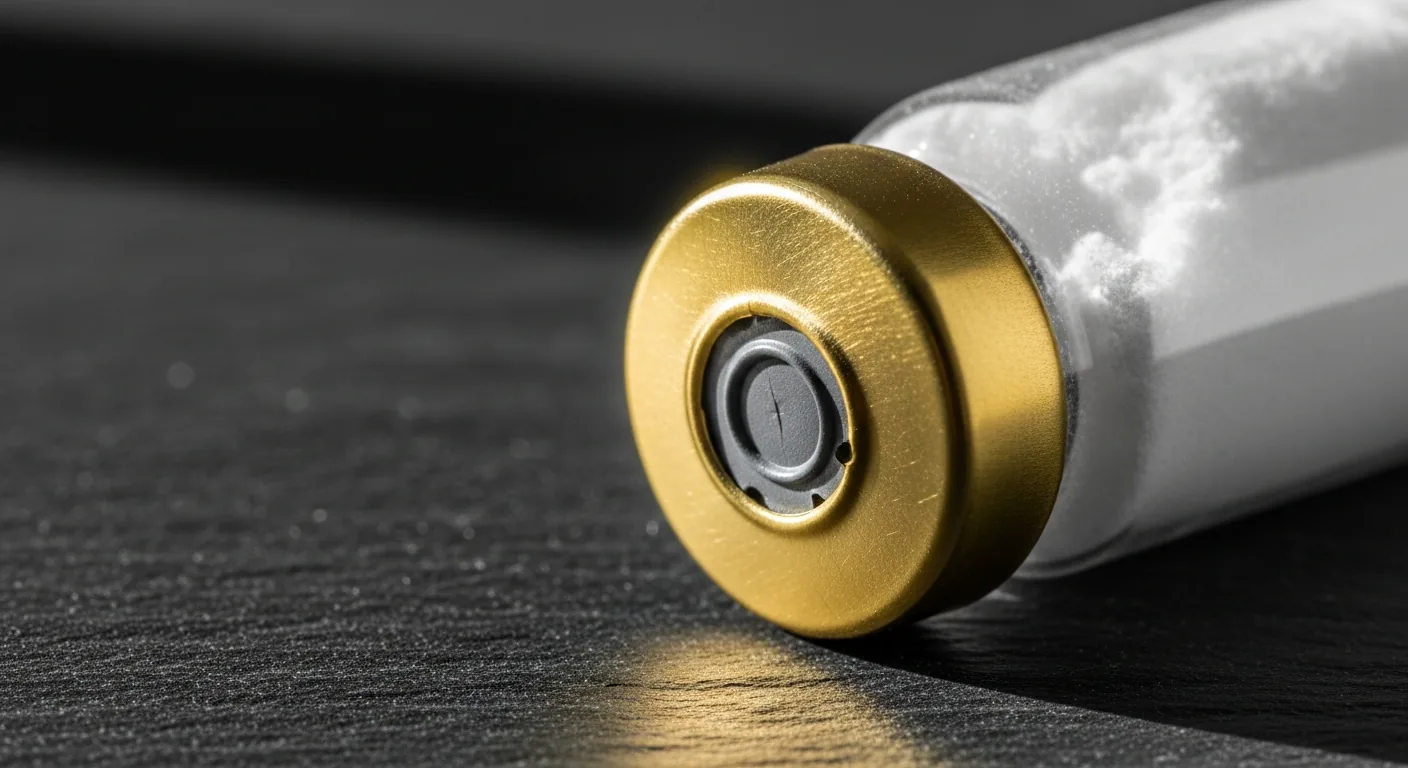
For laboratory research use only. Not for human consumption. This article is intended for educational purposes and does not constitute medical advice.
TL;DR: L-Carnitine is a quaternary ammonium compound (MW ~161.20 Da) biosynthesized from lysine and methionine. Research-grade L-carnitine requires ≥99% chiral purity (L-form only) verified by chiral HPLC, with absence of the biologically inactive D-carnitine isomer. Available as free base, tartrate, or acetyl-L-carnitine (ALCAR) forms. Compare verified L-carnitine pricing across vendors at chemverify.com.
Last verified: March 2026 | Data accuracy confirmed by ChemVerify Editorial Team
What Is L-Carnitine?
L-Carnitine (L-3-hydroxytrimethylammoniobutanoate) is a quaternary ammonium compound with the molecular weight of 161.20 Da. Also known as Levocarnitine or simply Carnitine, this naturally occurring compound is biosynthesized from the amino acids lysine and methionine in laboratory settings.
Research into L-Carnitine has established its critical role in cellular energy metabolism, particularly in the transport of long-chain fatty acids into mitochondrial matrices. The compound exists as a zwitterion at physiological pH, making it highly water-soluble and suitable for various research applications.
In laboratory studies, L-Carnitine is classified as a conditionally essential nutrient, meaning that while organisms can synthesize it endogenously, certain conditions may require external supplementation in experimental models. Its stereoisomer, D-Carnitine, lacks the biological activity of the L-form and may even interfere with L-Carnitine function in research settings.
Research Background & Key Studies
Extensive research has been conducted on L-Carnitine since its discovery in muscle tissue in 1905. Laboratory studies have consistently demonstrated its fundamental role in fatty acid oxidation and energy production at the cellular level.
Research published in the Journal of Clinical Investigation has shown that L-Carnitine deficiency in laboratory models results in impaired fatty acid oxidation and altered energy metabolism. Studies indicate that the compound is essential for the transport of acetyl and acyl groups across mitochondrial membranes in experimental systems.
Metabolic research has revealed that L-Carnitine concentrations vary significantly across different tissue types in laboratory specimens. Skeletal muscle typically contains the highest concentrations, followed by cardiac tissue, with lower levels observed in liver and kidney samples.
Recent studies in cellular biology have explored L-Carnitine's role beyond fatty acid metabolism, investigating its potential involvement in glucose homeostasis, protein metabolism, and cellular antioxidant systems in controlled laboratory environments.
Mechanism of Action
L-Carnitine functions primarily through the carnitine shuttle system, a well-characterized biochemical pathway studied extensively in laboratory settings. This mechanism involves the transport of long-chain fatty acids across the inner mitochondrial membrane for β-oxidation.
The process begins with the enzyme carnitine palmitoyltransferase I (CPT-I), which catalyzes the formation of acylcarnitine from L-Carnitine and fatty acyl-CoA on the outer mitochondrial membrane. Research has shown this step to be rate-limiting in fatty acid oxidation under laboratory conditions.
Laboratory studies demonstrate that acylcarnitine is then transported across the inner mitochondrial membrane via the carnitine/acylcarnitine translocase. Once inside the mitochondrial matrix, carnitine palmitoyltransferase II (CPT-II) converts acylcarnitine back to fatty acyl-CoA and free L-Carnitine.
Research indicates that L-Carnitine also participates in the removal of toxic acyl groups from cellular compartments through the formation of acylcarnitines, which can be excreted or metabolized further in experimental systems.
Chemical Properties
L-Carnitine exhibits excellent stability under standard laboratory storage conditions when maintained at temperatures below 25°C. Research-grade L-Carnitine typically meets purity standards of ≥99%, making it suitable for precise experimental applications.
The compound demonstrates high water solubility (>200 mg/mL at room temperature) and remains stable in aqueous solutions for extended periods when stored properly. Its hygroscopic nature requires careful handling in laboratory environments with controlled humidity.
Laboratory analysis shows that L-Carnitine has a relatively short half-life of 2-3 hours in biological systems, which is an important consideration for experimental design and timing in research protocols. The compound is readily filtered by kidneys in experimental models, requiring consideration of clearance rates in long-term studies.
For optimal research applications, L-Carnitine should be stored in sealed containers protected from light and moisture. Solutions can be prepared fresh for experiments or stored at 4°C for short-term use, with freezing recommended for long-term storage in laboratory settings.
Verified Sources on ChemVerify
Researchers seeking high-quality L-Carnitine for laboratory applications can find verified vendors and third-party tested batches on ChemVerify. Our platform provides comprehensive vendor verification and batch testing data to ensure research-grade quality standards.
ChemVerify's L-Carnitine listings at /product/l-carnitine feature detailed analytical reports, including purity verification, heavy metals testing, and microbial contamination screening. This transparency allows researchers to select products that meet their specific experimental requirements.
Each vendor on our platform undergoes rigorous qualification processes, and product batches are subject to independent third-party testing. This verification system helps ensure that researchers receive authentic, high-quality L-Carnitine for their laboratory studies.
Frequently Asked Questions
What is the optimal storage temperature for L-Carnitine in laboratory settings?
Research-grade L-Carnitine should be stored at temperatures below 25°C in sealed containers protected from moisture and light. For long-term storage, freezing at -20°C or below is recommended to maintain compound stability and purity.
How does L-Carnitine stability compare to D-Carnitine in experimental applications?
Laboratory studies indicate that L-Carnitine demonstrates superior stability and biological activity compared to its D-stereoisomer. D-Carnitine lacks the transport functionality of L-Carnitine and may interfere with research outcomes when present as a contaminant.
What factors affect L-Carnitine solubility in research preparations?
L-Carnitine exhibits excellent water solubility (>200 mg/mL) at room temperature. pH levels between 6-8 provide optimal solubility for most laboratory applications. Temperature and ionic strength can also influence dissolution rates in experimental solutions.
Can L-Carnitine be used in cell culture research?
Yes, L-Carnitine is commonly used in cell culture studies investigating fatty acid metabolism and mitochondrial function. Research protocols typically use concentrations ranging from 0.1-10 mM, depending on the experimental objectives and cell line characteristics.
What analytical methods are used to verify L-Carnitine purity?
High-Performance Liquid Chromatography (HPLC) is the standard method for L-Carnitine purity analysis in research applications. Additional verification may include mass spectrometry, nuclear magnetic resonance (NMR), and optical rotation measurements to confirm stereochemical integrity.
How does L-Carnitine interact with other research compounds?
Laboratory studies suggest that L-Carnitine generally exhibits good compatibility with common research buffers and media. However, researchers should be aware of potential interactions with certain metal ions and oxidizing agents that may affect experimental outcomes.
Frequently Asked Questions
Further Reading on ChemVerify
- Read more: Hexarelin: Complete Research Guide & Chemical Profile → https://www.chemverify.com/learn/hexarelin-research-guide-chemical-profile
- Read more: How Fast Do Peptides Work? Expected Timelines for BPC-157, Semaglutide, Ipamorelin & More → https://www.chemverify.com/learn/how-fast-do-peptides-work-timelines
- Read more: Retatrutide: Complete Research Guide & Chemical Profile → https://www.chemverify.com/learn/retatrutide-research-guide-chemical-profile
- Read more: Tirzepatide: Complete Research Guide & Chemical Profile → https://www.chemverify.com/learn/tirzepatide
References
Compare Verified Vendors
Browse COA-verified suppliers with exclusive discount codes and transparent pricing.
Continue Reading
Hexarelin: Complete Research Guide & Chemical Profile
Comprehensive research guide to Hexarelin (Examorelin), a synthetic hexapeptide GHSR-1a agonist. Covers molecular weight 887.04 Da, sequence, GH release mechanisms, and cardiac research.
L-Carnitine at Helus Lab: Price, Purity & Verification
L-Carnitine from Helus Lab – EUR 14.99/5000mg, COA verified.
L-Carnitine at Beyond Peptides: Price, Purity & Verification
L-Carnitine from Beyond Peptides – EUR 52.25/5000mg, COA verified.
How Fast Do Peptides Work? Expected Timelines for BPC-157, Semaglutide, Ipamorelin & More
Peptide onset varies widely: recovery peptides like BPC-157 show effects within 1-2 weeks, while body composition agents require 8-12 weeks. Explore evidence-based timelines by category.