
Amino Acid Analysis for Peptides: Complete Guide to Verification Methods
Master amino acid analysis techniques for peptide verification. Learn HPLC, mass spectrometry methods, sample prep, and quality control for accurate research.
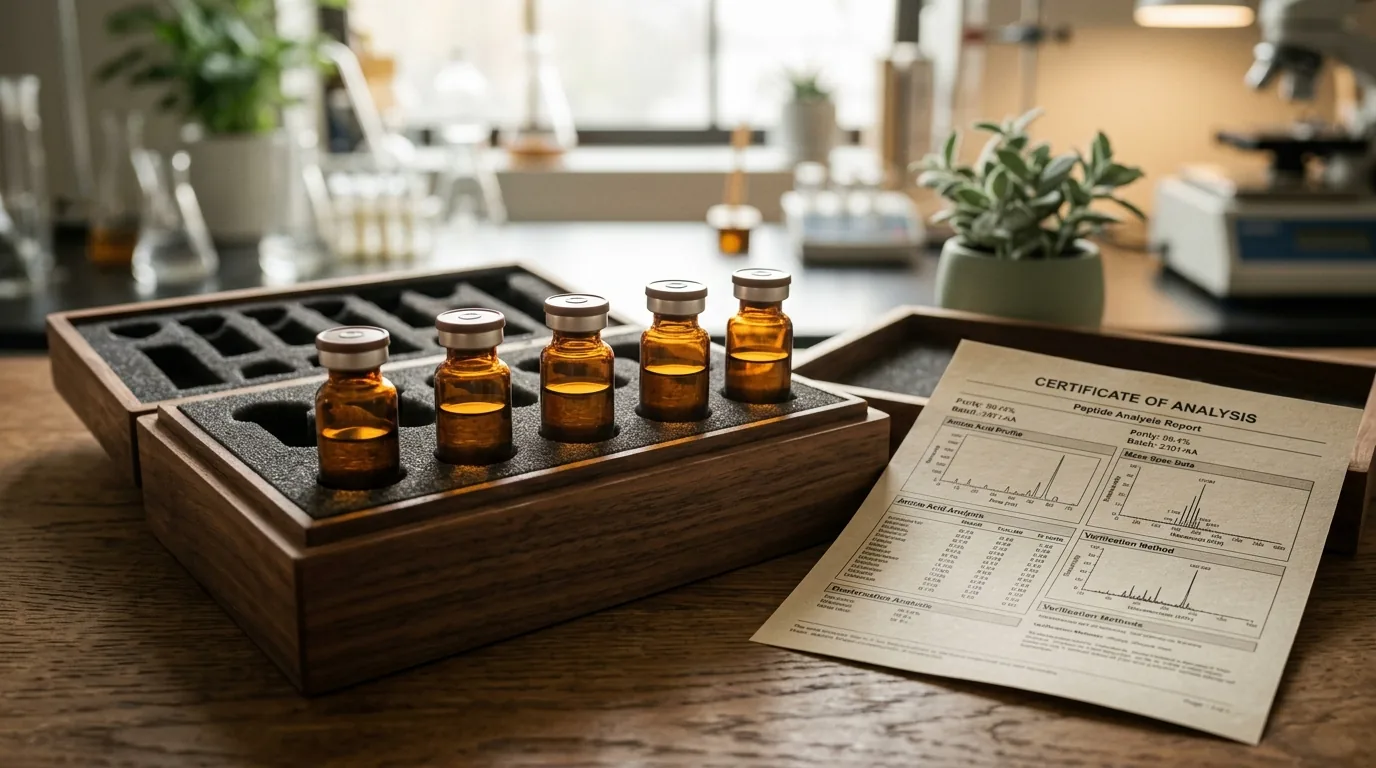
Amino acid analysis for peptides represents a cornerstone analytical technique in peptide research and quality verification. This comprehensive approach enables researchers to determine the precise composition, purity, and structural integrity of peptide compounds through systematic examination of their constituent amino acids. Understanding these analytical methods is essential for ensuring research reproducibility and compound authenticity.
TL;DR: Amino acid analysis (AAA) quantifies individual amino acid composition in peptides, serving as a critical verification method alongside HPLC and mass spectrometry. It confirms sequence identity, detects degradation products, and validates peptide concentration – essential for reproducible research results.
Last verified: March 2026 | Data accuracy confirmed by ChemVerify Editorial Team
Modern peptide research demands rigorous analytical verification to support scientific conclusions and regulatory compliance. Amino acid analysis provides quantitative data on peptide composition, enabling researchers to confirm sequence accuracy, assess degradation products, and validate synthesis outcomes with unprecedented precision.
Understanding Amino Acid Analysis in Peptide Research
Amino acid analysis serves as a fundamental quality control measure for peptide characterization. This analytical process involves complete hydrolysis of peptide bonds followed by separation and quantification of individual amino acids. The technique provides critical information about peptide purity, composition accuracy, and potential impurities.
Research peptides like BPC-157, TB-500, and Semaglutide require precise amino acid analysis to verify their structural integrity and therapeutic potential. These analyses ensure that synthetic peptides match their intended sequences and maintain consistent quality across production batches.
Amino acid analysis can detect compositional variations as small as 1-2%, making it an invaluable tool for peptide quality assessment and research validation.
Fundamentals of Amino Acid Analysis
The analytical process begins with complete peptide hydrolysis, typically using 6M hydrochloric acid at elevated temperatures. This procedure cleaves all peptide bonds, releasing individual amino acids for subsequent analysis. The hydrolysis conditions must be optimized to ensure complete bond cleavage while minimizing amino acid degradation.
- Acid hydrolysis using 6M HCl at 110°C for 18-24 hours
- Base hydrolysis for tryptophan preservation using 4M NaOH
- Enzymatic hydrolysis for mild conditions using proteolytic enzymes
- Vapor-phase hydrolysis for improved amino acid recovery
Post-hydrolysis processing involves sample concentration, pH adjustment, and derivatization when required. These preparatory steps ensure optimal conditions for chromatographic separation and detection of amino acids.
Analytical Methods for Peptide Amino Acid Analysis
Contemporary amino acid analysis employs several sophisticated analytical techniques, each offering unique advantages for specific research applications. The choice of method depends on sample characteristics, required sensitivity, and analytical objectives.
HPLC-Based Amino Acid Analysis
High-Performance Liquid Chromatography (HPLC) represents the gold standard for amino acid analysis in peptide research. Pre-column or post-column derivatization with reagents like OPA (o-phthalaldehyde) or FMOC (9-fluorenylmethoxycarbonyl) enables sensitive fluorescence detection.
- Pre-column derivatization with FMOC for enhanced stability
- Post-column derivatization with ninhydrin for universal detection
- Reverse-phase chromatography for optimal separation efficiency
- Ion-exchange chromatography for challenging amino acid mixtures
Advanced HPLC systems achieve baseline separation of all 20 standard amino acids within 45-60 minutes, with detection limits in the picomole range. This sensitivity enables analysis of small peptide samples while maintaining analytical precision.
Mass Spectrometry Applications
LC-MS/MS systems provide definitive amino acid identification through mass spectral fragmentation patterns. This approach offers superior specificity compared to chromatographic methods alone, enabling confident identification of modified or unusual amino acids.
Tandem mass spectrometry protocols can simultaneously quantify amino acids and detect impurities, making them particularly valuable for analyzing complex peptide samples like Tirzepatide or Ipamorelin derivatives.
Sample Preparation and Hydrolysis Protocols
Proper sample preparation critically influences analytical accuracy and reproducibility. Standard protocols involve peptide dissolution, hydrolysis optimization, and sample cleanup procedures tailored to specific analytical requirements.
- Dissolve peptide samples in appropriate solvents (water, dilute acid)
- Add internal standards for quantitative accuracy
- Perform hydrolysis under controlled atmospheric conditions
- Remove excess acid through evaporation or neutralization
- Filter samples to remove particulate matter before injection
Tryptophan and cysteine require special handling during hydrolysis. Tryptophan degrades under acidic conditions, while cysteine may form disulfide bridges affecting quantification accuracy.
Quality peptides like Tesamorelin and HGH Fragment 176-191 benefit from standardized preparation protocols that minimize analytical variability and ensure consistent results across multiple analyses.
Quality Control and Method Validation
Robust quality control measures ensure analytical reliability and data integrity. Method validation parameters include linearity, precision, accuracy, specificity, and detection limits established through systematic testing protocols.
- Calibration using certified amino acid reference standards
- System suitability testing before each analytical run
- Blank injections to monitor contamination levels
- Duplicate analysis for precision assessment
- Recovery studies using peptide standards with known composition
Documentation requirements include analytical procedures, calibration records, and quality control data that support research conclusions and regulatory submissions when applicable.
Common Challenges and Troubleshooting
Amino acid analysis presents several technical challenges that require systematic troubleshooting approaches. Understanding common issues and their solutions enhances analytical success rates and data quality.
- Incomplete hydrolysis leading to low amino acid recovery
- Amino acid degradation during harsh hydrolysis conditions
- Contamination from laboratory glassware or reagents
- Derivatization reagent stability affecting quantification
- Chromatographic interference from impurities or degradation products
Regular maintenance of analytical instruments and use of high-purity reagents significantly reduces analytical complications and improves data consistency.
Systematic troubleshooting protocols involve method parameter optimization, reference standard verification, and systematic elimination of potential interference sources.
Best Practices for Reliable Results
Achieving reliable amino acid analysis results requires adherence to established best practices that minimize variability and maximize analytical confidence. These practices encompass sample handling, analytical procedures, and data interpretation guidelines.
- Use certified reference materials for calibration and validation
- Implement appropriate internal standards for quantitative accuracy
- Maintain consistent environmental conditions during analysis
- Document all procedural modifications and their rationale
- Perform regular instrument maintenance and performance verification
- Store samples under appropriate conditions to prevent degradation
Research peptides including AOD 9604, Cagrilintide, and 5-Amino-1MQ require consistent analytical approaches that account for their unique structural characteristics and potential degradation pathways.
Establishing analytical protocols during early research phases ensures consistent data quality throughout extended study periods and facilitates meaningful comparison of results.
Research Applications and Case Studies
Amino acid analysis supports diverse research applications ranging from peptide synthesis verification to stability studies and impurity profiling. These applications demonstrate the versatility and importance of accurate compositional analysis in peptide research.
Synthesis verification studies utilize amino acid analysis to confirm that synthetic peptides match their intended sequences. This application is particularly important for complex peptides like CJC-1295 (No DAC) and Epithalon, where synthesis errors can significantly impact biological activity.
Stability studies employ amino acid analysis to monitor peptide degradation over time under various storage conditions. These studies provide critical data for establishing appropriate storage protocols and expiration dating for research compounds.
Impurity profiling applications identify and quantify related substances that may accompany peptide synthesis or result from degradation processes. This information supports safety assessments and quality specifications for research materials.
Advanced research applications include analysis of modified peptides containing non-standard amino acids, cross-linking studies, and investigation of peptide-protein interactions through compositional analysis of bound complexes.
Frequently Asked Questions
What is amino acid analysis used for in peptide research?
Amino acid analysis determines the exact composition and ratio of amino acids in a peptide sample. Researchers use it to verify peptide identity, assess purity, and measure accurate concentration for experimental protocols.
How does AAA differ from HPLC testing?
While HPLC separates peptides based on hydrophobicity to assess overall purity, AAA breaks the peptide into individual amino acids and quantifies each one. They are complementary – HPLC tells you how pure the sample is, AAA confirms it contains the correct building blocks.
Can amino acid analysis detect peptide degradation?
Yes. Degraded peptides show altered amino acid ratios compared to the expected composition. AAA can reveal hydrolysis, oxidation, or deamidation by detecting shifts in specific amino acid quantities.
How much sample is needed for amino acid analysis?
Most modern AAA methods require 1–50 micrograms of peptide material. Pre-column derivatization techniques like AccQ-Tag can work with as little as 1 microgram, making them suitable for precious research samples.
Compounds Referenced in This Article
Explore detailed chemical profiles and research guides for compounds discussed in this article:
- AOD 9604: Complete Research Guide → /learn/aod-9604
- BPC-157: Complete Research Guide → /learn/bpc-157
- CJC-1295: Complete Research Guide → /learn/cjc-1295-no-dac
- Epithalon: Complete Research Guide → /learn/epithalon
- HGH Fragment 176-191: Complete Research Guide → /learn/hgh-fragment-176-191
- Ipamorelin: Complete Research Guide → /learn/ipamorelin
- Semaglutide: Complete Research Guide → /learn/semaglutide
- TB-500: Complete Research Guide → /learn/tb-500
- Tesamorelin: Complete Research Guide → /learn/tesamorelin
- Tirzepatide: Complete Research Guide → /learn/tirzepatide
Further Reading on ChemVerify
- Read more: AI-Guided High-Throughput Screening Accelerates Antimicrobial Peptide-Mimicking Polymer Discovery → https://www.chemverify.com/learn/ai-guided-antimicrobial-peptide-polymer-discovery
- Read more: Re-Engineering Insulin for Oral Delivery: Structural Modifications and Formulation Advances → https://www.chemverify.com/learn/insulin-oral-delivery-peptide-engineering
- Read more: Cyclic Lipopeptides: Biosurfactant Peptides as Next-Generation Drug Delivery Modulators → https://www.chemverify.com/learn/cyclic-lipopeptides-drug-delivery-modulators
- Read more: Microneedle-Delivered Peptide Decoy Receptors Show Promise in Psoriasis Treatment → https://www.chemverify.com/learn/microneedle-peptide-decoy-receptors-psoriasis
- Read more: GLP-1 Receptor Agonists Demonstrate Cardiorenal Protection in Chronic Kidney Disease: Meta-Analysis → https://www.chemverify.com/learn/glp1-receptor-agonists-cardiorenal-protection-ckd
References
Compare Verified Vendors
Browse COA-verified suppliers with exclusive discount codes and transparent pricing.
You Might Also Like
Continue Reading
Beyond Sleep: Complete Research Guide & Chemical Profile
Comprehensive research guide on Beyond Sleep peptide blend for sleep and circadian rhythm studies. Chemical properties, mechanisms, and laboratory applications.
AI-Guided High-Throughput Screening Accelerates Antimicrobial Peptide-Mimicking Polymer Discovery
Researchers at Zhejiang University combined machine learning with automated high-throughput synthesis to efficiently discover antimicrobial polymers that mimic the action of natural antimicrobial peptides, screening over 13,000 candidates to find top performers.
Research Peptide Vendor Verification: The Complete Quality Checklist
A systematic, evidence-based checklist for evaluating research peptide suppliers. Covers CoA verification, testing standards, transparency indicators, and warning signs of unreliable vendors.
Re-Engineering Insulin for Oral Delivery: Structural Modifications and Formulation Advances
A comprehensive 2026 review examines cutting-edge strategies to overcome the challenges of oral insulin delivery, including PEGylation, lipidation, cyclization, and nanocarrier technologies that enhance peptide stability and bioavailability.