
LL-37: Complete Research Guide & Chemical Profile
Comprehensive research guide to LL-37, the only human cathelicidin antimicrobial peptide. Covers MW ~4493 Da, 37-residue sequence, antimicrobial mechanisms, immunomodulation, and wound healing.
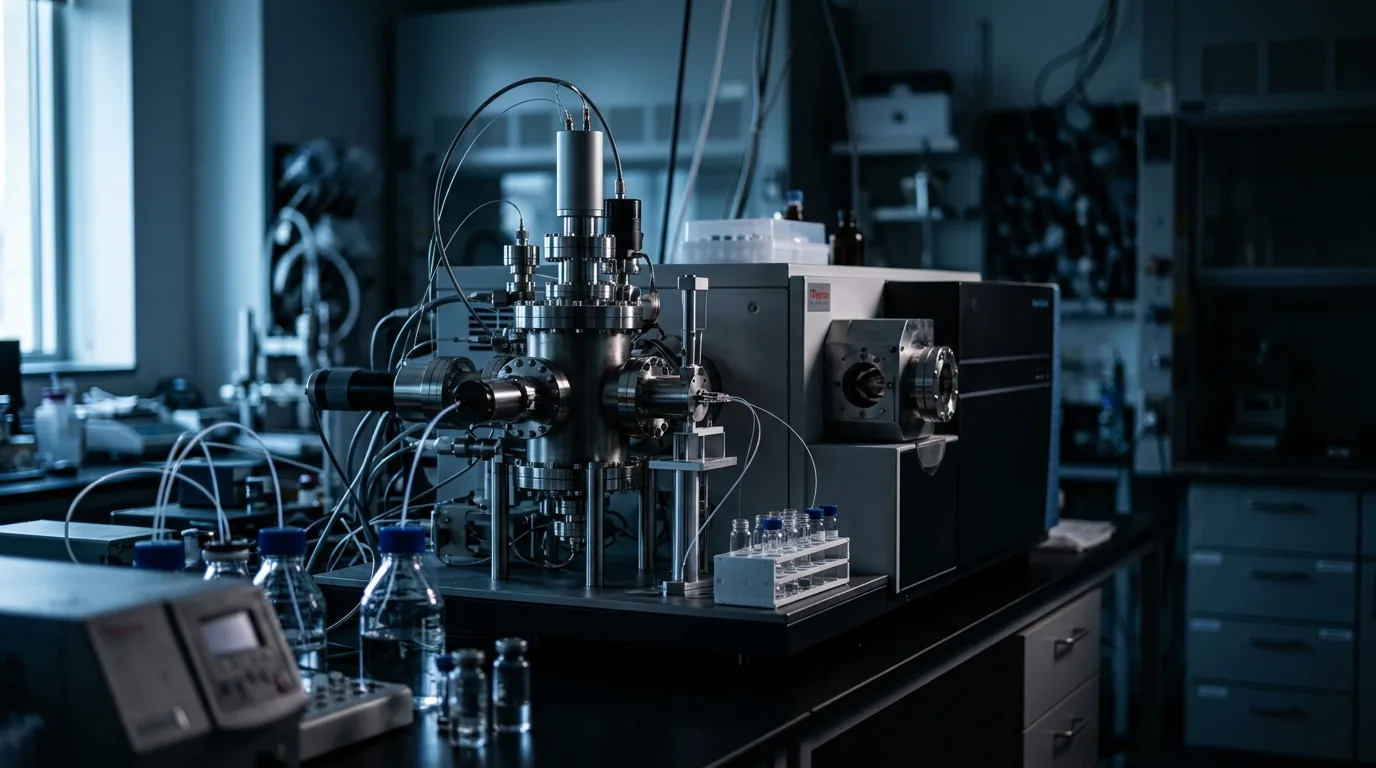
For laboratory research use only. Not for human consumption.
TL;DR: LL-37 is the sole human cathelicidin-derived antimicrobial peptide, a 37-residue alpha-helical peptide (MW ~4493 Da) starting with two leucine residues. It disrupts microbial membranes, modulates innate immune responses, and promotes wound healing in preclinical research. This guide covers its chemical profile, antimicrobial mechanisms, immunomodulatory functions, and laboratory handling.
Last verified: April 2026 | Data accuracy confirmed by ChemVerify Editorial Team
Chemical Identity & Molecular Properties
LL-37 is a 37-amino acid cationic antimicrobial peptide derived from the C-terminal cleavage of the human cathelicidin precursor protein hCAP18 (human cationic antimicrobial protein, 18 kDa). Its name reflects the two N-terminal leucine residues (Leu-Leu) and total length of 37 amino acids. The complete sequence is LLGDFFRKSKEKIGKEFKRIVQRIKDFLRNLVPRTES. Its molecular formula is approximately C₂₀₅H₃₄₀N₆₀O₅₃ and molecular weight is approximately 4493.3 Da.
LL-37 carries a net positive charge of +6 at physiological pH due to the presence of 11 positively charged residues (5 Lys, 5 Arg, 1 His-like contribution) and 5 negatively charged residues (2 Glu, 2 Asp, 1 C-terminal carboxylate). This cationic character is fundamental to its interaction with the negatively charged phospholipid membranes of bacteria and other microorganisms. The peptide is amphipathic, forming an alpha-helical structure with distinct hydrophobic and hydrophilic faces.
- Molecular Weight: ~4493.3 Da
- Sequence: LLGDFFRKSKEKIGKEFKRIVQRIKDFLRNLVPRTES (37 residues)
- Net Charge: +6 at pH 7.4
- Parent Protein: hCAP18 (human cathelicidin antimicrobial protein 18 kDa)
- Gene: CAMP (cathelicidin antimicrobial peptide), chromosome 3p21.31
- Structure: Amphipathic alpha-helix in membrane environments
- Solubility: Soluble in water (up to ~5 mg/mL), DMSO, dilute acetic acid
- Storage: -20°C lyophilized; 2-8°C reconstituted
Cathelicidin Biology & Processing
LL-37 is the only cathelicidin-family antimicrobial peptide identified in humans, whereas other mammals express multiple cathelicidins. The precursor protein hCAP18 is stored in the specific (secondary) granules of neutrophils and is secreted by epithelial cells of the skin, airways, gastrointestinal tract, and urogenital tract. Upon neutrophil degranulation or epithelial release, extracellular proteinase 3 (a serine protease) cleaves hCAP18 to release the biologically active LL-37 fragment.
CAMP gene expression is regulated by multiple signals including vitamin D (through a vitamin D response element in the CAMP promoter), bacterial products (LPS, flagellin), inflammatory cytokines (IL-1, IL-6), and butyrate (a short-chain fatty acid produced by gut bacteria). The vitamin D-CAMP axis has been a major area of investigation in innate immunity research, with vitamin D deficiency associated with reduced LL-37 expression and impaired antimicrobial defense.
LL-37 concentrations in biological fluids vary significantly: plasma levels are approximately 1-2 micrograms per milliliter, while concentrations at sites of infection or inflammation can reach 5-100 micrograms per milliliter. In wound fluid, LL-37 levels peak during the early inflammatory phase and decline as healing progresses, suggesting a temporal regulatory role in the wound repair process.
Antimicrobial Mechanisms
The primary antimicrobial mechanism of LL-37 involves disruption of microbial membrane integrity. The cationic peptide initially binds to negatively charged components of microbial surfaces – lipopolysaccharide (LPS) in Gram-negative bacteria, lipoteichoic acid (LTA) in Gram-positive bacteria, and phosphatidylglycerol/cardiolipin in general bacterial membranes. This electrostatic interaction positions the peptide at the membrane surface, where it adopts its amphipathic alpha-helical conformation.
Multiple models describe subsequent membrane disruption: the barrel-stave model (peptides insert perpendicularly to form transmembrane pores), the toroidal pore model (peptides and lipids curve inward to form a pore with continuous lipid-peptide lining), and the carpet model (peptides accumulate on the membrane surface until a critical concentration is reached, causing detergent-like solubilization). Current evidence suggests LL-37 primarily operates through the toroidal pore and carpet mechanisms.
LL-37 exhibits broad-spectrum activity against Gram-positive bacteria (including S. aureus and MRSA), Gram-negative bacteria (E. coli, P. aeruginosa, K. pneumoniae), fungi (Candida species), and enveloped viruses. Minimum inhibitory concentrations (MICs) in standard microbroth dilution assays typically range from 2-32 micrograms per milliliter, though activity is significantly reduced in physiological salt concentrations and serum due to charge neutralization and protein binding.
Immunomodulatory Functions
Beyond direct antimicrobial activity, LL-37 functions as a multifaceted immunomodulatory molecule. It acts as a chemoattractant for neutrophils, monocytes, and T cells through activation of the formyl peptide receptor-like 1 (FPRL1/FPR2), promoting immune cell recruitment to sites of infection. LL-37 also activates mast cells to release histamine and prostaglandin D2, enhancing local inflammatory responses.
Paradoxically, LL-37 also exhibits anti-inflammatory properties by neutralizing lipopolysaccharide (LPS) and preventing TLR4-mediated proinflammatory signaling. This LPS-neutralizing capacity reduces macrophage production of TNF-alpha, IL-6, and nitric oxide in response to Gram-negative bacterial products. The dual pro-inflammatory (chemotaxis, cell activation) and anti-inflammatory (LPS neutralization) activities position LL-37 as an immune modulator that fine-tunes rather than simply amplifies the innate immune response.
LL-37 influences adaptive immunity through effects on dendritic cell maturation and function. It promotes dendritic cell differentiation toward a Th1-polarizing phenotype, enhances antigen uptake and processing, and facilitates the formation of LL-37-DNA or LL-37-RNA complexes that activate TLR9 and TLR7/8 pathways respectively. These nucleic acid complexes have been implicated in the pathogenesis of psoriasis, where LL-37 breaks immune tolerance to self-DNA.
Wound Healing Research
LL-37 has demonstrated significant wound-healing activity in preclinical research models. The peptide promotes re-epithelialization through stimulation of keratinocyte migration and proliferation, mediated by transactivation of the epidermal growth factor receptor (EGFR). This process involves LL-37-induced metalloproteinase activation, which releases membrane-bound EGFR ligands (HB-EGF) from the keratinocyte surface, triggering autocrine EGFR signaling.
In addition to epithelial effects, LL-37 stimulates angiogenesis by promoting endothelial cell proliferation, migration, and tube formation in matrigel assays. These angiogenic effects are mediated through FPRL1 activation and involve downstream signaling through the PI3K/Akt and MAPK/ERK pathways. Enhanced neovascularization provides the nutrient supply necessary for granulation tissue formation and wound closure.
LL-37 also modulates the wound environment by promoting fibroblast migration without inducing excessive fibroblast proliferation or collagen deposition, suggesting a pro-healing rather than pro-fibrotic role. In excisional wound models, topical application of LL-37 accelerates wound closure, increases granulation tissue formation, and enhances organized collagen deposition compared to vehicle-treated controls.
Structural Biology & Amphipathicity
In aqueous solution at low concentrations, LL-37 is largely unstructured (random coil). Upon interaction with lipid membranes, membrane-mimetic environments (SDS micelles, trifluoroethanol), or at high peptide concentrations, LL-37 adopts an amphipathic alpha-helical conformation spanning approximately residues 2-31, with a disordered C-terminal tail (residues 32-37). This environment-dependent structural transition is critical for biological activity.
The alpha-helical structure creates distinct hydrophobic and hydrophilic faces along the helix axis. The hydrophobic face (containing Phe5, Phe6, Ile13, Phe17, Ile20, Val21, Ile24, Phe27, Leu28, Leu31) inserts into the lipid bilayer, while the hydrophilic cationic face (Arg7, Lys8, Lys10, Glu11, Lys12, Lys15, Arg23, Lys25, Arg29) interacts with the polar head groups. This amphipathic arrangement is the structural basis for membrane selectivity and disruption.
Circular dichroism (CD) spectroscopy is the standard technique for characterizing LL-37 secondary structure. In buffer alone, the CD spectrum shows a minimum near 200 nm (random coil). In the presence of SDS micelles or liposomes, the spectrum shifts to show characteristic alpha-helical minima at 208 nm and 222 nm. The ratio of ellipticity at 222/208 nm provides information about helix-helix interactions and oligomerization state.
Biofilm Disruption Research
LL-37 has demonstrated the ability to prevent biofilm formation and disrupt established biofilms in vitro, a property of significant research interest given the recalcitrance of biofilm infections to conventional antibiotics. At sub-MIC concentrations (one-half to one-sixteenth of the planktonic MIC), LL-37 inhibits Pseudomonas aeruginosa biofilm formation by reducing bacterial attachment, stimulating twitching motility, and downregulating biofilm-related genes in the quorum sensing regulon.
The anti-biofilm mechanism involves disruption of the extracellular polymeric substance (EPS) matrix that protects biofilm-embedded bacteria. LL-37 interacts with extracellular DNA (eDNA), a critical structural component of biofilms from many species, and with polysaccharides such as Psl and Pel in P. aeruginosa biofilms. These interactions destabilize the biofilm architecture and increase the susceptibility of embedded bacteria to both the peptide itself and conventional antibiotics.
Stability, Reconstitution & Handling
Lyophilized LL-37 is stable for 24 months at -20°C. The peptide is sensitive to oxidation (Phe residues are relatively stable, but the general amino acid composition can undergo deamidation at Asn residues) and should be stored under inert gas when possible. Due to its amphipathic nature, LL-37 has a strong tendency to adsorb to glass and plastic surfaces, which can cause significant losses at low concentrations.
Reconstitution is performed with sterile water, and the peptide dissolves readily due to its net positive charge. For concentrations below 100 micrograms per milliliter, addition of 0.1% bovine serum albumin (BSA) or use of low-binding polypropylene tubes is recommended to minimize surface adsorption losses. Working solutions should be prepared fresh; aliquoting into single-use volumes at higher concentrations minimizes both adsorption losses and freeze-thaw degradation.
- Lyophilized storage: -20°C, protected from light, 24 months stability
- Reconstitution: Sterile water or bacteriostatic water
- Use low-binding tubes for dilute solutions (<100 µg/mL)
- Add 0.1% BSA carrier to minimize surface adsorption
- Reconstituted storage: 2-8°C, use within 7-14 days
- Aliquot into single-use volumes to avoid freeze-thaw cycles
- Protect from prolonged exposure to light and atmospheric oxygen
Analytical Verification & Quality Control
Identity confirmation of LL-37 requires mass spectrometric analysis. ESI-MS should show a series of multiply charged ions from which the deconvoluted molecular weight of ~4493.3 Da is calculated. Common charge states include [M+4H]⁴⁺ at m/z ~1124.3 and [M+5H]⁵⁺ at m/z ~899.7. MALDI-TOF provides a simpler spectrum with a dominant [M+H]⁺ peak near m/z 4494. The observed mass must agree with the theoretical value within instrument tolerance.
HPLC purity assessment requires careful method optimization due to the peptide size (37 residues). A C18 or C8 column with a shallow acetonitrile gradient (0.5-1% per minute) provides optimal resolution of LL-37 from potential impurities including deletion sequences, truncated fragments, and oxidized variants. Research-grade LL-37 should demonstrate ≥95% purity by HPLC. Endotoxin testing is particularly important for LL-37 intended for immunological assays, as residual bacterial endotoxin can confound results in innate immunity experiments.
References & Further Reading
The following publications represent foundational and current research on LL-37 and cathelicidin biology. These primary sources provide detailed experimental methods and comprehensive data.
Further Reading on ChemVerify
- Read more: TRH (Thyrotropin-Releasing Hormone): Research Guide & Chemical Profile → https://www.chemverify.com/learn/trh-thyrotropin-releasing-hormone-research-guide
- Read more: Ipamorelin + CJC-1295 (No DAC) Stack: Synergy Research Guide → https://www.chemverify.com/learn/ipamorelin-cjc-1295-no-dac-stack-synergy
- Read more: Beyond Gut Pro: Complete Research Guide & Chemical Profile → https://www.chemverify.com/learn/beyond-gut-pro
- Read more: Semax for Cognitive Research: ACTH(4-10) Analog Mechanism → https://www.chemverify.com/learn/semax-cognitive-research-acth-mechanism
References
Compare Verified Vendors
Browse COA-verified suppliers with exclusive discount codes and transparent pricing.
You Might Also Like
Continue Reading
Beyond Gut Pro: Complete Research Guide & Chemical Profile
Comprehensive research guide to Beyond Gut Pro peptide blend for gastrointestinal studies. Explore chemical properties, research applications, and verified sources.
Ipamorelin + CJC-1295 (No DAC) Stack: Synergy Research Guide
Research guide to the Ipamorelin + CJC-1295 No DAC growth hormone stack: GHRH-GHRP synergy mechanism, GH pulse amplification, timing protocols, and reconstitution guidance.
Semax for Cognitive Research: ACTH(4-10) Analog Mechanism
Semax mechanism of action: ACTH(4-10) fragment with Pro-Gly-Pro modification, BDNF and NGF upregulation, BBB penetration, nasal delivery, and Russian clinical research history.
TRH (Thyrotropin-Releasing Hormone): Research Guide & Chemical Profile
TRH (pGlu-His-Pro-NH2) is a hypothalamic tripeptide releasing TSH and prolactin. MW 362.38, neuroprotective research, and neuroendocrine signaling reviewed.