
Complete Peptide Solubility Guide: Solutions for Research Success
Master peptide solubility with our comprehensive guide. Learn proper solvents, pH optimization, and troubleshooting techniques for research applications.
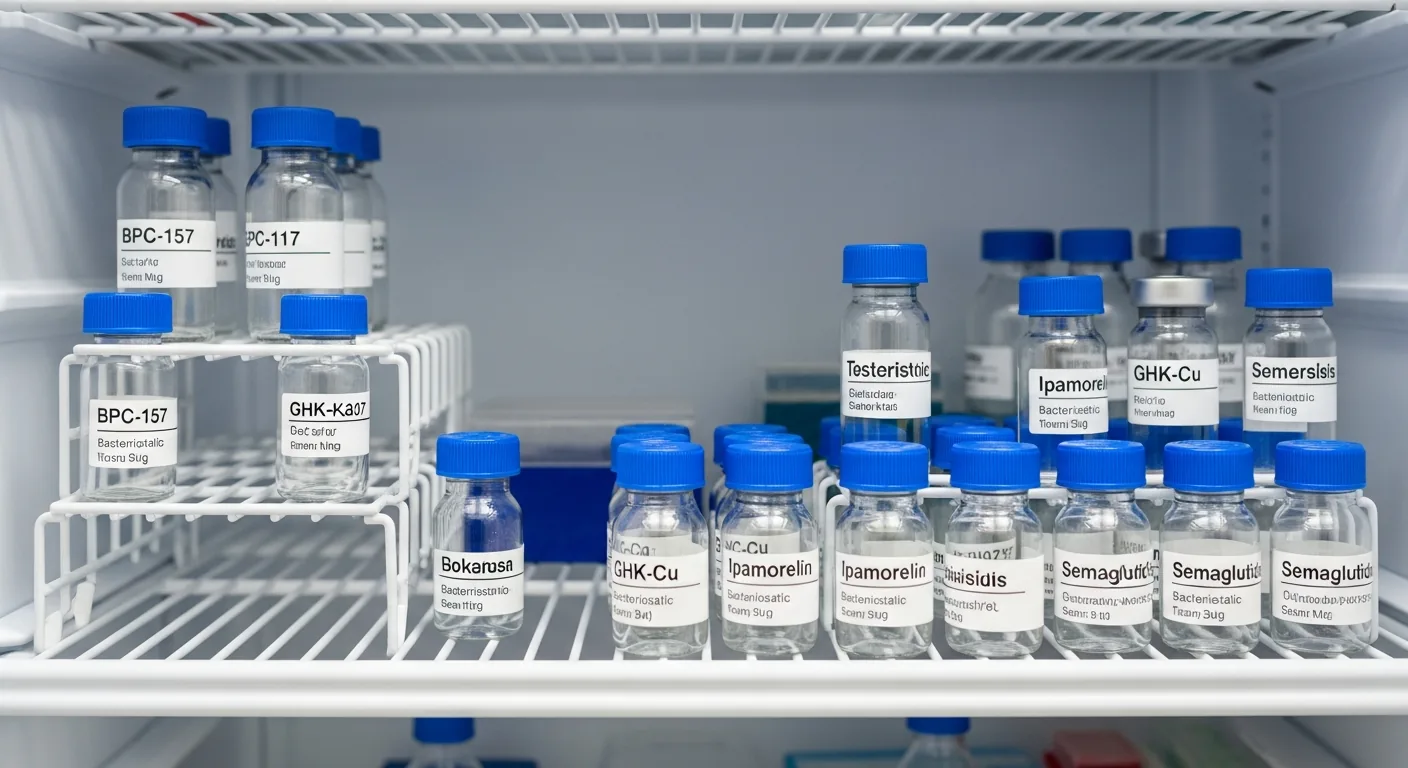
Peptide solubility represents one of the most critical challenges in research applications, directly impacting experimental success and data reliability. Understanding proper dissolution techniques ensures optimal peptide stability, biological activity, and reproducible results across research protocols.
TL;DR: Peptide solubility depends on amino acid composition, net charge at working pH, and sequence hydrophobicity. Acidic peptides dissolve best in basic buffers, basic peptides in acidic solutions, and hydrophobic peptides may require organic co-solvents like DMSO or acetonitrile. Predicting solubility from sequence analysis prevents costly reconstitution failures.
Last verified: March 2026 | Data accuracy confirmed by ChemVerify Editorial Team
Understanding Peptide Solubility Fundamentals
Peptide solubility depends on the complex interplay between molecular structure, environmental conditions, and solvent properties. Unlike simple small molecules, peptides exhibit amphiphilic characteristics due to their diverse amino acid compositions, creating unique dissolution challenges.
The primary determinant of peptide solubility lies in the balance between hydrophilic and hydrophobic residues within the sequence. Peptides containing predominantly charged or polar amino acids typically dissolve readily in aqueous solutions, while those with high hydrophobic content may require specialized solvent systems.
Research Tip: Always start with the gentlest dissolution method possible. Aggressive conditions can lead to peptide degradation, aggregation, or loss of biological activity.
Key Factors Affecting Peptide Solubility
Several interconnected factors influence how readily peptides dissolve in solution. Understanding these variables enables researchers to predict solubility behavior and select appropriate dissolution strategies for specific peptide sequences.
Amino Acid Properties and Hydrophobicity
The amino acid composition directly determines solubility characteristics. Hydrophobic residues like leucine, isoleucine, and phenylalanine reduce water solubility, while charged residues such as lysine, arginine, and glutamate enhance aqueous dissolution.
- Hydrophilic residues: Arginine, lysine, histidine, aspartate, glutamate
- Hydrophobic residues: Leucine, isoleucine, valine, phenylalanine, tryptophan
- Polar residues: Serine, threonine, asparagine, glutamine, tyrosine
- Special cases: Cysteine (disulfide bonding), proline (structural constraints)
pH Effects on Peptide Dissolution
Solution pH significantly impacts peptide solubility by altering the ionization state of amino acid side chains. At physiological pH, basic residues carry positive charges while acidic residues bear negative charges, affecting overall molecular polarity.
The isoelectric point (pI) represents the pH where the peptide carries no net charge, typically corresponding to minimum solubility. Adjusting pH away from the pI generally improves dissolution by increasing the net charge and electrostatic repulsion between molecules.
Solvent Selection Guide for Research Peptides
Proper solvent selection forms the foundation of successful peptide dissolution. The choice depends on peptide characteristics, intended application, and downstream experimental requirements.
Water-Based Solvent Systems
Most research peptides dissolve best in aqueous solutions, particularly those with high hydrophilic content. Start with sterile water or phosphate-buffered saline (PBS) for initial dissolution attempts.
- Sterile water: Universal starting point for most peptides
- PBS (pH 7.4): Maintains physiological conditions
- 0.1% acetic acid: Effective for basic peptides
- 10% DMSO in water: Enhances solubility for hydrophobic sequences
- Bacteriostatic water: Provides antimicrobial protection for storage
Avoid using bacteriostatic water for cell culture applications due to potential benzyl alcohol toxicity. Use sterile water or appropriate culture media instead.
Organic Solvent Options
Hydrophobic peptides may require organic solvents or co-solvent systems for complete dissolution. These solvents should be HPLC-grade and used in appropriate laboratory safety conditions.
- DMSO: Excellent general-purpose co-solvent (use 1-10% final concentration)
- Acetonitrile: Useful for analytical applications and LC-MS
- Methanol: Alternative organic modifier for specific applications
- TFA (0.1%): Helps dissolve peptides with secondary structure
Step-by-Step Peptide Dissolution Protocol
Following a systematic dissolution approach maximizes success rates and prevents peptide damage. This protocol works for most research peptides, with modifications as needed for specific sequences.
- Allow peptide vial to reach room temperature (15-20 minutes)
- Add small volume (50-100 μL) of chosen solvent to vial wall
- Gently swirl or tap vial - avoid vigorous vortexing initially
- Allow 5-10 minutes for initial dissolution
- Add remaining solvent gradually if needed
- Use sonication briefly (30-60 seconds) if dissolution is incomplete
- Check for complete dissolution - solution should be clear
- Filter through 0.22 μm filter if particulates remain
Never add solvent directly onto the peptide powder. Always add to the vial wall first to prevent localized high concentration that can cause aggregation.
Troubleshooting Common Solubility Issues
Even with proper technique, some peptides present dissolution challenges. Understanding common problems and their solutions helps researchers overcome solubility obstacles efficiently.
Preventing Peptide Aggregation
Peptide aggregation occurs when molecules associate through hydrogen bonding, hydrophobic interactions, or electrostatic forces. This phenomenon reduces apparent solubility and can affect biological activity.
- Keep peptide solutions dilute (typically <1 mg/mL)
- Maintain appropriate pH away from isoelectric point
- Add small amounts of organic co-solvent (1-5% DMSO)
- Use gentle mixing techniques - avoid vigorous agitation
- Store at 4°C to reduce thermal aggregation
- Consider adding chaotropic agents like urea for stubborn cases
Addressing Precipitation Problems
Peptide precipitation can occur during dissolution or storage, requiring specific intervention strategies. The approach depends on whether precipitation results from pH changes, concentration effects, or contamination.
- Adjust pH using dilute HCl or NaOH solutions
- Dilute the solution to reduce concentration-dependent precipitation
- Warm gently to 37°C while mixing (avoid prolonged heating)
- Add organic co-solvent incrementally
- Filter and re-dissolve precipitate if necessary
- Check for contamination or degradation products
Specific Peptide Solubility Considerations
Different peptide classes exhibit unique solubility patterns based on their structural characteristics and biological functions. Understanding these patterns helps predict optimal dissolution conditions.
Growth hormone releasing peptides like Ipamorelin and Tesamorelin typically dissolve well in sterile water due to their hydrophilic nature. GLP-1 receptor agonists such as Semaglutide and Tirzepatide may require gentle pH adjustment for optimal solubility.
Healing peptides including BPC-157 and TB-500 generally show good water solubility, while more hydrophobic sequences like certain fragments may benefit from co-solvent addition. Cosmetic peptides such as GHK-Cu often dissolve readily in aqueous solutions.
Always consult peptide-specific documentation when available. Some peptides have unique stability or solubility requirements that may differ from general guidelines.
Storage and Stability Best Practices
Proper storage of dissolved peptides maintains solubility and prevents degradation. The storage method depends on the intended use timeline and peptide characteristics.
For short-term use (1-7 days), store peptide solutions at 4°C in sterile containers. Long-term storage requires freezing at -20°C or -80°C, preferably in single-use aliquots to avoid repeated freeze-thaw cycles.
- Use amber or opaque containers to protect from light
- Add antioxidants like ascorbic acid for oxidation-sensitive peptides
- Maintain sterile conditions throughout handling
- Label solutions clearly with concentration and preparation date
- Monitor for precipitation or color changes during storage
- Consider lyophilization for extended storage periods
Successful peptide solubility management requires understanding the fundamental principles governing dissolution behavior. By applying systematic approaches to solvent selection, pH optimization, and troubleshooting techniques, researchers can overcome most solubility challenges while maintaining peptide integrity and biological activity.
Frequently Asked Questions
How can I predict whether a peptide will be water-soluble?
Examine the amino acid sequence: peptides with >25% charged residues (Arg, Lys, Asp, Glu) are generally water-soluble. Sequences rich in hydrophobic residues (Leu, Ile, Val, Phe, Trp) or containing long hydrophobic stretches will likely require co-solvents. The overall charge at physiological pH also influences aqueous solubility.
What is the best solvent for hydrophobic peptides?
DMSO is the most common first-line co-solvent for hydrophobic peptides. Dissolve the peptide in a small volume of neat DMSO first, then dilute with aqueous buffer to the working concentration. Keep final DMSO concentration below 10% for most biological assays to avoid solvent interference.
Why does my peptide form a gel instead of dissolving?
Gel formation typically occurs with peptides that self-assemble through beta-sheet or hydrophobic interactions at high concentration. Reduce the peptide concentration, change the pH to increase net charge (disrupting self-assembly), add a denaturing co-solvent, or sonicate briefly in a water bath to break aggregates.
Does counterion type affect peptide solubility?
Yes. TFA (trifluoroacetate) salt forms are more hydrophobic and sometimes less soluble than acetate or hydrochloride salt forms. If a TFA-salt peptide shows poor aqueous solubility, request the acetate salt form from the supplier, which often improves water solubility.
Compounds Referenced in This Article
Explore detailed chemical profiles and research guides for compounds discussed in this article:
- Bacteriostatic Water: Complete Research Guide → /learn/bacteriostatic-water
- BPC-157: Complete Research Guide → /learn/bpc-157
- GHK-Cu: Complete Research Guide → /learn/ghk-cu
- Ipamorelin: Complete Research Guide → /learn/ipamorelin
- Semaglutide: Complete Research Guide → /learn/semaglutide
- TB-500: Complete Research Guide → /learn/tb-500
- Tesamorelin: Complete Research Guide → /learn/tesamorelin
- Tirzepatide: Complete Research Guide → /learn/tirzepatide
Further Reading on ChemVerify
- Read more: AI-Guided High-Throughput Screening Accelerates Antimicrobial Peptide-Mimicking Polymer Discovery → https://www.chemverify.com/learn/ai-guided-antimicrobial-peptide-polymer-discovery
- Read more: Re-Engineering Insulin for Oral Delivery: Structural Modifications and Formulation Advances → https://www.chemverify.com/learn/insulin-oral-delivery-peptide-engineering
- Read more: Cyclic Lipopeptides: Biosurfactant Peptides as Next-Generation Drug Delivery Modulators → https://www.chemverify.com/learn/cyclic-lipopeptides-drug-delivery-modulators
- Read more: Microneedle-Delivered Peptide Decoy Receptors Show Promise in Psoriasis Treatment → https://www.chemverify.com/learn/microneedle-peptide-decoy-receptors-psoriasis
- Read more: GLP-1 Receptor Agonists Demonstrate Cardiorenal Protection in Chronic Kidney Disease: Meta-Analysis → https://www.chemverify.com/learn/glp1-receptor-agonists-cardiorenal-protection-ckd
References
Compare Verified Vendors
Browse COA-verified suppliers with exclusive discount codes and transparent pricing.
You Might Also Like
Continue Reading
How to Store Reconstituted Peptides: Temperature, Light, and Duration Guide
Complete laboratory guide to reconstituted peptide storage: optimal temperature ranges, light protection protocols, solvent selection, freeze-thaw cycle limits, and stability timelines by peptide class.
Beyond Sleep: Complete Research Guide & Chemical Profile
Comprehensive research guide on Beyond Sleep peptide blend for sleep and circadian rhythm studies. Chemical properties, mechanisms, and laboratory applications.
AI-Guided High-Throughput Screening Accelerates Antimicrobial Peptide-Mimicking Polymer Discovery
Researchers at Zhejiang University combined machine learning with automated high-throughput synthesis to efficiently discover antimicrobial polymers that mimic the action of natural antimicrobial peptides, screening over 13,000 candidates to find top performers.
Re-Engineering Insulin for Oral Delivery: Structural Modifications and Formulation Advances
A comprehensive 2026 review examines cutting-edge strategies to overcome the challenges of oral insulin delivery, including PEGylation, lipidation, cyclization, and nanocarrier technologies that enhance peptide stability and bioavailability.