
Orforglipron: Complete Research Guide & Chemical Profile
Comprehensive chemical profile of orforglipron (LY3502970), the first oral non-peptide small-molecule GLP-1 receptor agonist. Covers molecular structure, allosteric binding, ATTAIN trials, and analytical methods.
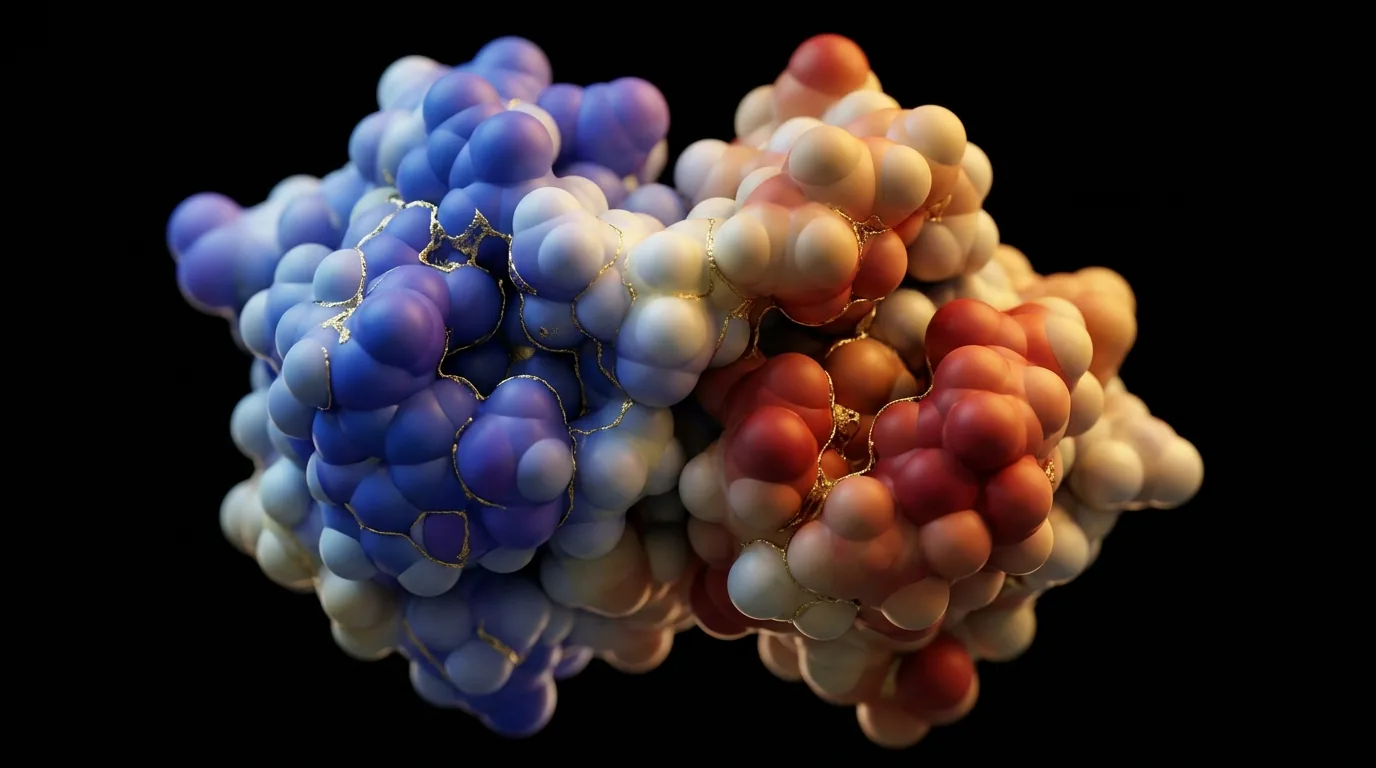
For laboratory research use only. Not for human consumption.
Last verified: April 2026 | Data accuracy confirmed by ChemVerify Editorial Team
Chemical Identity & Classification
Orforglipron (LY3502970, formerly OWL-833) is a groundbreaking non-peptide, small-molecule glucagon-like peptide-1 (GLP-1) receptor agonist designed for once-daily oral administration. Unlike all previously developed GLP-1 receptor agonists (semaglutide, liraglutide, tirzepatide), which are peptide-based and require injection or specialized oral formulations, orforglipron is a synthetic small molecule that achieves high oral bioavailability without the need for absorption enhancers or enteric coatings.
- Generic Name: Orforglipron
- Development Codes: LY3502970, OWL-833
- CAS Registry Number: 2212020-52-3
- Molecular Formula: C₄₈H₄₈F₂N₁₀O₅
- Molecular Weight: 882.97 Da
- Exact Mass: 882.3777 Da
- Classification: Non-peptide small-molecule GLP-1 receptor agonist
- Physical Form: Solid (calcium salt form used in formulations)
- Administration Route: Oral (once-daily tablet)
Molecular Structure & Properties
Orforglipron belongs to a novel chemical class featuring a complex heterocyclic scaffold that mimics the receptor-activating conformation of GLP-1 without sharing any structural similarity with the native peptide ligand. The molecule incorporates multiple ring systems including pyrazolo[4,3-c]pyridine, indazole, fluorophenyl, and oxadiazole moieties, creating a rigid three-dimensional architecture that engages the GLP-1 receptor transmembrane domain.
Two fluorine atoms are strategically positioned on the phenyl ring to enhance metabolic stability by blocking cytochrome P450-mediated oxidation at these positions. The overall molecular weight of 882.97 Da places orforglipron at the boundary between traditional small molecules and the 'beyond rule of five' chemical space – larger than typical oral drugs but engineered with sufficient lipophilicity and conformational rigidity to achieve high oral absorption.
Orforglipron is NOT a peptide. Unlike semaglutide or tirzepatide, it is a fully synthetic small molecule with no amino acid residues. Standard peptide analytical methods (amino acid analysis, peptide mapping) are not applicable. Small-molecule analytical techniques (NMR, X-ray crystallography, chiral HPLC) are required.
Mechanism of Action
Orforglipron activates the GLP-1 receptor through an allosteric binding mechanism fundamentally different from native GLP-1 or peptide-based agonists. While endogenous GLP-1 binds at the orthosteric site spanning the extracellular domain and the transmembrane core, orforglipron engages a distinct allosteric pocket within the transmembrane helical bundle of the receptor.
This allosteric binding triggers a conformational change in the receptor that mimics the active state induced by orthosteric GLP-1 binding, activating the Gs-protein/adenylyl cyclase/cAMP signaling cascade. The downstream effects include glucose-dependent insulin secretion from pancreatic beta cells, suppression of glucagon release, delayed gastric emptying, and activation of central nervous system satiety pathways through hypothalamic GLP-1 receptors.
- Binding Site: Allosteric pocket within the transmembrane domain (distinct from the orthosteric GLP-1 binding site)
- Signaling: Full agonist at Gs-coupled cAMP pathway
- Bias Profile: May exhibit biased agonism relative to native GLP-1 (differential activation of G-protein vs. beta-arrestin pathways)
- Selectivity: Highly selective for GLP-1 receptor; no significant activity at GIP or glucagon receptors
Oral Bioavailability & Absorption
The defining advantage of orforglipron is its high oral bioavailability, reported at approximately 79% in preclinical models. This is achieved through the molecule's intrinsic physicochemical properties rather than through formulation technology. Unlike oral semaglutide (Rybelsus), which requires co-administration with the absorption enhancer SNAC (sodium salcaprozate) and must be taken on an empty stomach with minimal water, orforglipron can be administered without food or liquid restrictions.
- Oral Bioavailability: ~79% (preclinical data)
- Food Effect: No clinically significant food effect; can be taken with or without meals
- Absorption Enhancer: Not required (unlike oral semaglutide)
- Formulation: Simple tablet formulation (calcium salt form)
- Dosing Frequency: Once daily
Research Applications
Orforglipron has become a critically important compound in GLP-1 receptor pharmacology research due to its unique non-peptide mechanism. Key research areas include:
- Allosteric Pharmacology: Studying the structural basis of allosteric GLP-1 receptor activation and how it differs from orthosteric peptide agonism. Orforglipron serves as a key tool compound for mapping the transmembrane allosteric pocket.
- Biased Agonism: Investigating whether orforglipron's allosteric mechanism produces different downstream signaling profiles (G-protein vs. beta-arrestin recruitment) compared to peptide agonists.
- Oral GLP-1 Delivery: Benchmarking the pharmacokinetic and pharmacodynamic profiles of small-molecule oral GLP-1 agonism against injectable peptide approaches.
- Receptor Structural Biology: Co-crystallization and cryo-EM studies of orforglipron bound to the GLP-1 receptor to elucidate the transmembrane allosteric binding pocket.
- Medicinal Chemistry: Structure-activity relationship (SAR) studies exploring the chemical space around the pyrazolo-pyridine scaffold for next-generation oral GLP-1 agonists.
Pharmacokinetic Properties
Orforglipron exhibits pharmacokinetic properties consistent with a once-daily oral dosing regimen. Unlike acylated peptide GLP-1 agonists that rely on albumin binding for half-life extension, orforglipron achieves its pharmacokinetic profile through intrinsic metabolic stability and moderate volume of distribution.
- Half-life: Approximately 25-35 hours (supporting once-daily administration)
- Tmax: 4-6 hours after oral administration
- Metabolism: Primarily hepatic, via CYP3A4 and other cytochrome P450 enzymes
- Protein Binding: High plasma protein binding (>95%)
- Steady-State: Achieved within approximately 7-10 days of once-daily dosing
- Dose Linearity: Approximately dose-proportional pharmacokinetics across the studied dose range
ATTAIN Clinical Program
The ATTAIN clinical program is Eli Lilly's comprehensive Phase 3 evaluation of orforglipron, representing the most advanced clinical development of any non-peptide oral GLP-1 receptor agonist. Key trials include:
- ATTAIN-1 (Obesity without T2D): Phase 3, 72-week trial evaluating orforglipron 6 mg, 12 mg, and 36 mg vs. placebo. The highest dose achieved mean body weight reduction of 12.4% (27.3 lbs) at 72 weeks; 59.6% of participants achieved ≥10% weight loss. Results published in the New England Journal of Medicine (2025).
- ATTAIN-2 (Obesity with T2D): Phase 3, 72-week trial in adults with type 2 diabetes and obesity. Mean bodyweight reduction of up to 9.6% at the highest dose. Published in The Lancet.
- ATTAIN-MAINTAIN: Phase 3, 52-week study evaluating weight maintenance after switching from injectable incretin therapy to oral orforglipron.
- ATTAIN-4: Evaluating orforglipron in combination with other metabolic interventions.
ChemVerify reports on clinical trial data strictly for chemical characterization and research context. This information does not constitute medical advice and should not inform any clinical decisions.
Storage & Handling Guidelines
As a small-molecule compound, orforglipron has fundamentally different storage requirements compared to peptide-based GLP-1 agonists. The molecule is significantly more stable than peptides due to the absence of amide bonds susceptible to hydrolysis and the absence of amino acid residues prone to oxidation or deamidation.
- Solid Form: Store at room temperature (15-25°C) in a tightly sealed container. Stable for 36+ months when protected from moisture and light.
- Solution/DMSO Stock: Store at -20°C. DMSO stock solutions (10-50 mM) are stable for 6+ months at -20°C.
- Aqueous Solutions: Prepare fresh for each experiment when possible. Aqueous solutions are stable for 24-48 hours at 2-8°C.
- Light Sensitivity: Moderate; store in amber vials or wrapped containers to prevent photodegradation of the aromatic ring systems.
- Moisture Sensitivity: Low to moderate; use desiccant during long-term storage of solid material.
- Solubility: Soluble in DMSO (≥50 mM). Limited aqueous solubility; may require co-solvents for in vitro assays.
Analytical & Purity Verification Methods
Orforglipron requires small-molecule analytical methods rather than the peptide-specific techniques used for semaglutide or tirzepatide. The complex heterocyclic structure necessitates high-resolution characterization to confirm identity and purity.
- HPLC (C18 Column): Standard reversed-phase C18 column with 100-120 Å pore size. UV detection at 254 nm or 280 nm due to the extended aromatic chromophore. Purity threshold: ≥98% for research-grade material.
- High-Resolution Mass Spectrometry (HRMS): Confirm exact mass of 882.3777 Da (M+H⁺ = 883.3855). ESI or APCI ionization modes.
- Nuclear Magnetic Resonance (NMR): ¹H-NMR and ¹³C-NMR for complete structural confirmation. ¹⁹F-NMR is particularly useful due to the two fluorine atoms, providing a clean diagnostic signal.
- Chiral HPLC: Verify stereochemical purity, as orforglipron contains multiple chiral centers. Incorrect stereochemistry results in inactive enantiomers/diastereomers.
- X-ray Powder Diffraction (XRPD): Confirm crystalline form (polymorphic form) of the calcium salt.
- Certificate of Analysis (CoA): Should include HPLC chromatogram, MS data, NMR spectra, and specific optical rotation.
Current Research Status
As of April 2026, orforglipron has been approved by the FDA (March 2026) for the treatment of obesity in adults, marking it as the first non-peptide oral GLP-1 receptor agonist to receive regulatory approval. The ATTAIN Phase 3 clinical program demonstrated consistent efficacy across multiple trial populations with a safety profile consistent with the established GLP-1 receptor agonist class.
Orforglipron represents a paradigm shift in GLP-1 receptor agonist research by demonstrating that high-potency receptor activation can be achieved with a non-peptide small molecule through allosteric binding. This has opened new research avenues in oral incretin pharmacology, allosteric GPCR modulation, and the medicinal chemistry of beyond-rule-of-five compounds. Research groups continue to explore the structural biology of the allosteric binding site, biased signaling properties, and the potential for next-generation oral GLP-1 agonists with improved potency and selectivity.
For laboratory research use only. Not for human consumption. All information presented is for scientific reference and does not constitute medical advice.
Further Reading on ChemVerify
- Read more: TRH (Thyrotropin-Releasing Hormone): Research Guide & Chemical Profile → https://www.chemverify.com/learn/trh-thyrotropin-releasing-hormone-research-guide
- Read more: Ipamorelin + CJC-1295 (No DAC) Stack: Synergy Research Guide → https://www.chemverify.com/learn/ipamorelin-cjc-1295-no-dac-stack-synergy
- Read more: TP508 (Chrysalin): Research Guide & Chemical Profile → https://www.chemverify.com/learn/tp508-chrysalin-research-guide-chemical-profile
- Read more: Semax for Cognitive Research: ACTH(4-10) Analog Mechanism → https://www.chemverify.com/learn/semax-cognitive-research-acth-mechanism
References
Compare Verified Vendors
Browse COA-verified suppliers with exclusive discount codes and transparent pricing.
You Might Also Like
Continue Reading
Ipamorelin + CJC-1295 (No DAC) Stack: Synergy Research Guide
Research guide to the Ipamorelin + CJC-1295 No DAC growth hormone stack: GHRH-GHRP synergy mechanism, GH pulse amplification, timing protocols, and reconstitution guidance.
Semax for Cognitive Research: ACTH(4-10) Analog Mechanism
Semax mechanism of action: ACTH(4-10) fragment with Pro-Gly-Pro modification, BDNF and NGF upregulation, BBB penetration, nasal delivery, and Russian clinical research history.
TRH (Thyrotropin-Releasing Hormone): Research Guide & Chemical Profile
TRH (pGlu-His-Pro-NH2) is a hypothalamic tripeptide releasing TSH and prolactin. MW 362.38, neuroprotective research, and neuroendocrine signaling reviewed.
TP508 (Chrysalin): Research Guide & Chemical Profile
TP508 (Chrysalin) is a 23-amino-acid thrombin receptor binding domain peptide with FDA orphan drug status for fracture healing. Bone repair and angiogenesis research.