
SS-31 (Elamipretide): Complete Research Guide & Chemical Profile
Comprehensive guide to SS-31 (Elamipretide), a mitochondria-targeting tetrapeptide. Learn about its chemical properties, research applications, and mechanism of action.
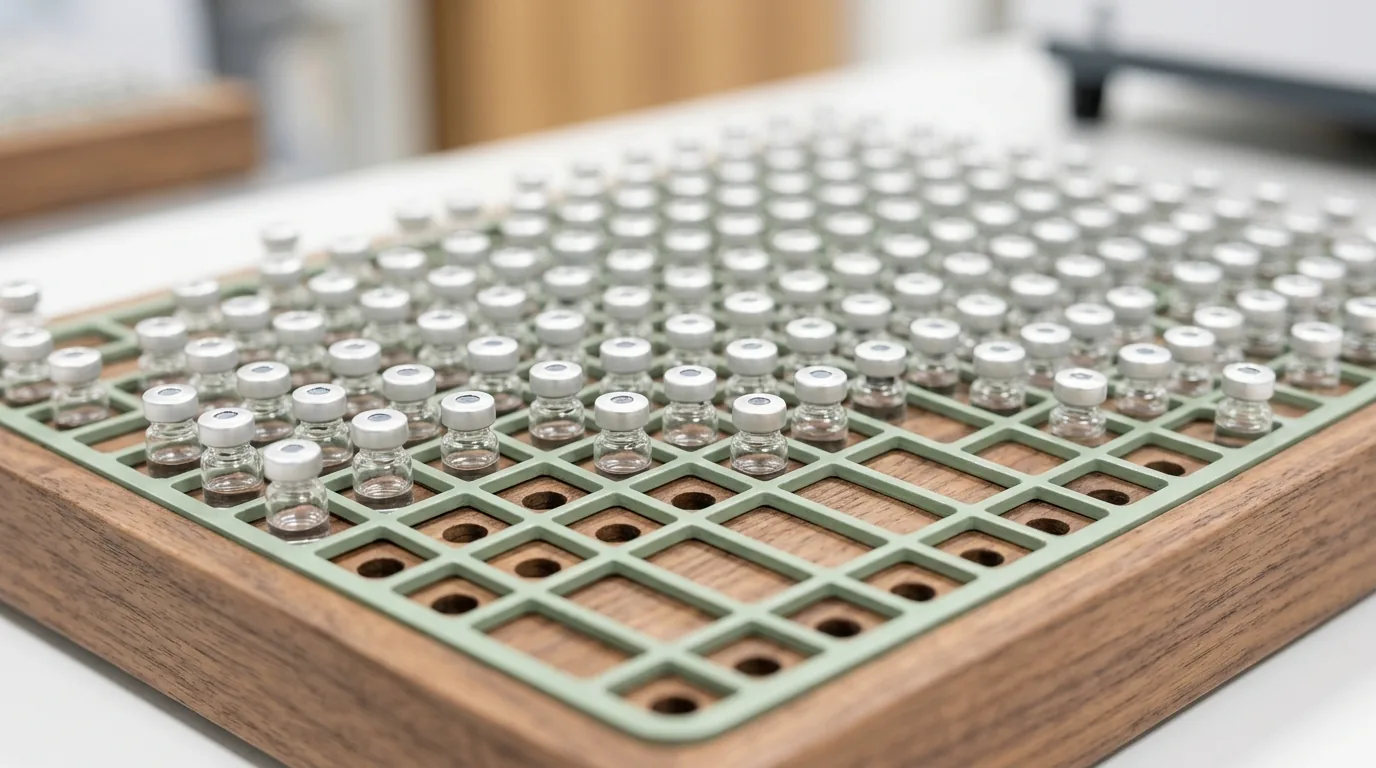
For laboratory research use only. Not for human consumption. This article is intended for educational purposes and does not constitute medical advice.
TL;DR: SS-31 (Elamipretide) is a 4-amino-acid mitochondria-targeted tetrapeptide (MW ~640.75 Da) with the sequence D-Arg-Dmt-Lys-Phe-NH₂ containing the unnatural amino acid 2',6'-dimethyltyrosine. Research-grade SS-31 requires ≥95% HPLC purity with ESI-MS confirmation of the modified residues. Its alternating aromatic-cationic motif enables selective cardiolipin binding. Compare verified SS-31 pricing across vendors at chemverify.com.
Last verified: March 2026 | Data accuracy confirmed by ChemVerify Editorial Team
What Is SS-31?
SS-31, also known as Elamipretide, MTP-131, or Bendavia, is a synthetic tetrapeptide specifically designed to target mitochondria. This research compound has gained significant attention in scientific communities for its unique ability to concentrate in the inner mitochondrial membrane, making it a valuable tool for studying mitochondrial dysfunction and cellular energy metabolism.
The peptide consists of four amino acids with the sequence D-Arg-Dmt-Lys-Phe-NH2, where Dmt represents 2',6'-dimethyltyrosine. With a molecular weight of 639.8 Da, SS-31 is characterized by its small size and high membrane permeability, properties that contribute to its research utility in mitochondrial studies.
Research suggests that SS-31's unique chemical structure allows it to selectively accumulate in mitochondria at concentrations up to 1000-fold higher than in the cytoplasm. This selective targeting mechanism has made it an important research tool for investigating mitochondrial-related cellular processes and energy metabolism disorders.
Research Background & Key Studies
SS-31 was originally developed by researchers at Cornell University as part of a series of mitochondria-targeting peptides. The compound has been extensively studied in various laboratory models, with research focusing primarily on its effects on mitochondrial function and cellular energy production.
Preclinical studies have investigated SS-31's potential applications in several research areas. Laboratory experiments have demonstrated its ability to improve mitochondrial respiration and reduce oxidative stress markers in various cell culture models. Research has also examined its effects on cardiac tissue, skeletal muscle function, and neuronal cell viability under controlled laboratory conditions.
Studies indicate that SS-31 may influence mitochondrial membrane stability and ATP production efficiency. Research conducted on isolated mitochondria has shown that the peptide can help maintain optimal mitochondrial morphology and function under stress conditions, making it a valuable research tool for studying cellular energy metabolism.
Clinical research programs have evaluated SS-31 in various contexts, with studies examining its pharmacokinetic properties and safety profile. These investigations have provided valuable data on the peptide's half-life, distribution patterns, and elimination pathways in research settings.
Mechanism of Action
The mechanism of action of SS-31 centers on its unique ability to target and interact with cardiolipin, a phospholipid found exclusively in the inner mitochondrial membrane. Research suggests that this interaction helps stabilize mitochondrial membrane structure and optimize the efficiency of the electron transport chain.
Laboratory studies indicate that SS-31 may work through several interconnected pathways. The peptide appears to reduce mitochondrial peroxide production while simultaneously improving ATP synthesis efficiency. This dual action helps maintain optimal mitochondrial function under various experimental conditions.
Research has shown that SS-31's positive charge allows it to be driven into mitochondria by the membrane potential, where it concentrates in the inner mitochondrial membrane. Once localized, the peptide appears to interact with cardiolipin to help maintain proper cristae structure and respiratory complex organization.
Studies suggest that SS-31 may also influence calcium handling within mitochondria and help protect against mitochondrial calcium overload. This protective mechanism may contribute to improved cellular viability in laboratory models of oxidative stress and energy depletion.
Chemical Properties
SS-31 is supplied as a lyophilized powder with a purity standard of ≥98% as determined by HPLC analysis. The peptide exhibits excellent chemical stability when stored under appropriate conditions and maintains its biological activity over extended periods.
The compound demonstrates a half-life of approximately 3-4 hours in physiological conditions, making it suitable for various research protocols and experimental designs. Its relatively short half-life allows for precise timing in research applications and reduces the risk of compound accumulation during repeated dosing studies.
Storage & Stability
For optimal stability, SS-31 should be stored at -20°C in its lyophilized form, protected from light and moisture. Under these conditions, the peptide maintains its integrity and biological activity for at least 24 months from the date of manufacture.
Once reconstituted, SS-31 solutions should be stored at 4°C and used within 30 days to ensure maximum potency. For longer-term storage of prepared solutions, aliquoting and freezing at -80°C is recommended, though freeze-thaw cycles should be minimized to prevent degradation.
Solubility & Preparation
SS-31 demonstrates excellent solubility in water and various buffer systems commonly used in laboratory research. The peptide can be readily dissolved in sterile water, phosphate-buffered saline (PBS), or cell culture media at concentrations suitable for most research applications.
For reconstitution, it is recommended to add solvent slowly while gently swirling the vial to ensure complete dissolution. Vortexing should be avoided as it may cause peptide degradation or aggregation. The pH of prepared solutions should be maintained between 6.0 and 8.0 for optimal stability.
Verified Sources on ChemVerify
Researchers seeking high-quality SS-31 for their laboratory studies can find verified vendors and third-party tested batches on ChemVerify at /product/ss-31. Our platform provides comprehensive vendor verification, certificate of analysis reviews, and quality assurance data to ensure researchers receive authentic, high-purity compounds for their investigations.
ChemVerify's verification process includes independent testing of peptide purity, identity confirmation through mass spectrometry, and vendor reliability assessments. This comprehensive approach helps researchers make informed decisions when sourcing SS-31 for their mitochondrial research projects.
Frequently Asked Questions
What makes SS-31 unique compared to other mitochondria-targeting compounds?
SS-31's unique structure, featuring the 2',6'-dimethyltyrosine residue, provides exceptional mitochondrial selectivity and membrane permeability. Research indicates it can achieve mitochondrial concentrations up to 1000-fold higher than cytoplasmic levels, making it highly effective for mitochondrial research applications.
How should SS-31 be handled in laboratory settings?
SS-31 should be handled using standard laboratory safety protocols, including appropriate personal protective equipment. The lyophilized powder should be reconstituted in sterile conditions, and prepared solutions should be filtered through 0.22μm filters if sterility is required for cell culture applications.
What experimental models have been used to study SS-31?
Research with SS-31 has utilized various experimental models including isolated mitochondria preparations, cell culture systems, tissue explants, and animal models. Studies have examined its effects in cardiac myocytes, skeletal muscle cells, neuronal cultures, and hepatocytes under different stress conditions.
Can SS-31 be used in combination with other research compounds?
Laboratory studies have investigated SS-31 in combination with various research compounds, including antioxidants, metabolic modulators, and other peptides. Researchers should consider potential interactions and validate compatibility through preliminary experiments when designing combination studies.
What analytical methods are recommended for SS-31 detection and quantification?
HPLC and LC-MS/MS are the preferred analytical methods for SS-31 quantification in research samples. These techniques provide accurate detection and can distinguish SS-31 from potential metabolites or degradation products in biological matrices.
How does the half-life of SS-31 affect experimental design?
The 3-4 hour half-life of SS-31 allows for flexible experimental designs and precise timing of measurements. Researchers should consider this pharmacokinetic parameter when planning sample collection timepoints and determining optimal dosing intervals for their specific research protocols.
Frequently Asked Questions
Further Reading on ChemVerify
- Read more: Hexarelin: Complete Research Guide & Chemical Profile → https://www.chemverify.com/learn/hexarelin-research-guide-chemical-profile
- Read more: How Fast Do Peptides Work? Expected Timelines for BPC-157, Semaglutide, Ipamorelin & More → https://www.chemverify.com/learn/how-fast-do-peptides-work-timelines
- Read more: Retatrutide: Complete Research Guide & Chemical Profile → https://www.chemverify.com/learn/retatrutide-research-guide-chemical-profile
- Read more: Tirzepatide: Complete Research Guide & Chemical Profile → https://www.chemverify.com/learn/tirzepatide
References
Compare Verified Vendors
Browse COA-verified suppliers with exclusive discount codes and transparent pricing.
You Might Also Like
Continue Reading
SS-31 at BioCollex: Price, Purity & Verification
SS-31 from BioCollex – USD 60.00/10mg, COA verified.
SS-31 at Licensed Peptides: Price, Purity & Verification
SS-31 from Licensed Peptides – USD 272.00/10mg, COA verified.
SS-31 at Bio BoostX: Price, Purity & Verification
SS-31 from Bio BoostX – EUR 169.95/50mg, COA verified.
Hexarelin: Complete Research Guide & Chemical Profile
Comprehensive research guide to Hexarelin (Examorelin), a synthetic hexapeptide GHSR-1a agonist. Covers molecular weight 887.04 Da, sequence, GH release mechanisms, and cardiac research.