

Research Peptide Guides
Learn to read a certificate of analysis, interpret a lab result and look up a peptide batch. Browse research guides, compound profiles and published studies.
Knowledge areas
Scientific Studies Database
Browse peer-reviewed research on peptide compounds with direct links to published literature.
Browse StudiesFrequently Asked Questions
Quick answers to the most common beginner questions about research peptides.
Browse FAQPeptides 1x1
Foundational knowledge about peptides – the essential basics every researcher should know. Start here to build a solid understanding of peptide science.
Blog
Articles, insights, and guides about peptide research, industry trends, and best practices.
News & Updates
Latest research findings, study results, and industry developments in the peptide space.
All Articles
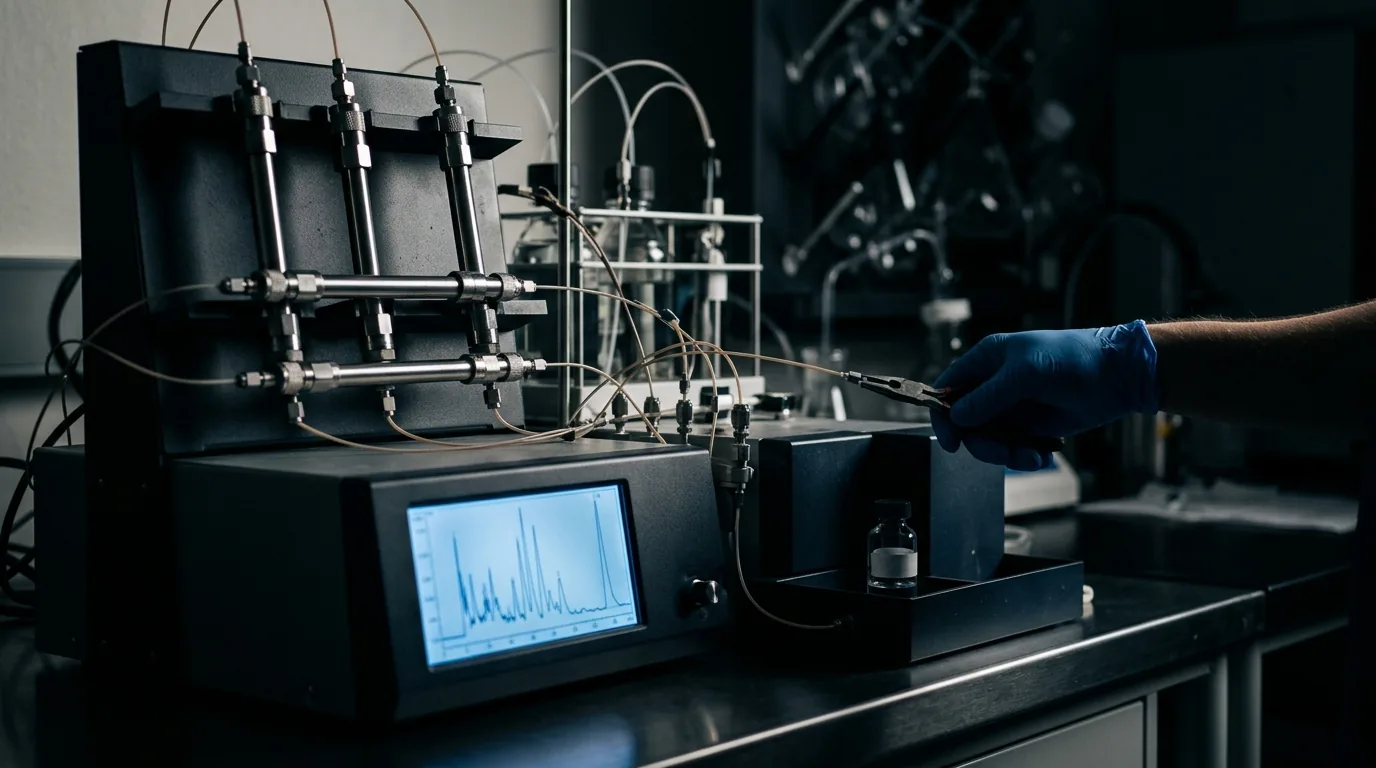
Peptide Research Equipment List: What You Need to Get Started
Essential laboratory equipment for peptide research: analytical balances, pipettes, pH meters, centrifuges, HPLC systems, and proper storage solutions.
Sermorelin vs Ipamorelin: GHRH Analog vs GHRP Compared
Structural and mechanistic comparison of Sermorelin (GHRH analog, 29 aa, ~3,358 Da) vs Ipamorelin (GHRP, 5 aa, ~711 Da). Covers receptor selectivity, stability, and analytical methods.
Why Some Peptides Need Refrigerated Shipping and Others Don't
Which research peptides require cold-chain shipping and which survive ambient transport. Stability factors, degradation risks, and vendor shipping standards.
Peptide Modifications: PEGylation, Lipidation, Cyclization, and D-Amino Acids
Advanced guide to peptide chemical modifications including PEG conjugation, fatty acid acylation, stapled peptides, head-to-tail cyclization, retro-inverso design, and non-natural amino acids.
Peptide Counterions Explained: TFA, Acetate, HCl, and Their Impact
How TFA, acetate, and HCl counterions affect peptide solubility, pH, cell toxicity, and mass spec results. Counterion exchange methods for researchers.

Understanding Peptide Half-Life: What Determines How Long a Peptide Stays Active
Scientific explanation of peptide half-life determinants including proteolytic degradation, renal clearance, PEGylation, lipidation, albumin binding, and stabilization strategies.

What Is Solid-Phase Peptide Synthesis (SPPS)? A Beginner's Guide
Learn how solid-phase peptide synthesis (SPPS) works, from resin selection to cleavage. Fmoc vs. Boc chemistry, coupling reagents, and common side reactions.
Peptide Synthesis Methods: SPPS, LPPS, and Recombinant Production Explained
Detailed comparison of peptide synthesis methods including Fmoc and Boc solid-phase synthesis, liquid-phase production, recombinant expression, and native chemical ligation.
Peptide Degradation: Deamidation, Oxidation, and How to Prevent It
Scientific guide to peptide degradation pathways including asparagine deamidation, methionine oxidation, disulfide scrambling, and evidence-based prevention strategies.
Peptide Fibrils and Aggregation: When Peptides Form Unwanted Structures
Why research peptides aggregate into fibrils, amyloid-like structures, and gels. Causes, detection methods, and prevention strategies for laboratory handling.
Khavinson Bioregulator Peptides: A Complete Scientific Overview
Comprehensive scientific review of Khavinson bioregulator peptides including Epithalon, Thymalin, Pinealon, and seven more short regulatory peptides with epigenetic mechanisms.
Reconstitution Troubleshooting: 7 Common Problems and How to Fix Them
Solve the 7 most common peptide reconstitution problems: poor solubility, visible particles, foaming, wrong solvent, incorrect pH, aggregation, and loss of activity.
TRH (Thyrotropin-Releasing Hormone): Research Guide & Chemical Profile
TRH (pGlu-His-Pro-NH2) is a hypothalamic tripeptide releasing TSH and prolactin. MW 362.38, neuroprotective research, and neuroendocrine signaling reviewed.
Peptide Stability at Different pH Levels: Acid, Neutral, and Alkaline
Understand how pH affects peptide stability through hydrolysis, deamidation, and oxidation. Practical guidance on buffer selection and storage pH for research peptides.
What Is GMP Manufacturing? Why It Matters for Peptide Quality
Understand Good Manufacturing Practice (GMP) standards, how they apply to peptide synthesis, and why GMP compliance is a key quality indicator when evaluating vendors.
TP508 (Chrysalin): Research Guide & Chemical Profile
TP508 (Chrysalin) is a 23-amino-acid thrombin receptor binding domain peptide with FDA orphan drug status for fracture healing. Bone repair and angiogenesis research.

B7-33: Research Guide & Chemical Profile
B7-33 is a single-chain relaxin-3 analog and biased RXFP1 agonist studied for cardiac fibrosis, anti-fibrotic activity, and metabolic regulation in preclinical models.
Peptide Research Applications by Field: Neuroscience, Oncology, Metabolic, Dermatology
Survey key peptide research applications across neuroscience, oncology, metabolic disease, and dermatology. Covers target peptides, mechanisms, and current research trends.
ARA 290 (Cibinetide): Research Guide & Chemical Profile
ARA 290 (Cibinetide) is an 11-amino-acid EPO-derived peptide targeting the innate repair receptor. Chemical profile, neuropathy and sarcoidosis research reviewed.
How to Compare Peptide Vendors: A Researcher's Decision Framework
A systematic framework for evaluating peptide vendors on quality documentation, analytical testing, shipping, pricing transparency, and customer support for researchers.
Peptide N-Terminal Acetylation and C-Terminal Amidation: Why Caps Matter
Learn why N-terminal acetylation and C-terminal amidation protect peptides from exopeptidases, improve stability, and affect biological activity in research settings.
Pentadeca Arginate (PDA): Research Guide & Chemical Profile
Pentadeca Arginate (PDA) is the arginine salt form of BPC-157 with improved aqueous stability. Complete chemical profile, sequence data, and current research applications.

Glutathione: Complete Research Guide & Chemical Profile
Complete research guide to Glutathione (GSH), the tripeptide Glu-Cys-Gly and master intracellular antioxidant. Covers GSH/GSSG redox ratio, NAC as precursor, IV vs oral vs liposomal forms, and redox signaling.
D-Amino Acids in Peptides: Why Mirror-Image Residues Improve Stability
Discover how D-amino acid substitutions improve peptide stability against proteolysis. Covers chirality, racemization, detection methods, and research applications.